What Is Nicer, Punta Cana Or Puerto Plata?
A comparison of Punta Cana and Puerto Plata, framed by what each base offers for day trips such as the 27 Waterfalls of Damajagua.
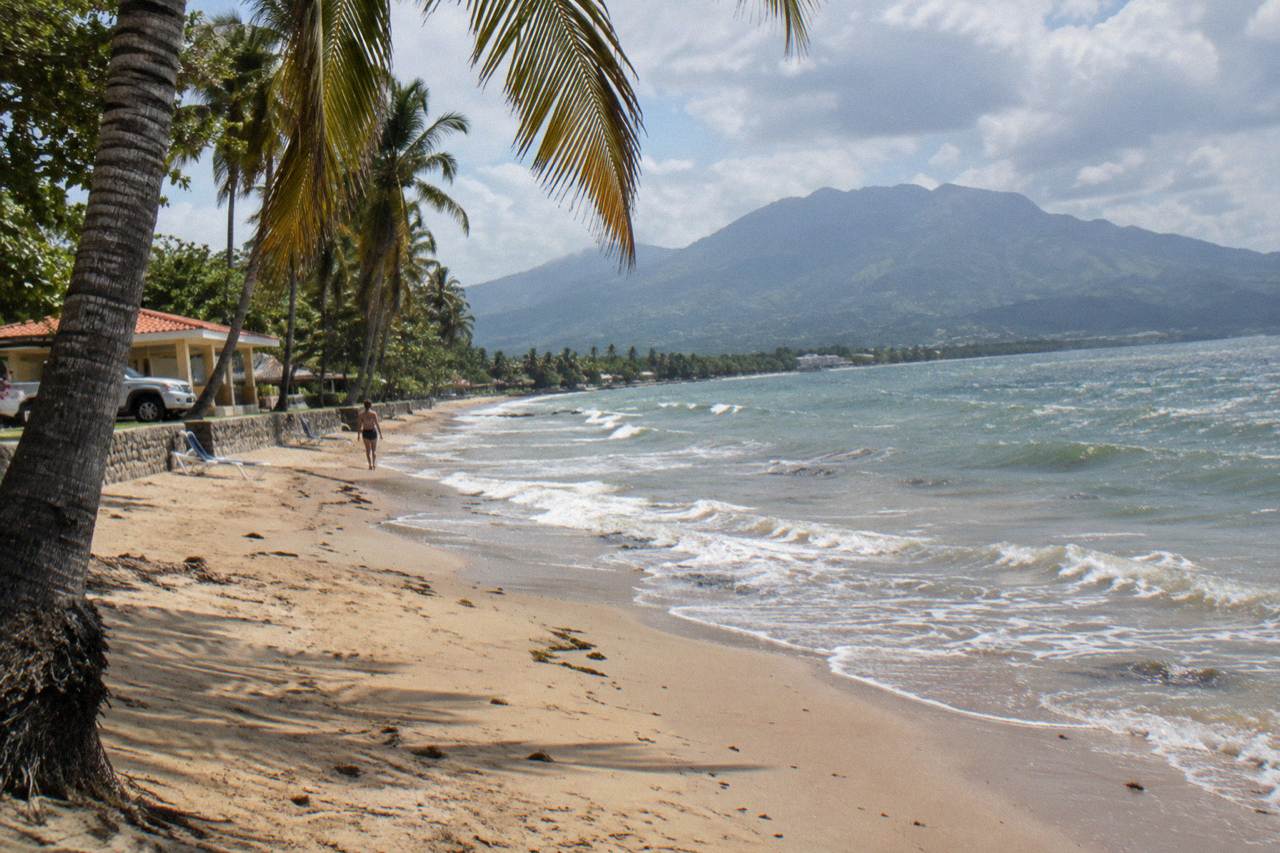
Two coastlines, two very different holidays. On the east, Punta Cana wraps long stretches of pale sand around a corridor of large all-inclusive resorts, built for people who mostly intend to stay inside the gates. On the north, Puerto Plata sits under green mountains with a colonial-era malecon, two cruise terminals and a canyon of 27 waterfalls in the hills behind it. Neither is objectively nicer. One of them is dramatically better positioned if waterfalls, canyoning and day trips are part of your plan, and this comparison is written from that angle, because that is what this site covers.
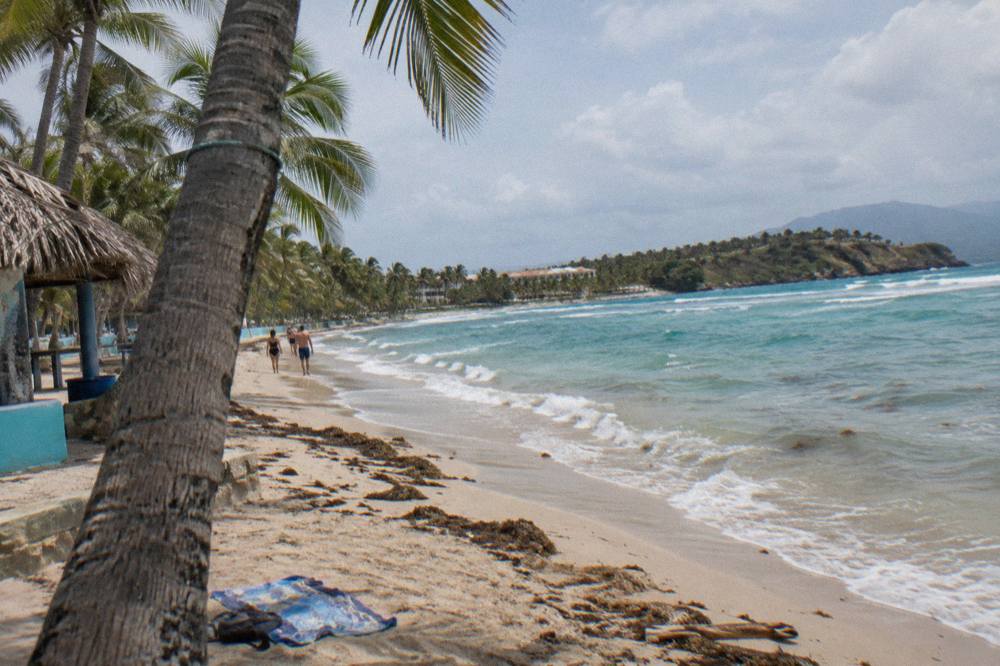
Neither is simply nicer, and the honest split is this: Punta Cana is nicer for a classic fly-and-flop beach week with polished resort infrastructure, while Puerto Plata is nicer for variety, mountains, canyons and adventure day trips, including the 27 Waterfalls of Damajagua, which sit roughly 30 minutes from the city by road. If your holiday mental image is a lounger and a swim-up bar, the east coast wins. If it involves sliding through canyon pools, hiking forest trails or wandering a real Dominican town, the north coast wins comfortably.
Start with what each place actually is. Punta Cana is a resort corridor rather than a town: hotels, golf courses and beach clubs stretch along the eastern tip of the island, and most visitors rarely leave the complex they booked. The sand is genuinely excellent, the water is calm and shallow, and the resort standard is high. There are caves, catamaran trips and sugar-white cays nearby. What there is not, within easy reach, is serious topography. The terrain is flat, and the signature excursions are water-based: snorkeling, island boats, party cruises.
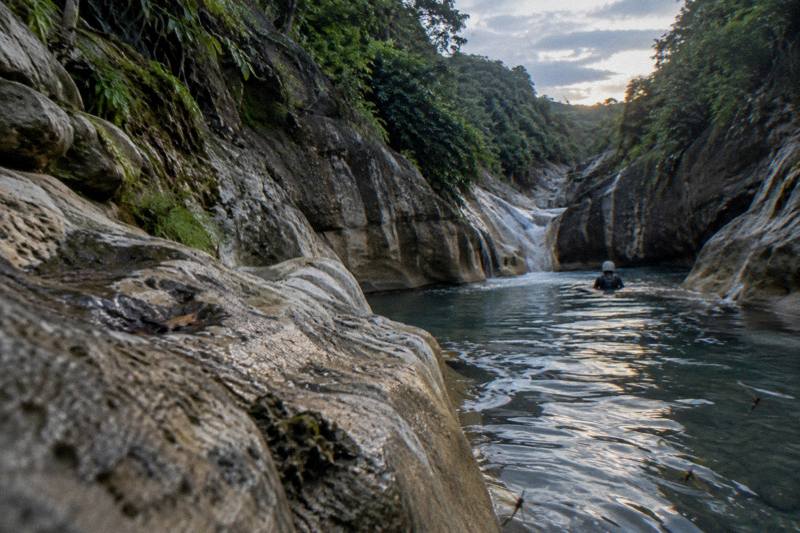
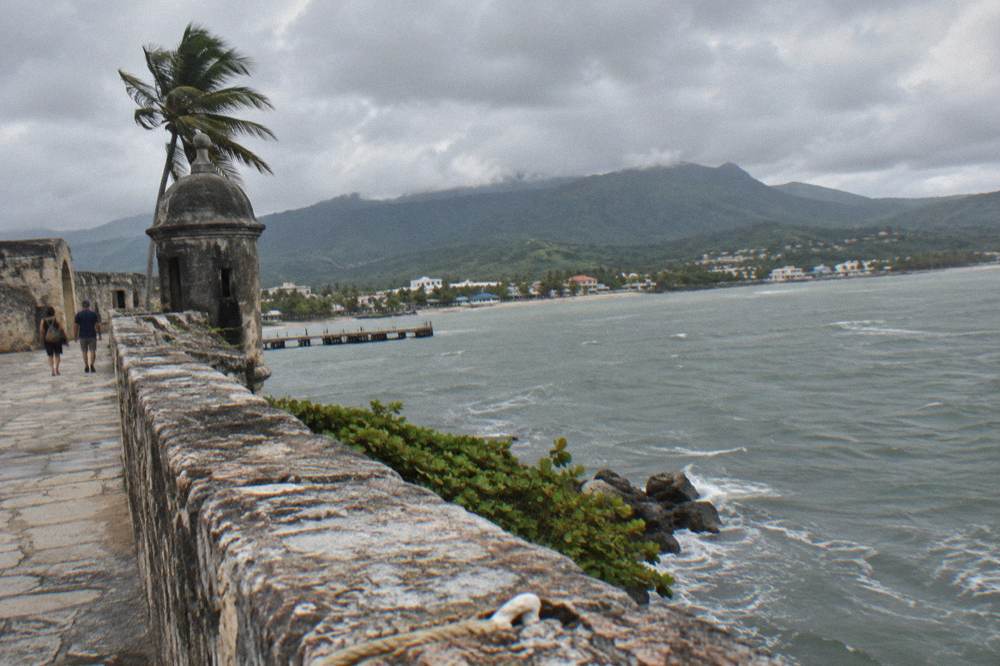
Puerto Plata is a working port city with a malecon, a historic stone fortress and the Cordillera Septentrional rising directly behind it. That mountain range is the reason this site exists. The 27 Waterfalls of Damajagua, a natural monument of cascades and plunge pools managed with the Ministry of Environment, sits near the town of Imbert, about 28 minutes by road from the city centre and about 20 minutes from Amber Cove cruise port. From a Punta Cana hotel, the same park is roughly five hours of driving each way.
For a reader deciding between the two, the practical question is rarely which beach is prettier. It is what you will do on the four or five days you are not on a sunbed. The north coast stacks waterfall canyoning, a monkey sanctuary, ziplines, river beaches and a colonial fortress into a tight radius. The east coast offers a more uniform but more flawless beach product, with excursions that are longer drives and often more resort-oriented.
The site's perspective is admittedly skewed. Everything on 27 Waterfalls Dominican Republic exists because the Damajagua canyon is on the north coast, and the tour roster here is dominated by operators running out of Puerto Plata hotels and the Amber Cove and Taino Bay cruise terminals. Readers comparing the two coasts with waterfalls in mind should see the realistic day-trip math before booking anything, so that comparison follows.
For travelers already leaning north, two listings show the shape of the Puerto Plata side. The Damajagua Waterfalls, Zipline with Lunch and Transfer combo packs a zipline ride and the waterfalls into one 4-hour booking, from $110 per person. Prefer to skip the zipline? Damajagua Waterfalls Adventure runs 3 hours with wifi on board, lunch and drinks included, from $70 per person.
That pair is not a ranking, it is a spread of formats. One bolts a zipline onto the canyon. The other is a shorter 3-hour falls trip from Puerto Plata with lunch and drinks included. Check the cancellation terms on each listing, which matters when plans hinge on a ship schedule or a weather window.
| Punta Cana | Puerto Plata | |
|---|---|---|
| Setting | Flat east-coast resort corridor | Port city under forested mountains |
| Signature beach | Long, pale, calm, resort-fronted | Varied, Atlantic-facing, more public and rustic |
| Headline excursion | Catamarans, Saona and Catalina islands | 27 Waterfalls of Damajagua canyon |
| Drive to Damajagua gate | About 5 hours each way | About 28 minutes from the city |
| Excursion variety | Mostly boat and beach based | Canyons, ziplines, monkeys, fort, city |
| Resort stock | Larger and more polished | Smaller, older, better value |
Is Puerto Plata Nicer Than Punta Cana?
For adventure and variety, yes: Puerto Plata packs waterfalls, canyons, ziplines and history into a half-hour radius that Punta Cana cannot match, and its excursions are shorter, cheaper and more varied. For beach purists who want flawless sand, calm water and big polished resorts, Punta Cana stays ahead, so "nicer" depends entirely on the mix of activities you want.
The north-coast case rests on concentration. From a Puerto Plata hotel you can be at the Damajagua visitor centre in roughly half an hour, and Ocean World in Cofresi and Fortaleza San Felipe are each under half an hour's driving time from the park entrance. A single week can hold a waterfall canyon day, a zipline morning, a monkey sanctuary visit and an afternoon on the malecon. The town itself gives the stay a historic backdrop that resort corridors lack.
The beaches are the honest weak point, and pretending otherwise would be salesmanship. The Atlantic side of Puerto Plata province is open ocean: good for scenery and surfing-adjacent swells at Cabarete, less reliably swimmable than the bathtub Caribbean of the east. At times authorities fly red flags along this coast and close swimming entirely during periods of dangerous swell. Puerto Plata beach days are real but more conditional than Punta Cana beach days.
Punta Cana's counterargument is reliability. Resorts are newer and larger, service standards are uniformly high, and the beach in front of your room is nearly always the postcard. Couples and families who measure a holiday in hours by the pool genuinely prefer it. The trade is that nearly every excursion is a bus ride, and the really distinctive terrain of the island is elsewhere.
There is also a weather angle specific to this site's subject. The Damajagua river rises fast after mountain rain, and the park closes upper sections first and shuts the river entirely when it runs brown, typically reopening 12 to 24 hours after rain stops. The wet season runs May to November. That risk exists regardless of which coast you sleep on, but a north-coast base lets you pivot to a fort, a city walk or Ocean World the same day, while a Punta Cana base has burned ten hours of driving to arrive at a closed gate.
Wondering which waterfalls day to lock in first? The Waterfalls of Damajagua & Lunch Included listing above, rated 4.9 from 29 reviews and from $60 per person, includes helmets, life jackets and lunch, with hotel pickup, and it lists free cancellation, so you can hold the date and adjust if the forecast turns.
Is It Better To Go To Puerto Plata Or Punta Cana?
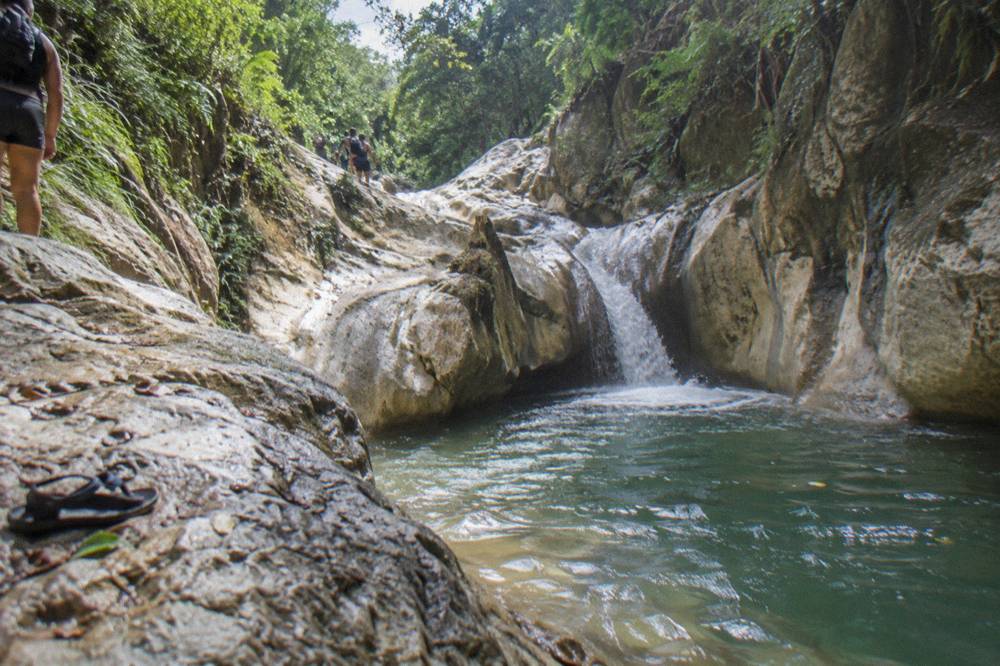
Go to Puerto Plata if waterfalls, canyoning, hiking, ziplines or a real town matter to you, because the Damajagua canyon, a protected natural monument, is half an hour away and port-day logistics are simple. Go to Punta Cana if your priority is beach-resort ease with minimal planning, accepting that excursions involve longer drives and the Damajagua canyon makes for a very long day trip.
Frame it as a decision between two products. The east-coast product is the resort. You choose it the way you choose a hotel, and the destination around it is secondary. The north-coast product is the region: a base from which you book distinct days, most of which happen outside the hotel. People who enjoy researching and booking tours tend to be happier in Puerto Plata. People who want the holiday to begin and end at the swim-up bar tend to be happier in Punta Cana.
Price also behaves differently. Puerto Plata hotel rates often run lower than comparable Punta Cana resorts, so it pays to compare rates for your dates. The tour market around the waterfalls is deep and competitive because it serves three demand streams at once: hotel guests, Amber Cove cruise passengers and Taino Bay cruise passengers. On the roster here, waterfalls tours from the Puerto Plata side start at $44 per person for the most reviewed cruise excursion, rated 4.8 across 617 reviews, while hotel-pickup options start at $45 per person.
Cruise passengers get a cleaner version of this choice. If your ship calls at Amber Cove or Taino Bay, you are already on the Puerto Plata side and the waterfalls are a short drive from the pier. The 27 Waterfalls Puerto Plata-style listings built for ships, such as the 5.0-rated, 309-review tour from $59 per person that departs Amber Cove, Taino Bay and Puerto Plata, exist precisely because the port-to-gate drive is short. Choosing Punta Cana as a cruise base is not a thing; choosing between coasts applies to land travelers.
One more honest note on crowds. Dry season, December to April, is peak season on both coasts, and cruise traffic adds mid-morning waves at the canyon. Arriving before 9 AM is the standard advice from operators. The wet season thins the crowds dramatically but adds closure risk at the waterfalls and red-flag days at Atlantic beaches, so the shoulder logic differs: the east coast barely changes with the calendar, while the north coast's best days are very much dry-season days.
Is It Better To Go To Punta Cana Or Puerto Plata?
Put the question in this order and the honest answer flips only for beach-first travelers: Punta Cana is better for a guaranteed postcard beach and low-effort resort week, Puerto Plata is better for everything else, and a first-time visitor who wants both usually enjoys two or three nights in Puerto Plata tacked onto a Punta Cana stay more than either alone.
The split-stay option deserves more attention than it gets. International flights into Punta Cana are frequent and often cheaper, and driving time from there north to the Damajagua area runs about five hours. Travelers do land in the east, bank three or four resort days, then move north for two waterfall-and-mountain days before flying home from Puerto Plata or looping back. That structure captures both coasts' strengths and avoids the daily-bus problem entirely.
If the split-stay is not practical, rank your week's activities honestly. Count the hours you realistically intend to spend off-resort. If the answer is two or fewer, Punta Cana delivers a better version of the hours you actually care about. If it is four or more, or if a waterfall canyon appears anywhere on your list, the north coast is the correct base, full stop. The Damajagua experience, sliding and jumping through a guided river canyon, is genuinely one of the country's signature activities, and logistically it belongs to Puerto Plata the way wine tasting belongs to a vineyard region.
Food and nightlife tilt east for polish and north for character. Punta Cana's restaurant scene is largely inside resorts and polished beach clubs. Puerto Plata offers simpler, cheaper Dominican cooking, roadside fruit stands and the malecon's evening promenade. Neither is a gourmet capital. The difference is atmosphere, and travelers who like towns tend to prefer the north for it.
The food point matters for waterfalls days specifically, because lunch is a roster flag that varies listing by listing. The 7 waterfalls+typical food tour, a 4.7 from 567 reviews from $60 per person, lists lunch, helmets and life jackets as included. Other listings exclude meals. Reading the inclusions line before booking matters more on this excursion than on most, since there are limited food options at the visitor centre beyond an on-site buffet.
Is Puerto Plata As Good As Punta Cana?
As a beach destination, no: Puerto Plata's Atlantic shoreline is more variable, and red-flag days close swimming during periods of heavy swell. As an overall destination, many travelers find it better, because the waterfalls, canyons, history and price advantage outweigh the softer beach, so "as good" depends on which yardstick you use.
Use the yardsticks one at a time. Beach: Punta Cana clearly ahead on sand quality, calm water and resort frontage. Hotels: Punta Cana ahead on scale and polish, Puerto Plata ahead on price. Excursions: Puerto Plata clearly ahead on variety and drive times. Food: a matter of taste, cheaper in the north. Town and culture: Puerto Plata, almost by default, since Punta Cana has no real town center. Weather reliability for beach days: the east, since the north coast's Atlantic exposure produces more variable sea conditions.
For this site's readers, one yardstick settles it. The waterfall draw in question is the Damajagua canyon, and the drive-time table above decides which coast, Puerto Plata or Punta Cana, can reach it faster. A detailed breakdown of how many waterfalls you actually visit at Damajagua explains the 7, 12 and 27 circuits, but geography is the short version: from Puerto Plata the gate is about 28 minutes away, from Punta Cana about five hours each way.
That said, do not treat Punta Cana as a waterfalls staging post, because it is not sold as one and should not be. Some readers ask whether a Punta Cana week can include Damajagua anyway. Technically a private driver could do it, at a cost and length that swallows the entire day. Practically, the honest advice is to choose the north coast for the canyon or save it for a future trip. More on that trade-off, including the full drive-time breakdown, sits in the guide to Damajagua from Punta Cana.
The Atlantic hurricane season, June 1 to November 30, affects both coasts, and the National Hurricane Center's climatology pages are the right primary source for seasonal timing. Neither coast is structurally safer; the north simply has more weather-dependent excursions, so the calendar matters more there.
| Question | Punta Cana | Puerto Plata |
|---|---|---|
| Best for | Beach-first resort weeks | Adventure and day-trip weeks |
| Waterfalls access | About 5 hours each way | About 28 minutes from the city |
| Typical tour price band | Higher, transfer-heavy | From $44 per person on this roster |
| Beach reliability | High, calm Caribbean water | Variable, Atlantic swell, flag system |
| Town atmosphere | Resort corridor, no real center | Historic port city with a malecon |
| Weather dependency | Low | Higher, canyon closes after rain |
The comparison, condensed: Punta Cana is a better resort and a worse playground. Puerto Plata is a better playground and a softer resort. Travelers who know which of those words they care about already know which coast to book, and travelers who care about both should split the stay. Readers arriving by ship rather than by plane have effectively made the choice already, and the Puerto Plata shore excursions overview covers the port-side options in detail, with the waterfalls consistently the busiest of them.
Whatever you choose, book the canyon day for early in the stay rather than the last day, so a rain closure leaves time to retry. And if the north coast wins your vote, compare a small-group waterfalls tour with lunch included, a zipline combo and a cruise-timed excursion before you book.
Common Questions About Punta Cana Or Puerto Plata
What Is Nicer, Punta Cana Or Puerto Plata?
Punta Cana is nicer for a beach-first resort week; Puerto Plata is nicer for variety, mountains, canyons and day trips. The 27 Waterfalls of Damajagua, about 28 minutes from Puerto Plata, are effectively unreachable as a day trip from Punta Cana at roughly five hours of driving each way.
Is Puerto Plata Nicer Than Punta Cana?
For adventure and excursion variety, yes. For beach quality, resort polish and low-effort relaxation, Punta Cana remains ahead. The north coast also carries more weather dependency, since the canyon closes after heavy rain and Atlantic beaches fly red flags during dangerous swell.
Is It Better To Go To Puerto Plata Or Punta Cana?
Choose Puerto Plata if waterfalls, ziplines, hiking or a real town matter; choose Punta Cana if the resort is the holiday. Cruise passengers calling at Amber Cove or Taino Bay are already on the Puerto Plata side, with the waterfalls about 20 to 30 minutes from the pier.
Is It Better To Go To Punta Cana Or Puerto Plata?
Put the beach first and Punta Cana wins; put activities first and Puerto Plata wins. Many first-time visitors split the stay: resort nights in Punta Cana, then two or three activity nights in Puerto Plata for the canyon and the mountains.
Is Puerto Plata As Good As Punta Cana?
As a pure beach destination, no. As an overall destination, many travelers rate it higher thanks to excursion variety, lower prices and genuine town character. If the Damajagua waterfalls are on your list, the north coast is the only practical base.