Can Non-Swimmers Do The Damajagua Waterfalls?
A clear answer for non-swimmers considering the Damajagua waterfalls: what the life jacket and guides cover, which circuit fits, and what to ask before booking.
Yes, in many cases, and the reason is structural: a life jacket is mandatory for every visitor, it is included in your entry, and you are never in the canyon without certified guides. But the park itself says you must be comfortable in water, so the honest answer is tell your guide, ask your operator, and choose the shorter circuit.
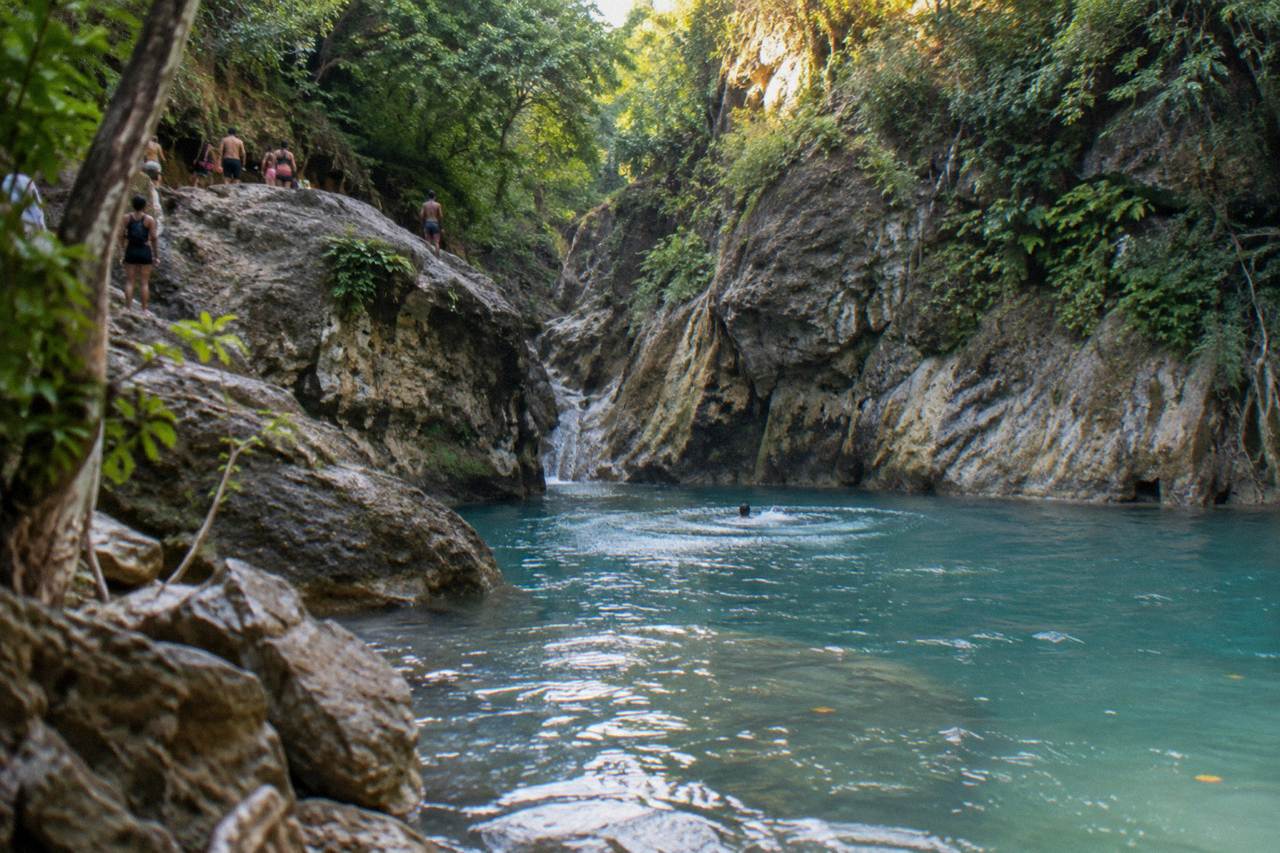
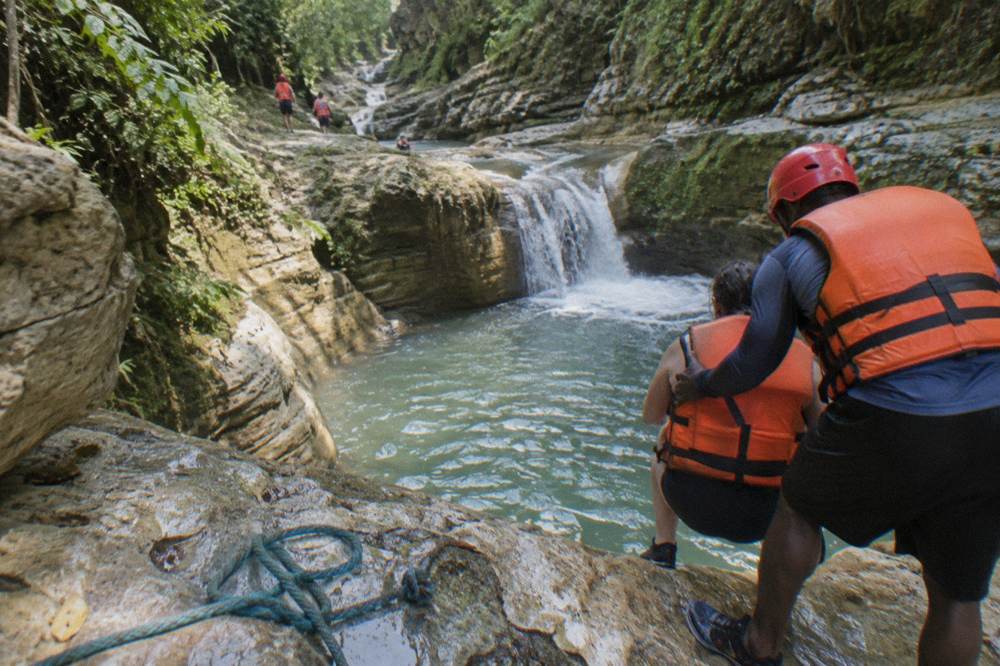
The question comes up constantly, and it deserves a straight answer rather than a sales pitch. The 27 waterfalls of Damajagua, the canyon system near Imbert in Puerto Plata province, is not a swimming attraction in the way a beach or a cenote is. You do not swim laps here. You hike up through forest, then descend through a chain of pools and chutes, sliding and stepping and occasionally jumping, always with a helmet on and a buoyancy aid clipped tight.
That structure is exactly why the answer is a qualified yes. The same sources that describe the park, including the visitor guidance on 27waterfalls.org, are explicit that swimming ability is not indispensable because of the life jacket, while also stating you must be comfortable in water. Both halves of that sentence matter. The jacket keeps you floating; comfort keeps you calm when a pool is deeper than your chest or a current nudges you sideways.
What the jacket and the guides cannot do is make the decision for you. If deep water triggers panic, if you cannot walk thirty to sixty minutes uphill on a forest trail, or if you would freeze when asked to let go of a rock, the day will be long. If you are a weak or non-swimmer who is genuinely relaxed in water and willing to say so out loud at the start, the first circuit is well within reach for many people exactly like you.
If that describes you, these are the three listings this site would put in front of a cautious first-timer, all built around the shorter circuit, all with lunch included.
Why The Life Jacket Does Most Of The Work
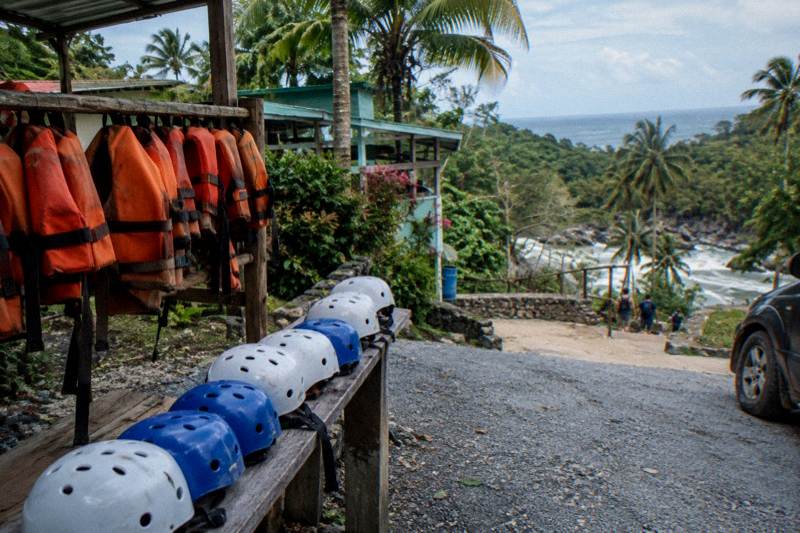
Every visitor wears a helmet and a life jacket, both provided with entry, and both are rules rather than options. The jacket is the reason the park's own guidance says swimming is not indispensable. It keeps you at the surface whether or not you can propel yourself, which converts the canyon from a swimming test into a floating descent with guide supervision at every pool.
The entry system at Damajagua is built around the idea that visitors arrive with wildly different water confidence. Your gate fee, roughly RD$600 for the first 7 falls, about US$11, and cash only, includes a mandatory certified guide, a helmet and a life jacket. You cannot opt out of any of the three. Guides are assigned at a ratio designed so that nobody is alone in the water, and the guides who lead the circuits are local, trained in rescue and first aid, and intimately familiar with every pool, chute and rock in the canyon.
For a non-swimmer, this changes the physics of the day. Unassisted, a deep pool is a hazard. With a properly fitted buoyancy aid, the same pool is simply a place where you float while the guide positions you, tells you where to hold, and pulls you to the next foothold. Slides and jumps, the features people worry about, are optional in a way many first-timers do not realize: lateral ladders and walking bypasses exist, and guides choose the entry point for each feature based on the group in front of them, not a fixed script.
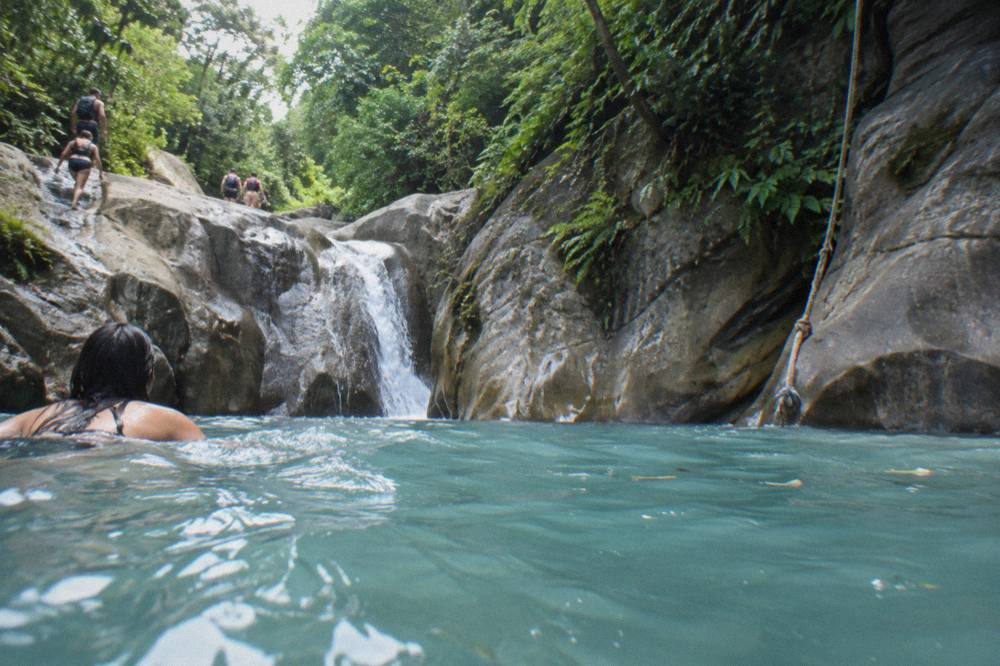
What the jacket does not do is hold your mind together. Panic is the real risk for non-swimmers, not sinking. A person who splashes frantically in a buoyancy aid is harder to help than a relaxed one, which is why every credible source on the park, including Hotel Platino's detailed guide, lands on the same phrase: confident in water. Confidence is not skill. Plenty of people who cannot swim a length of a pool are entirely calm floating in one with a jacket on. That is the profile that does fine here.
The gear rules reinforce this. Closed water shoes or old trainers with grip are required, flip-flops and sandals are banned in the water, and loose valuables and unstrapped sunglasses are best left in a locker at the visitor centre, where lockers and a place to eat exist. Rentals for shoes and lockers cost a few dollars extra, paid on arrival. None of that is swimming-related, which is the point: the park has engineered out most of the variables that hurt people, and the ones that remain are about your own calm and fitness.
What A Non-Swimmer Can Actually Expect In The Water
Expect a hike up, then a slow floating descent through pools, not a swim. The walk up through forest takes 30 to 60 minutes, then you work down through the canyon with the group, and the whole 7-fall circuit typically runs about 2.5 to 3 hours. Deep pools, cold water and short slides are the reality; so are bypass ladders and guides who position you physically.
Walking through the mechanics removes half the fear, so here is the shape of the day. You arrive at the visitor centre near Imbert, gear up, and walk uphill on a forest trail for 30 to 60 minutes with your group. This is the part nobody warns non-swimmers about, and it is the part that occasionally ends the day early: it is a real hike, humid, uneven underfoot, with no water features to break it up. If your legs can handle that, the water section is, oddly, the easier half for many people.
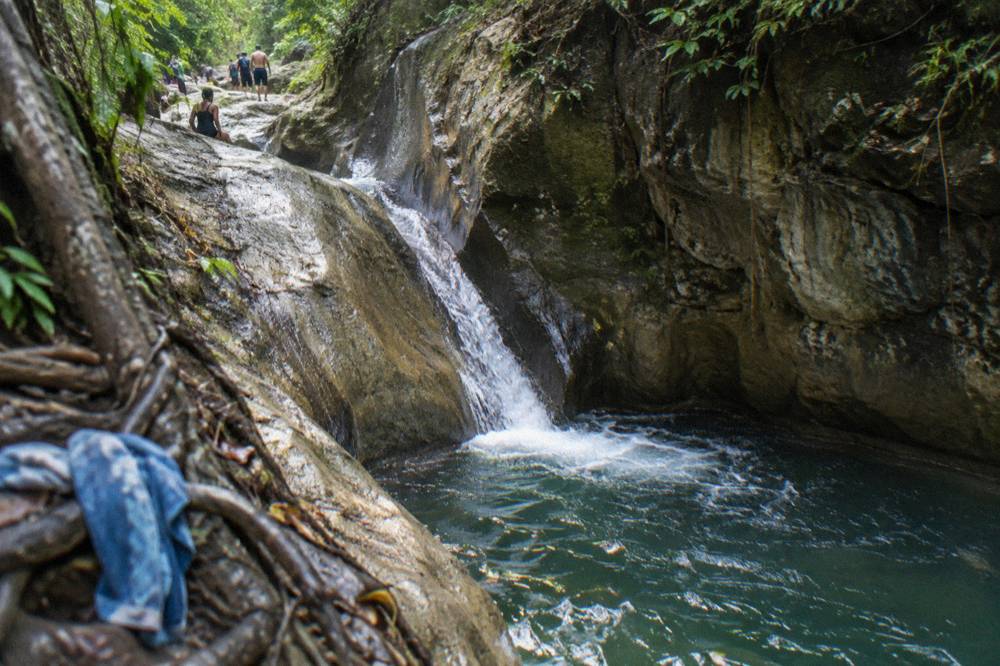
Then you descend. At each fall you either slide down a worn rock chute, step or lower yourself down, or jump from a ledge of varying height into a deep pool, and in every case the guide goes first or catches you below. For a non-swimmer some of the jumps can be skipped by ladder, so ask the guide which ones, and the slide is a controlled push-off into a pool where you bob to the surface in your jacket and get gathered up. Between features you float or wade. There is no distance swimming anywhere in the first circuit and no point where you are asked to cross open water unaided.
The water itself deserves a sentence. It is mountain river water: cool, occasionally cold on entry, and clear when conditions are good. The river dictates everything here. After upstream mountain rain it can rise quickly even when the site itself is sunny, and the park closes upper sections first and shuts the river entirely when it runs brown. Reopening typically comes 12 to 24 hours after rain stops. For you this means one practical thing: a calm, clear day is the day a non-swimmer wants, and booking with free cancellation listed, which most tours on this site carry, protects you if the river turns.
One more mechanic that surprises people: you will be in a group. Tours on the roster run with caps of roughly 10 to 100 guests depending on the listing, plus your guide team. A larger group moves slower and waits more; a smaller cap, like the 11-guest maximum on Waterfalls of Damajagua & Lunch Included, from $60, rated 4.9 from 29 reviews, means more guide attention per person. For a nervous non-swimmer, that number on the listing is worth as much attention as the price.
Which Circuit Should A Non-Swimmer Choose?
The first 7 falls, without hesitation. It is the shortest circuit, the one with the lowest minimum age, 8, the one with the gentler features, and the one almost every organized tour runs. The 12 and 27 circuits are longer, harder and demand more sustained water confidence, with minimum age 12 for the longer circuits and a typical duration of 4 to 5 hours for the full 27.
The park sells three circuits, and the choice is genuinely load-bearing for a non-swimmer. Here is how they compare on the things that matter to you.
| Circuit | Gate fee (about, cash only) | Typical duration | Minimum age | Non-swimmer fit |
|---|---|---|---|---|
| First 7 falls | RD$600, about US$11 | About 2.5 to 3 hours | 8 | The realistic choice; gentlest features, most bypass options |
| 12 falls | RD$900, about US$16 | Between the two | 12 for longer circuits | Only with real water confidence |
| All 27 falls | RD$1,200, about US$21 | Typically 4 to 5 hours | 12 for longer circuits | Not advised; sustained effort and harder features |
The 7-fall circuit is not a diluted version of the experience. It contains the slides, the jumps of varying height, the deep pools and the canyon scenery that people come for, and it is the circuit the overwhelming majority of visitors, including most swimmers, actually do. Tours from every departure point on this site are built around it. The 12 and 27 add more canyon, more climbing between features and more time in the water, which for a non-swimmer stacks fatigue on top of anxiety. Fatigue is the quiet enemy here, which is a strong argument for the shorter circuit and for finishing while you still feel fresh.
If you want extra reassurance in the structure itself, look at listings that describe pace explicitly. One Puerto Plata listing, the Damajagua Waterfalls Tour with Lunch from $65 per person, rated 4.3 from 35 reviews, offers a family-friendly slow-hike option described as suitable for kids, elderly guests and people with mobility or health limitations, alongside an adventurous option. That kind of choice, stated on the listing, is exactly what a non-swimmer should be shopping for.
A private format is the other lever. Private tours on the roster start around $110 per person from Puerto Plata or from $360 per person for an exclusive version out of the cruise ports, and they let the guide set a pace around your comfort rather than around a group. That costs real money. The cheaper structural lever is simply picking a shared listing with a low guest cap, of which there are several in the hotel-pickup group, and the cheapest lever of all is the sentence in the next section, which is free.
How To Tell Your Guide And Operator Before You Book
Say it twice: once in writing when you book, once out loud at the trailhead before the hike. Operators respond to stated limits, and the standing safety advice is unambiguous: tell the guide and ask the operator rather than testing yourself in a canyon. Guides can adjust routes, pair you with themselves, and skip features; they cannot read minds.
The site's own Damajagua safety guide makes the same point in more detail, and it is worth reading before you commit. The single highest-value action available to a non-swimmer costs nothing and takes ten seconds. Before you pay, message the operator through the live listing and ask plainly: I do not swim, I am comfortable floating with a jacket, is the 7-fall circuit realistic for me? Reputable operators answer this question every week. Their answer also tells you something about the operator, and an operator who brushes it off is telling you what the day will feel like.
Then repeat it in person. At the visitor centre, before the hike up, tell your guide directly and specifically. Do not soften it. Say: I cannot swim, here is where I get nervous, I want to skip jumps. The guide will fit your jacket tighter, position you in the middle of the group rather than the back, assign themselves to you at the deeper pools, and point you at the ladders. This is normal work for them, not an imposition; the park's whole model, a community guides' association co-managing the monument with the Ministry of Environment, is built on local guides who grew up on this river and read visitors for a living.
The operator question covers the limits the canyon cannot flex. Health guidance for the park lists heart problems, recent surgery or back injury, pregnancy and severe reduced mobility as reasons not to go, and wheelchairs cannot use the trail. Ask your operator about height and weight limits too, since the park publishes none and the operator's equipment and experience are the real reference. The age rules are more forgiving: 8 is the minimum for the first 7 falls, 12 for the longer circuits, per the rules described on the saltos del Damajagua site and corroborated by visitor guides, but ages are the operator's rule to confirm, not a promise.
Booking shape matters here as well. Most listings on this site carry free cancellation, which for a weather-dependent river canyon is not a perk but a planning tool: river conditions can close the upper falls after rain, and the flexibility to move your day is worth having. The featured listing for this article, Adventure in 7 Damajagua Waterfalls with Lunch, from $60 per person with free cancellation listed, includes complete safety equipment, park entrance fees and lunch, and as a newer listing it has only seven reviews so far, too few for a star rating to mean much yet.
What Else Decides Whether Your Day Works
Fitness, footwear, weather and honesty, roughly in that order. The 30 to 60 minute uphill hike filters more people than the water does, closed shoes are mandatory, and the river's condition on the day overrides everything. Dry season, December to April, is the statistically calmer window, with the highest tropical-storm risk in September and October.
Swimming ability is only one input in whether a Damajagua day succeeds, and for many cautious visitors it is not even the deciding one. The hike is. Thirty to sixty minutes up a forest trail in tropical humidity, in water shoes, before any fun happens, is the part that turns people back. If you can walk an hour on uneven ground, you have cleared the barrier that actually stops guests. Training for the trip is straightforward: walk, on hills, in the weeks before.
Then the small mechanics. Bring closed water shoes or grippy old trainers; rentals exist on site for a few dollars but supply is not a promise. Bring a towel and dry clothes for after. Leave real valuables in a locker at the visitor centre, lockers cost a few dollars extra, and leave anything not strapped on securely at the hotel, because camera and phone losses in the canyon are common enough that every guide repeats it. A waterproof pouch for a phone is the standard compromise. Tipping the guides is customary; amounts vary, so treat it as a cash line in your day budget rather than a fixed figure.
| Factor | What it means for a non-swimmer | What you control |
|---|---|---|
| The uphill hike | 30 to 60 minutes on uneven forest trail before the water section | Train legs beforehand; choose the 7-fall circuit |
| Water confidence | Calm floating matters more than stroke ability | Tell the guide; skip jumps; use ladders |
| River condition | Upper falls close first after rain; brown water closes the river | Visit in dry season; keep free cancellation |
| Group size | Smaller caps mean more guide attention | Check the guest cap on the listing before booking |
| Timing | Park opens about 8:30 AM; arriving before 9 AM beats cruise crowds | Book the earliest departure offered |
Timing and season are the quiet advantages. The park is open daily, about 8:30 AM to 4:00 PM, and the standing advice is to arrive before 9 AM, because mid-morning is when the cruise-vehicle waves from Amber Cove and Taino Bay land, about 20 and 30 minutes away respectively. Dry season, December to April, offers the clearest water and lowest closure risk; the wet season from May to November brings more flow, greener scenery, higher closure risk and thin crowds, with September and October the roughest window. If your dates are flexible and your swimming is not, dry season mornings are your configuration, a point developed in detail in the site's best time to visit Damajagua guide.
And if the honest conclusion is that the canyon is not for you this trip, the region around it is not short of alternatives. The 27 waterfalls anchor a full day out of Puerto Plata, but the province also carries Fort San Felipe, the malecón, and beach towns up the coast, themes this site covers in its Puerto Plata cruise port things-to-do guide. Choosing an easier day is not a failed Damajagua decision. The best version of this trip, whether you swim or not, is the one where the answer to the guide's question at the trailhead is the truth.
Before the closing questions, a last look at the two listings that fit a cautious first-timer best: the well-reviewed Dominican-lunch tour from $50 with 4.6 across 31 reviews, and a full 7-hour day from Puerto Plata at $76.93 with hotel pickup, rated 4.7 across 136 reviews, for anyone who prefers to take the river at an unhurried pace.
Common Questions About Non-Swimmers At The Damajagua Waterfalls
Can Non-Swimmers Do The Damajagua Waterfalls?
Yes, many do, with qualifications. A life jacket is mandatory and included in entry, certified guides accompany every group, and the first 7 falls is the realistic circuit. You must still be comfortable in water and able to walk 30 to 60 minutes uphill. Tell your guide and ask your operator before you book.
Do You Have To Jump Or Slide At Every Waterfall?
No. Guides choose the entry point based on the group, and lateral ladders let you bypass some of the jumps and slides, not all of them. A non-swimmer can still get down the first 7 falls by taking the bypasses where they exist. Say so at the trailhead and ask which drops are optional.
Is The Life Jacket Really Included, Or Is It A Rental?
It is included. The gate price, roughly RD$600 for the 7 falls, about US$11, cash only, covers the mandatory certified guide, the helmet and the life jacket. Shoes and lockers are the extras that cost a few dollars on arrival.
Which Circuit Should A Non-Swimmer Book?
The first 7 falls. It is the shortest, gentlest circuit, typically about 2.5 to 3 hours, with a minimum age of 8. The 12 and 27 circuits demand sustained water confidence and fitness; the full 27 typically runs 4 to 5 hours and is not advised for non-swimmers.
What If It Rains Before My Visit?
The river decides. After upstream rain the park closes upper sections first and shuts the river entirely when it runs brown, typically reopening 12 to 24 hours after rain stops. Book a listing with free cancellation and check conditions on the morning.