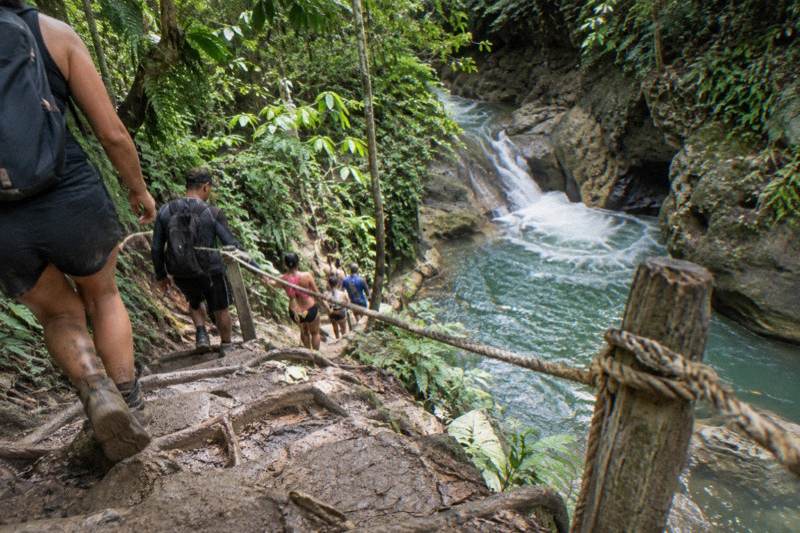
Do The Damajagua Waterfalls Close When It Rains?
Rain can close the Damajagua waterfalls, but not every shower does. How the closure protocol works, how fast the river reacts, what happens to your booking, and when to go instead.
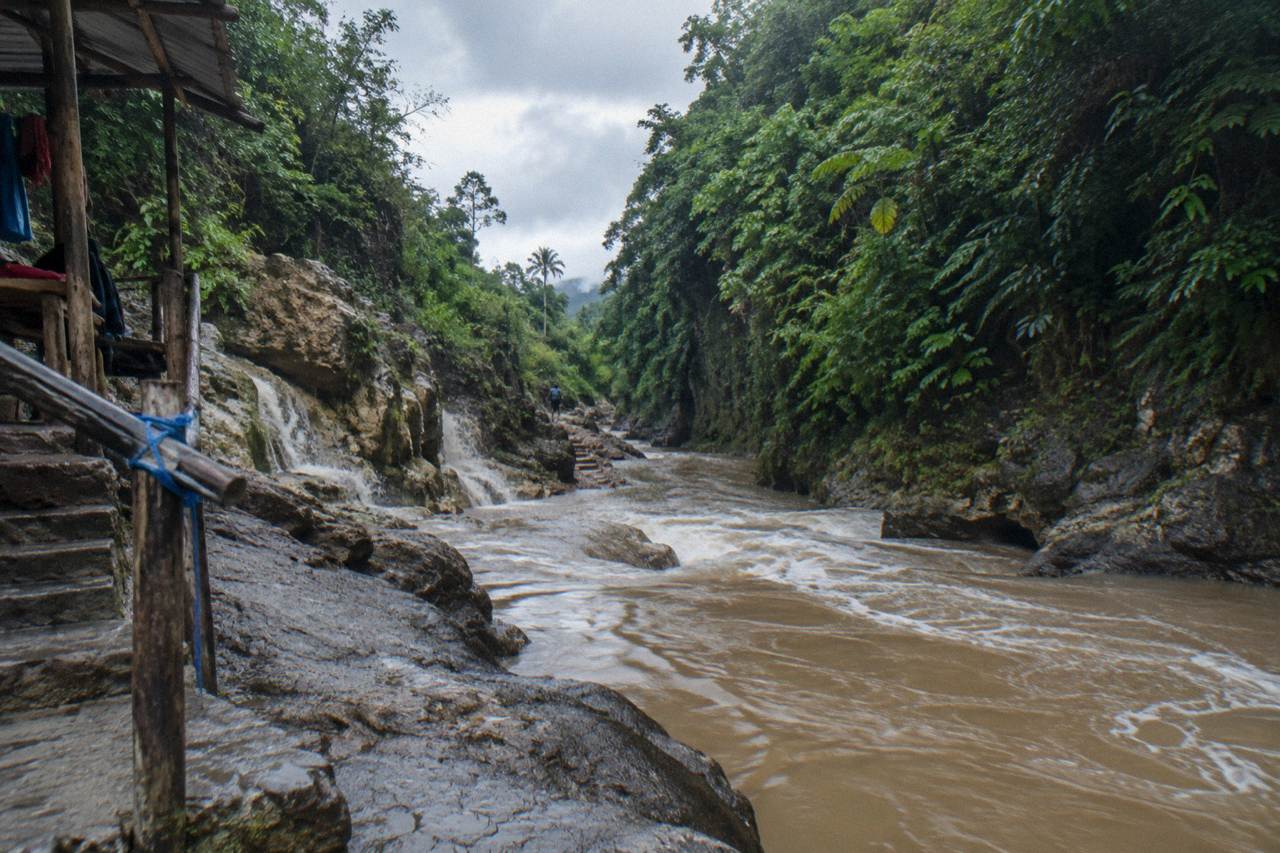
Yes, sometimes, but not for the reason most visitors expect. The rangers at the 27 Waterfalls of Damajagua do not watch the clouds over the park; they watch the river. A grey, drizzly morning can still mean a full, open canyon with lighter crowds, while a brilliantly sunny afternoon can mean a total closure, because rain that fell hours earlier in the mountains upstream is only then arriving as a rising brown current. The decision is made on the day, on the water.
That single distinction shapes almost every practical question a weather-worried visitor has. Does your tour still run? Do you get your money back? Should you book ahead or wait for the forecast? This article walks through how the closure system works, what the wet and dry seasons actually mean for your plans, and which booking choices protect you if the river decides to shut on your day.
They close when rain pushes the river past safe levels, not merely because rain is falling. The park shuts the upper falls first, restricts visitors to the lower circuits as flow rises, and closes the river entirely when the water runs brown and fast. Independent sources describe reopening 12 to 24 hours after rain stops. Dry season runs December to April; wet season runs May to November.
The detail that surprises people is the speed. The Damajagua river drains a mountain catchment, and visitor guides describe water that can rise significantly in under thirty minutes even while the sun shines at the entrance. The park's response is layered rather than binary. Rangers read the water colour and the flow, keep watch posts upstream, and pull the plug in stages: first the long 27 circuit, then the 12, until only the first seven falls remain open, and finally nothing at all.
Because the system reacts rather than predicts, a same-day answer is the only honest one. If you are standing in Puerto Plata wondering about conditions at the canyon, the practical move is to message your tour operator that morning rather than trusting a forecast icon. Operators run the route daily, they know what the river did overnight, and they would rather tell you early than drive you out to a closed gate.
If your dates are flexible at all, the seasonal picture matters too. The dry months from December to April bring clearer, turquoise water and the biggest cruise-driven crowds; the wet months from May to November bring stronger flow, greener jungle and a real chance of a restricted or closed canyon, with September and October carrying the highest tropical-storm risk in the region. Neither season is a guarantee in either direction, they tilt the odds.
For travellers who want the canyon with a booking that bends with the weather, these two listings are worth comparing.
How The Closure Protocol Actually Works
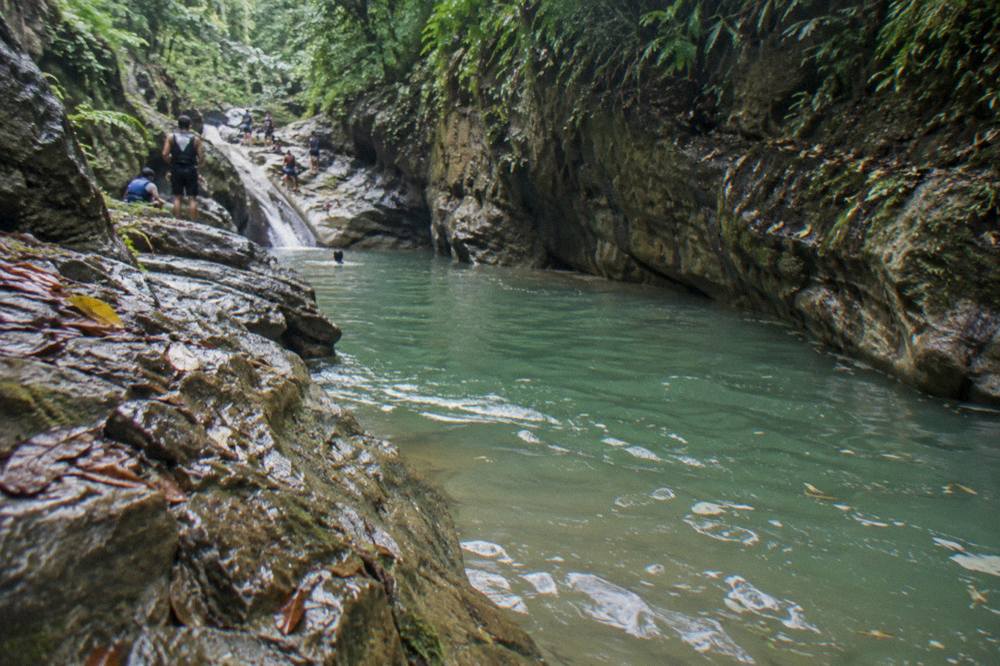
The rangers judge three things on the day: water colour, flow level and which pools are usable. Clear turquoise water means all three circuits open; a green tint trims the canyon to the first 7 or 12 falls; turbid water keeps only the first 7; brown, muddy water closes everything. Rangers decide on site and their call is final.
The staged logic is worth understanding because it explains why a "closure" is often only a partial one. The upper falls sit deeper in the canyon, take longer to evacuate, and hold the biggest jumps and slides, so they are the first thing switched off when the river gains force. A family booked on the first seven falls can complete a perfectly good morning while a group of fitness hikers headed for the full 27 is turned around or rerouted. Two parties can leave the same gate on the same day with completely different stories.
The river's speed is the reason the system exists at all. Rain in the Cordillera Septentrional upstream arrives at Damajagua as a pulse, and the canyon's geology funnels it. Independent guides describe flash rises that transform calm green pools into a churning brown corridor between one group and the next, which is why guides are mandatory, why nobody is ever alone in the water, and why the watch posts upstream matter as much as anything happening at the visitor centre.
Reopening follows the same logic in reverse. Sources aligned with the park's operators describe the river typically settling back within 12 to 24 hours after rain stops, as the level drops and clarity returns. That is fast by river standards, and it is why a rainy Tuesday rarely ruins a Thursday visit, but it is also why a same-morning storm can end a same-morning tour.
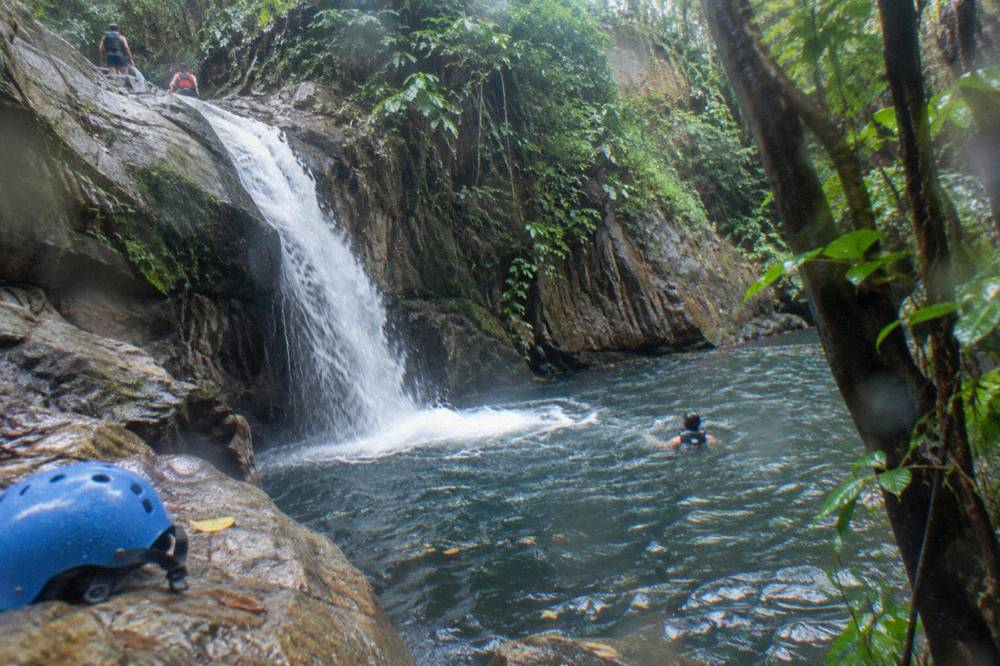
One planning note that follows from all this: guides carry rescue training and first aid, and the helmet and life jacket that come with every entry, tour or independent, are not decoration. The protocol exists because the river is genuinely powerful in flow, and the same power is what makes the place worth visiting on a clear day. If you are weighing whether the activity suits you at all, the Damajagua waterfalls safety and deaths guide covers the risk picture in more depth.
Weather-worried about losing the fee?
Can you cancel if the forecast turns bad? Most listings on this site offer free cancellation, so a storm on the horizon rarely means losing your money.
Does Light Rain Stop The Tour?
Usually no. Light drizzle with the river at normal levels is not a closure trigger, and operators describe those days as quieter, greener and with more water in the falls. The risks are slippery paths and the chance of a mid-tour restriction if the level rises, so the tour can be cut short even when it starts.
This is the part of the answer that genuinely helps a visitor decide. A drizzly morning in an otherwise dry week is, by most accounts, one of the better times to be in the canyon: cruise groups thin out, the jungle colour deepens, and the falls themselves carry more volume than in the driest weeks of March. Visitors who go on grey days often get more of the place to themselves.
The honest caveat is the mid-tour change. Because the closure call is made on the water and the water can move fast, a tour that starts under drizzle can be trimmed partway through, descending the first falls and exiting before the upper section. Guides handle this routinely, and nobody is left in the canyon when a restriction lands, but if your heart is set on the full 27 circuit, a rising forecast is the wrong morning to attempt it.
The practical takeaway for bookers: choose a listing with free cancellation, keep an eye on the sky the evening before, and message the operator in the morning rather than cancelling on a forecast alone. The Waterfalls of Damajagua Tour is a useful example of the pattern that suits this kind of day, from $50 per person for about 3 hours with hotel pickup and entry tickets included, free cancellation listed, and a small pool of 6 reviews so far, too few for a reliable rating. Lockers and water-shoe rental cost a few dollars extra, paid on arrival. Its listing notes shoes and food are not included, which is normal for the budget-priced options.
Beyond tours, the full gate price picture is covered in the Damajagua waterfalls tickets and entrance fee guide: roughly US$11 to US$21 per person depending on circuit, cash only at the gate, with helmet, life jacket and the mandatory guide included.
What Happens To Your Booking If The Falls Close?
If the operator cancels for weather you are typically refunded or rebooked, and most listings on this site carry free cancellation so you can withdraw yourself before the cut-off. If the park closes mid-tour, guides exit the canyon early and operators decide on partial remedies case by case. Read the listing's cancellation terms before booking, not after.
There are three distinct scenarios and they are treated differently. The first is the cleanest: you cancel in advance under a free-cancellation policy, usually because the forecast has turned and you would rather not gamble the day. Nothing is owed, nothing is lost. The second is the operator cancelling, which happens when the river is shut before departure; the standard outcome across the industry is a refund or an offered alternative, and some cruise-focused listings spell out a full refund if the ship cannot call at all. More of these guides are collected on 27 Waterfalls Dominican Republic.
The third is the awkward one: the canyon closes while you are in it. This is rare, because the rangers restrict from the top down well before a full closure, but it happens. Your group exits at the nearest safe point, and the question of a partial refund or a return trip sits with the operator rather than the park. The gate fee itself is a park matter, so ask your operator how a mid-visit closure is handled.
A worked comparison of three real listings shows how differently the protection can sit:
| Listing | Price from | Cancellation listed | What the listing says about risk |
|---|---|---|---|
| Waterfalls of Damajagua Tour | $50 per person | Free cancellation | Pickup and entry tickets included; 6 reviews so far |
| Damajagua Waterfalls for Cruise Ship Passengers | $89 per person | Free cancellation | Buffet lunch and port pickup listed; 4.8 from 376 reviews |
| 27 Waterfalls With Locals Expert Guides | $75 per person | No free cancellation | Entry fees and lunch included; 3.8 from 16 reviews |
That last row is the one to notice. Most tours on this roster list free cancellation, but a few do not, and a no-cancellation listing paired with a stormy-season booking is a genuine gamble. Checking that single line before you pay costs ten seconds and can save the whole fare. The Damajagua Waterfalls for Cruise Ship Passengers listing, 4.8 from 376 reviews and from $89 per person with buffet lunch, port pickup and helmet use included, is the sort of well-reviewed, flexible option cruise passengers lean on when the sky looks doubtful.
Cruise passengers face one extra layer: the ship's own all-aboard time. A delayed canyon exit eats a buffer that matters more than any refund, which is why shore excursion operators build slack into their schedules and why you should tell the guide your sail-away time at the start. The Damajagua waterfalls cruise day timing guide breaks down that arithmetic.
When Is The Rainy Season At Damajagua?
The wet season runs May to November, with September and October carrying the highest tropical-storm risk; the dry season runs December to April. Dry months bring clearer water and bigger crowds, wet months bring stronger flow, greener scenery and a higher chance of restrictions or closure. The Atlantic hurricane season runs June 1 to November 30.
None of that makes a wet-season visit a bad idea. It makes it a different bet. A July morning with scattered showers can deliver a superb canyon run with thinner crowds than February, and the falls are at their most photogenic when they carry real volume. The trade is variance: the odds of a same-day closure or a trimmed circuit are simply higher from May through November, and highest of all in the two peak storm months.
The dry season flips the equation. From December to April the river runs clearer and calmer, the turquoise water the canyon is famous for is at its most reliable, and the main constraint is not weather but people: this is cruise season on the north coast, and the mid-morning window at the park fills with groups from Amber Cove and Taino Bay. Arriving before 9 AM is the standard advice in every serious guide to the place, and it applies doubly in the dry months.
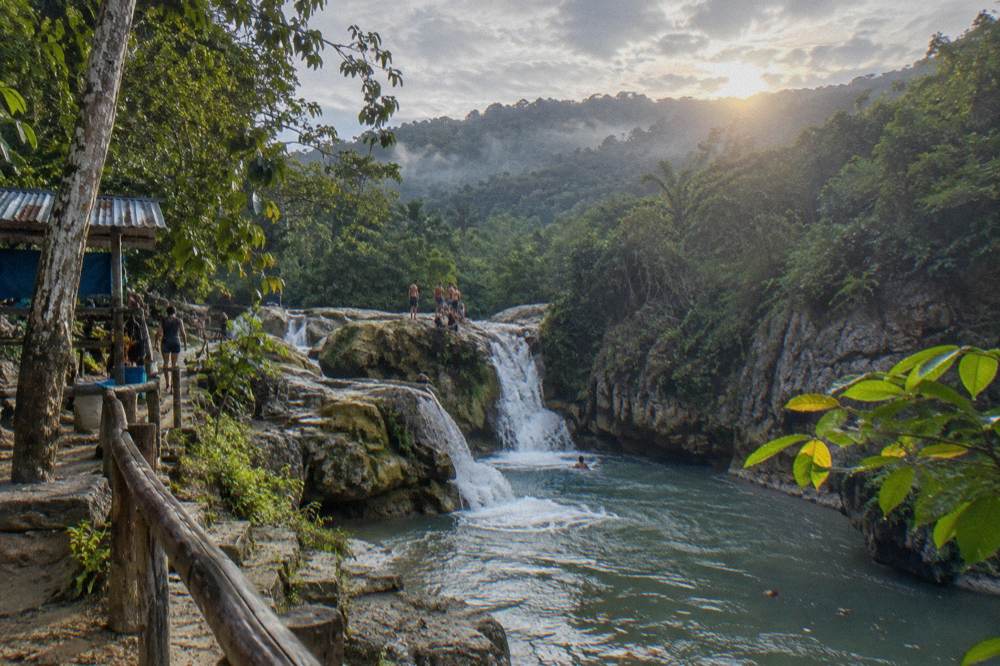
For readers planning further out, the seasonal logic, month-by-month trade-offs and crowd patterns are laid out in the best time to visit Damajagua waterfalls guide. For the regional storm backdrop, the National Hurricane Center's climatological season dates are the primary reference, and the portal page on rain and river flow is the most detailed public description of the closure protocol; the community-run park itself is co-managed by the local guides' association with the Ministry of Environment, and no tour operator owns or speaks for it.
Should You Book Ahead Or Wait For The Forecast?
Book ahead, but book flexible. Same-day slots at Damajagua fill in cruise season, and the listings that suit weather-worried travellers are exactly the ones with free cancellation and a clear refund policy. Watch the forecast from 48 hours out, message the operator the morning of, and cancel before the cut-off if the river looks shut.
Waiting costs more than it saves. The canyon has a physical capacity, the cruise ports of Amber Cove and Taino Bay have been running more than 35 calls in a busy month, and a large share of those passengers arrive mid-morning with pre-booked groups. A walk-up visitor in high season meets the cruise groups at the gate, and the alternative, driving out independently to hire a guide at the gate, only works if you also solve transport, timing and cash, since the gate takes pesos or dollars only, no cards.
The flexible-booking pattern solves the forecast problem cleanly. Reserve a free-cancellation listing as soon as your dates firm up, which locks the seat, then treat the forecast window from two days out as a decision point rather than a source of anxiety. If a big rain event is sitting on your date, cancel and rebook the next day; if the picture is mixed drizzle, go, because drizzle plus normal river levels is a green light with better photos.
Two more listings round out the flexible picture. The 7 Damajagua Waterfalls safari from Taino Bay and Amber Cove, from $85 per person for 4 hours with lunch, transport, tickets and free cancellation listed, is built for port days with weather doubt. And the Combo Damajagua and zipline with lunch, from $130.50 per person for 5 hours 30 minutes with entry, safety gear and an authentic Dominican lunch included, suits visitors who want the day to survive a partial closure, since a river restriction still leaves the full zip line circuit as a dry-land consolation. Both carry small review pools so far, so judge them on the itinerary and the terms rather than a star rating.
Is Damajagua Waterfalls Open Today?
There is no live public status feed, so the only reliable answer comes from a human: message your tour operator that morning, or call the park visitor centre directly. Rangers make the open, restricted or closed call on the water that day, so any answer published yesterday, including this one, is already out of date by the time you read it.
That said, you can narrow it yourself in two minutes. Look at the last 24 hours of rain across the region, not just over the park: if a significant system has passed through, assume the river may still be settling and that reopening typically lands 12 to 24 hours after rain stops. Check whether the rain has genuinely ended or is still sitting on the mountains upstream. Then ask the operator, who drove the road that morning and knows what colour the water is.
The one outcome you should never plan around is persistence. The park closes upper falls first and shuts the river entirely when it runs brown, and it reopens on the river's schedule, not on anyone's booking. Travellers who accept that, book flexible tours, and hold a loose plan for the afternoon are the ones whose Puerto Plata day survives a downpour; the ones who gamble a no-cancellation listing against a September forecast usually end up writing the one-star review.
Common Questions About Rain At Damajagua Waterfalls
Do The Damajagua Waterfalls Close When It Rains?
Sometimes, but not automatically. Light rain with the river at normal levels usually leaves the canyon open and even improves it, while heavy upstream rain can force a staged closure ending in a full shutdown when the water runs brown. Rangers decide on the day based on water colour and flow, and the river typically reopens 12 to 24 hours after rain stops.
Will I Get A Refund If The Falls Close On My Tour Day?
It depends on who cancels. If you cancel in advance under a free-cancellation policy, you pay nothing. If the operator cancels for weather, the standard outcome is a refund or a rebooking. Most listings on this site offer free cancellation, but a few do not, so read that line before you pay rather than after.
Does Light Drizzle Cancel The Tour?
Almost never. Drizzle with normal river levels is not a closure trigger, and those days are often quieter, greener and carry more water in the falls. The real risk with drizzle is a mid-tour restriction if the river rises, in which case guides exit the canyon at the nearest safe point.
Which Months Have The Highest Closure Risk?
September and October, inside the May to November wet season and the June 1 to November 30 Atlantic hurricane season. The dry season from December to April brings the clearest water and the fewest closures, at the price of the biggest cruise-season crowds.
How Can I Find Out If Damajagua Is Open Today?
There is no live public status feed. Message your tour operator that morning or contact the park visitor centre directly; rangers make the open, restricted or closed call on the water that day, so yesterday's answer is already out of date.
Does The Gate Refund Entry If The Park Closes Mid-Visit?
The gate fee is a park matter and access is the product, so weather-dependent refunds sit with the operator rather than the park. This is one more reason to book a listing with free cancellation and clear terms instead of arriving on a tight, non-refundable plan.