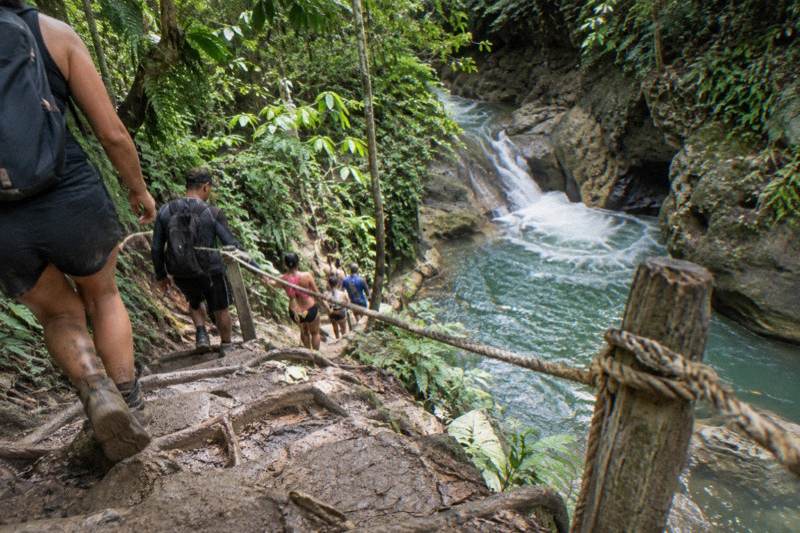
Dollars Or Pesos At Damajagua: What To Carry And What To Tip
Cash only at the Damajagua gate: what the entry costs in pesos and dollars, what tours already cover, what you pay on site, and how tipping the guides works.
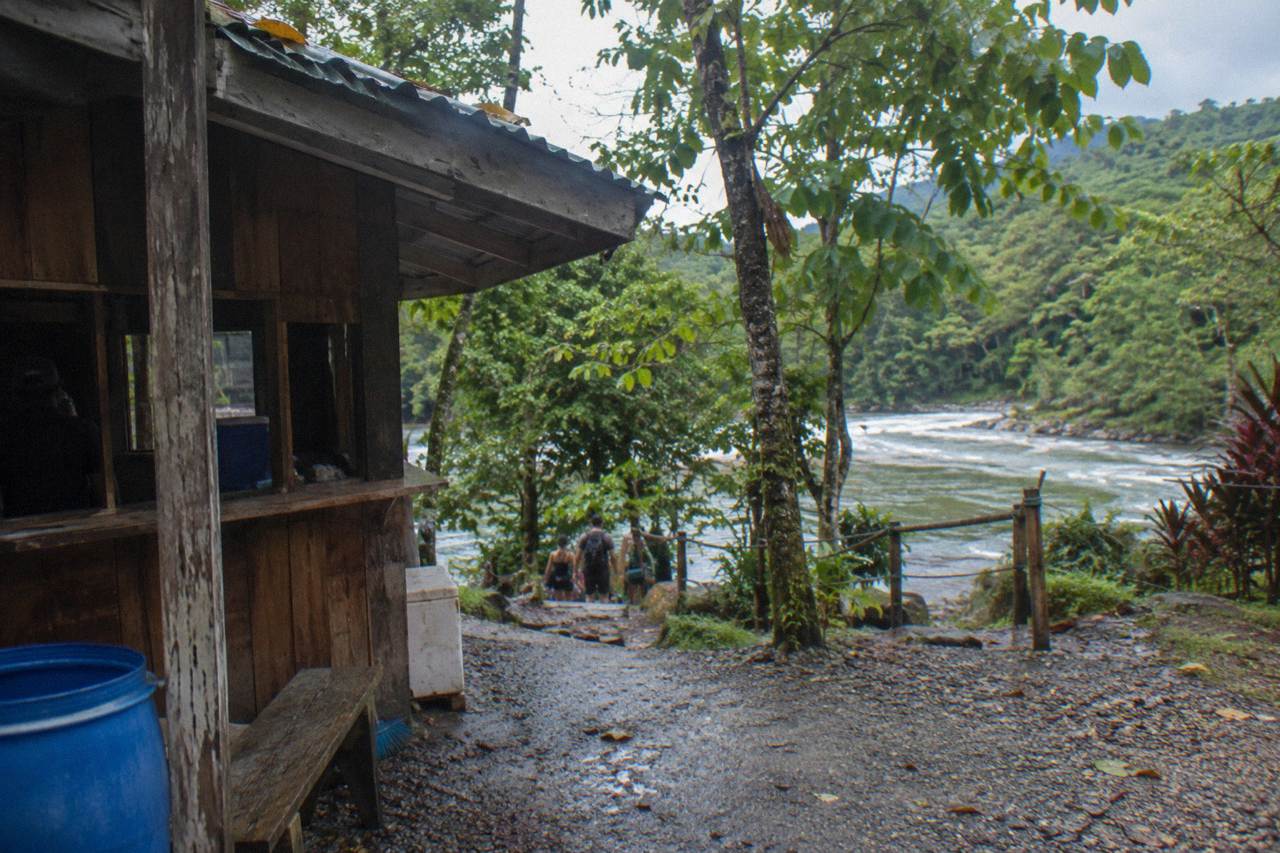
The ticket booth at the 27 Waterfalls of Damajagua does not take cards. That single fact shapes the whole money question for this trip, because the booth is also where you pay if you arrive independently, and it sits on a road through the hills above Imbert, so bring the cash you need with you. The gate takes pesos or US dollars, and everything written about the entry price is approximate, so the honest answer starts with what to carry rather than a precise bill.
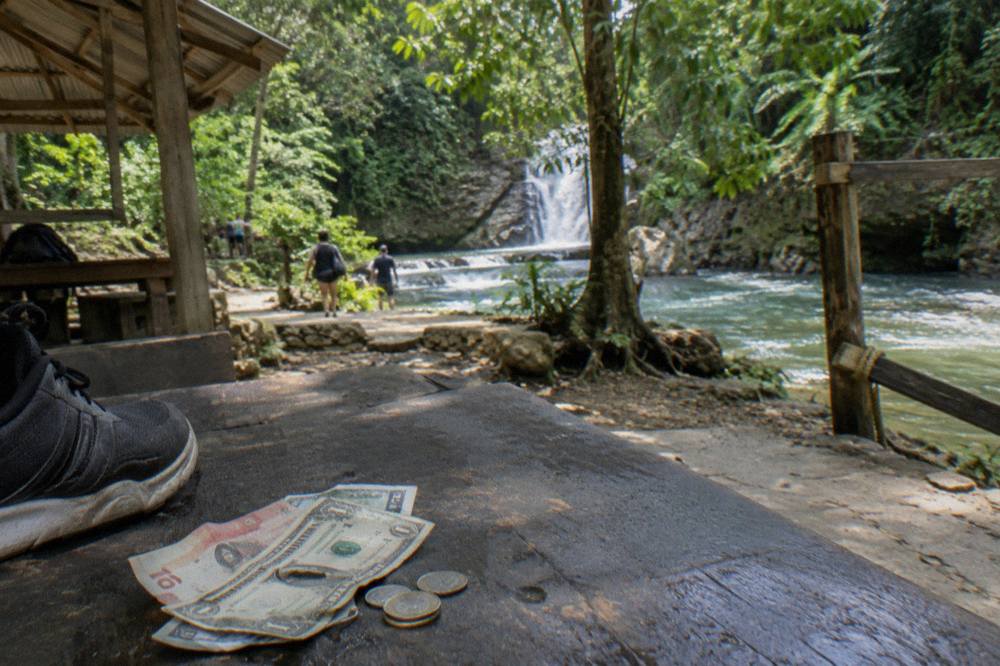
The practical breakdown is simple. If you arrive on an organized tour that lists entry admission as included, you may need almost no cash for the gate at all, only a little for extras on site and a tip for the guides. If you arrive independently, you pay at the booth, in cash, roughly RD$600 for the 7-fall circuit, RD$900 for the 12, or RD$1,200 for all 27, which works out to about US$11 to US$21 depending on the circuit. Both currencies work. Large US bills are harder to pass than small ones, so whatever you carry should be in modest denominations.
Carry cash, not cards: pesos for the smoothest transactions, small US bills as a workable backup, and a separate little stack for tipping the guides, because the gate accepts both currencies, the on-site extras are cash too, and tipping the canyon guides is a customary part of the day rather than an obligation with a fixed price. Nobody at the waterfalls needs to see a credit card, and nobody there will take one. A mix works better than a single currency, because tips and small purchases move fastest in local notes.
Why pesos edge out dollars for this particular day comes down to change-making. The entry gate takes US dollars as well as pesos, cash only either way, so paying in US bills at the booth is fine. The friction sits elsewhere. Drinks, snacks, a locker, a pair of rented water shoes: these smaller transactions around the visitor centre run more smoothly in pesos, because the people running them make change faster and quote prices without a mental conversion. If your base is a cruise ship or an all-inclusive resort, you may have had no reason to hold pesos at all until now, and that is fine: dollars work everywhere at the waterfalls, they just work a little more slowly at the low end.
Denominations matter more than currency. A folded large US note or a fresh high-value peso bill is close to useless at a rural ticket booth that has to make change all morning. Tens and twenties in dollars, or low-value peso notes, are the working sizes. On busy cruise days the same booth and the vendors near the entrance handle a steady stream of visitors, so small notes matter more than which currency you carry. Plan for the day as a series of small payments and carry accordingly.
One more thing worth knowing before the money detail: the park is not a private attraction. It is a protected natural monument, declared in 2004, run under a co-management arrangement between the Ministry of Environment and the local community guides' association from the villages around Imbert. A share of what you pay at the gate funds the community and the canyon's protection. The cash-only booth is partly a reflection of that structure, a rural community operation on a forest road, not a theme park with a payments terminal, as the visitor guide at 27waterfalls.org explains.
What Does The Gate Cost And How Do You Pay It?
Entry at the gate costs about RD$600 for the 7-fall circuit, about RD$900 for the 12-fall circuit, and about RD$1,200 for all 27, roughly US$11 to US$21 total, paid in cash only, in pesos or US dollars. Those figures are the price for foreign visitors, and they are approximate: independent portals publish slightly different dollar conversions, so treat every number here as a round guide rather than a fixed fact. Entry includes the mandatory certified guide, the helmet and the life jacket, which are not optional extras but part of the access itself.
The word "about" is doing real work in that answer. There is no government price page for the monument; the figures above come from visitor portals and operator pages that broadly agree in pesos but diverge slightly once converted to dollars, one publishing roughly US$11, US$16 and US$21 for the three circuits, another giving slightly different dollar figures. The safest mental model is the peso figure, since the gate quotes in pesos first, with a dollar band of roughly US$11 to US$21 across the circuits from the lowest to the highest. Whatever the exact number on the day, it will be cash.
| What you are paying | Rough price | Currency | Notes |
|---|---|---|---|
| 7 waterfalls circuit | About RD$600 | Pesos or US dollars, cash | Includes guide, helmet, life jacket |
| 12 waterfalls circuit | About RD$900 | Pesos or US dollars, cash | Includes guide, helmet, life jacket |
| All 27 waterfalls | About RD$1,200 | Pesos or US dollars, cash | Last entry around 1:30 PM |
| Gate payment methods | Cash only | No cards at the booth | Pesos or US dollars accepted |
The entry fee is where the money question is easiest, because it is a single known payment with a published ballpark. The complication is that the gate price is not the whole cost of an independent day: you still need transport to Imbert, water shoes unless you bring old trainers, a locker if you want one, and lunch if you want more than the buffet option the visitor centre area offers. Organized tours collapse most of that into one price, which is why the two routes through the day, tour or independent, produce two completely different cash plans. The fees breakdown at 27waterfalls.org lists the same approximate gate figures alongside the on-site extras.
If you are building the independent visit yourself, the practical move is pesos in small notes sufficient for the gate, plus a little more for the on-site items. If you are on a tour with entry included, the gate is not your transaction at all, and your cash plan shrinks to extras and tips. The worst-case version is arriving independent with a single large dollar bill and a card, which is the one combination the booth genuinely cannot help you with.
Do Tour Prices Include The Entry Fee?
Some do and some do not, and the listing's inclusions line is the only reliable answer: tour lines that state entry admission or all fees and taxes are included remove the gate from your cash plan entirely, while lines that stay silent on entry leave you paying about RD$600 to RD$1,200 in cash at the booth. The price gap between a $55 tour and a $60 tour often disappears the moment you notice that one covers the gate and the other does not. Reading inclusions before booking is the highest-value two minutes of money planning this trip offers.
The roster of real listings shows the spread clearly. Cruise port excursions from Amber Cove and Taino Bay, a category of 12 tours, mix both patterns: the featured 7 waterfalls excursion from $44 per person lists entry admission to the Damajagua waterfalls as included, while the 7 waterfalls plus typical food tour from $60 per person, carrying 567 reviews at 4.7, does not state gate entry among its inclusions, meaning the booth may still be a cash stop on that version of the day. On the hotel-pickup side, the pattern repeats: a 3-hour tour from $55 lists entry explicitly, a private adventure from $70 lists lunch but says nothing about the gate. Assuming inclusion when the listing is silent is the classic way to arrive at a cash-only booth with no cash.
For readers who want the gate handled, the 27 Waterfalls Tour with Entrance Fee & Lunch names it in the title: from $55 per person, it bundles the entrance, a local guide, lunch, snacks and beverages, with free cancellation listed and gratuities excluded. Transport is the one thing it does not include, so it suits travelers already based in or near Puerto Plata with a ride arranged. Set against it, the cruise-ship-focused 27 Waterfalls Puerto Plata: Special for Cruise Ship People, from $79 per person for a 6 hour 30 minute day, lists national park entrance fees, lunch, safety equipment and round-trip transport all included, which is the everything-handled version for port days.
The comparison matters most at the low end of the price range, where a cheaper listing without entry can cost more in total than a pricier one with it once the roughly US$11 to US$21 gate payment lands in cash. A mid-range example worth weighing: a 7-hour Damajagua adventure from Puerto Plata at $76.93 per person, 4.7 from 136 reviews, lists hotel pickup, lunch and a professional guide but is silent on gate entry, so a reader comparing it against an entry-inclusive listing should mentally add the booth payment to its price. The rule is mechanical and it never fails: check the inclusions line, and if entry is absent, budget the gate in cash.
What Extra Cash Do You Need On Site?
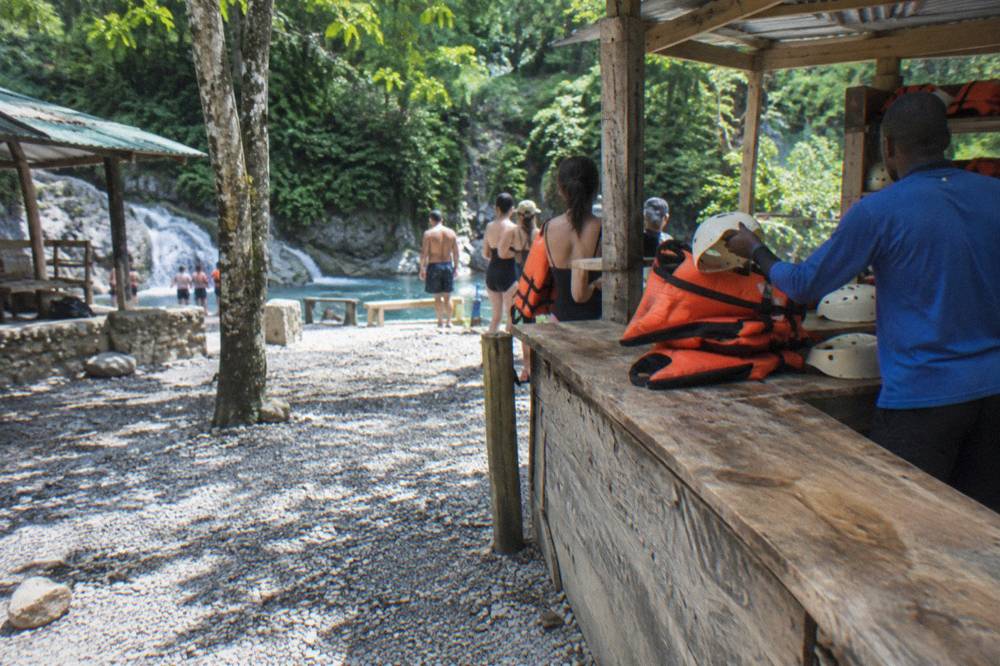
Beyond the gate, plan cash for water shoes if you did not bring old trainers, a locker for dry belongings, drinks or the on-site food option, and a tip for the guides, with lockers and shoe rental costing a few dollars extra, paid on arrival. None of these have prices worth printing as facts, because independent sources conflict on every one of them, but all of them are real cash transactions. The safe planning range is a modest buffer of small notes above whatever the gate or tour already covered.
The shoes question comes first because it is the most common surprise. The rule from the park side is simple: closed water shoes or old trainers with grip, no flip-flops or sandals in the water, and the rental exists on site for visitors who arrive in beach footwear. Rentals and lockers are a few dollars each, cash, at the visitor centre area. If you are packing for the day yourself, an old pair of trainers you do not mind soaking removes the rental transaction entirely, which is why the packing advice on sites like the Damajagua visitor guide keeps repeating it.
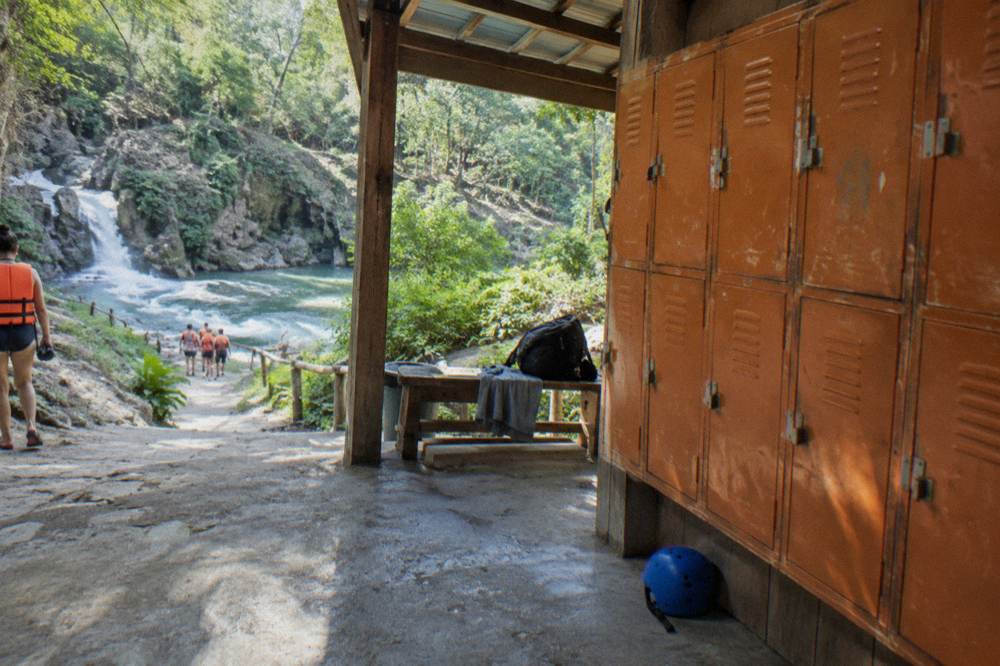
Lockers are the second stop. The visitor centre has lockers and a place to eat, and the standard advice is to leave valuables there rather than carry them into the canyon, where anything not strapped on securely is likely to be lost in the water. Cameras and phones deserve a waterproof pouch if they go in at all. The locker is a cash payment of a few dollars, and it is one more reason the working denomination advice matters: a day of the gate, shoes, locker, a drink and a tip is five small transactions, not one large one.
| On-site item | How it is paid | Planning note |
|---|---|---|
| Water shoe rental | Cash on arrival, a few dollars | Avoid entirely by bringing old trainers |
| Locker | Cash on arrival, a few dollars | Valuables stay dry at the visitor centre |
| Food and drinks | Cash at the visitor centre | Tours with lunch listed skip this |
| Guide tip | Cash at the end of the tour | Customary, amount is your call |
Food deserves a specific note, because the answer depends on your tour line again. Gate entry does not include lunch, but many organized tours do, and the listing will say so under inclusions. If your tour lists lunch, the on-site food spending drops to maybe a drink; if it does not, the visitor centre's buffet option is a cash payment in the same small-notes pattern as everything else here. Independent visitors should treat lunch as part of the day's cash budget from the start rather than a surprise at noon.
How Much Should You Tip The Guides?
Tipping the canyon guides at Damajagua is customary, the amount is entirely your call, and no figure is published by the park or fixed by any operator, so treat it as a personal cash gesture at the end of the tour rather than a line item with a price. The guides are the safety system as much as the hosts: a certified guide is mandatory for every group, visitors are never alone in the water, and the guides are the ones who read the river, choose the entry points and run the jump and slide briefings. What you hand over recognizes that work.
There is no standard tip amount at Damajagua. Figures quoted online conflict with each other: one article suggests a per-person dollar range, another a peso amount for small groups. The custom itself is settled: guides in the community association are tipped by visitors who feel well looked after, and the tip is cash, handed directly, at the end of the canyon descent.
Two practical notes make the tip easier. First, tips in dollars are accepted without friction, so a cruise visitor without pesos can tip in US notes without any awkwardness; the guides handle both currencies daily during the season. Second, if you are on a large shared excursion, the group size works in your favor, small contributions from many passengers add up, so nobody needs to over-give. The tip conversation is also a natural moment to fold in the wider picture at Hotel Platino's Damajagua guide, which describes the community-guides structure behind the association.
Readers prepping the whole day rather than just the wallet may want the wider picture in the complete Damajagua waterfalls guide, and the question of whether the waterfalls close when it rains affects whether the cash leaves your pocket at all on a weather day.
Should You Exchange Money Before The Trip?
Exchange a modest amount into pesos before the waterfalls day, or plan to pay in small US bills throughout, because the booth takes cash only and you should not count on finding a cash machine nearby; the goal is simply to arrive holding clean small notes in one or both currencies rather than to optimize an exchange rate. Chasing a perfect rate on a US$11 to US$21 gate payment saves cents. Arriving with the wrong paper, a card and one large bill, costs the morning.
Where you get the pesos depends on where you are starting. From a Puerto Plata hotel, the city has banks and exchanges, and front desks routinely help; from a cruise ship, the practical answer is usually dollars, since port days leave no time for an exchange errand, and every transaction at the waterfalls genuinely accepts US cash. From an all-inclusive resort, ask at the front desk the night before; resorts in the Puerto Plata area deal with this question daily in the cruise season. The pattern from the money advice across this site's tickets and entrance fee guide holds here too: the amounts are small enough that convenience beats rate on every axis.
A simple worked example shows how little is at stake. A solo independent visitor doing the 7-fall circuit might face the gate at about RD$600, shoes and a locker at a few dollars each, a drink, and a tip. Even at the generous end that is a low-tens-of-dollars day in cash. A family of four on an entry-inclusive tour with lunch listed might need nothing but the tip and a locker. Neither day justifies a bank errand across town; both justify five minutes the night before checking that the notes in your wallet are small, clean and sufficient.
The one genuinely bad plan is the card-only plan, and it is worth being blunt about it because it happens regularly. The booth takes no cards, the rentals take no cards, the food takes no cards, and the nearest cash machine is a drive away in Imbert or back toward Puerto Plata, minutes you do not want to spend against a tour departure time. If you take one sentence from this article, take that one.
The 27 Waterfalls Tour with Entrance Fee & Lunch is the cleanest expression of the low-cash approach on the roster: from $55 per person, entrance and lunch are in the price, and your wallet's only remaining jobs are the extras and the tip. For hotel guests weighing the fuller alternatives, a monkeys-and-city combination from $110 per person, 5.0 from 17 reviews, bundles the canyon with a sanctuary visit, lunch and a city tour, while the entry question on any other listing always comes back to the same inclusions check described above. More on structuring the whole day, including timing against ship departures, sits in the site's 27 Waterfalls Dominican Republic planning coverage.
Cards, Lockers, And Photos: What You Cannot Pay For Late
Everything at the monument is settled in cash on the day, and cards have no role anywhere on site. The photo question is where that matters most, and the listings spell it out: several excursions state that photos and videos are excluded from the price and that you should bring cash to buy your package. So plan for photos as a cash purchase made on the spot. That is the last cash decision of the day and the easiest one to get wrong, because it comes when most visitors think the spending is over.
The photo economy works like this. Local photographers follow the groups through the canyon, shooting every jump and slide, and at the end they sell the package at the visitor centre. If you want the pictures, you pay in cash, on the spot. If you have spent your last note on the tip, the pictures are gone, there is no card reader and no online follow-up sale. Multiple tour listings flag this in their exclusions, which is the operators' way of warning you: the photo purchase is real, cash-only, and final.
Set against that, the things you can safely leave behind or ignore are fewer than you might think. Cards, as established, are dead weight here. Large bills are near-dead weight. Everything else, gate or no gate, shoes, locker, food, tip, photos, is a live cash decision. The visitors who have the smoothest money day are the ones who treated it as one simple list the night before, and the site's rundown of free and cheap things to do in Puerto Plata is the mirror-image read for anyone deciding the waterfalls' cash day is more than they want.
One listing that shifts the cash math in an unusual direction is the 7 waterfalls plus typical food excursion from $60 per person, one of the most reviewed port options at 4.7 from 567 reviews: it includes lunch, water, helmet and life jackets, while its exclusions list names the extras you will pay for in cash, paparazzi photos, gratuities, lockers and water shoes. Read as a money document, that line is almost a packing list of small payments. The alternative pattern, a fuller line such as the Amber Cove-Taino Bay excursion from $60 per person, 4.7 from 394 reviews, covers fees and taxes plus lunch, drinks and tasting sessions, which leaves water shoes, lockers, photos and the tip as your cash items.
Common Questions About Dollars And Pesos At Damajagua
Dollars Or Pesos At Damajagua: What To Carry And What To Tip?
Carry cash in both currencies if you can: pesos in small notes for the smoothest payments, and small US bills as a backup, since the gate and every on-site extra accept dollars. Tip the canyon guides in cash at the end of the tour; the amount is customary rather than fixed.
Can I Pay The Damajagua Entry Fee With A Card?
No. The ticket booth at the 27 Waterfalls is cash only, in pesos or US dollars. There is no card reader and no cash machine at the monument, so arrive with the cash you need.
How Much Is Entry At The Gate?
About RD$600 for the 7-fall circuit, about RD$900 for the 12-fall circuit and about RD$1,200 for all 27, roughly US$11 to US$21 across the range. The figures are approximate, they are for foreign visitors, and they include the mandatory guide, helmet and life jacket.
Does A Tour Price Include The Entry Fee?
Only if the listing says so. Tours that list entry admission or all fees and taxes as included remove the gate from your cash plan; listings that stay silent on entry leave you paying cash at the booth. Always read the inclusions line before comparing prices.
How Much Should I Tip The Guide?
Tipping the guides is customary and the amount is your call. No figure is published by the park, and the numbers quoted on travel blogs trace to single sources that conflict, so plan a modest cash gesture in either currency, handed directly at the end of the tour.
How Much Extra Cash Do I Need On Site?
Plan for water shoe rental if you did not bring old trainers, a locker for dry belongings, food or drinks if your tour does not include lunch, a tip, and a photo package if you want one. Each is a small cash payment, so small clean notes beat one large bill.