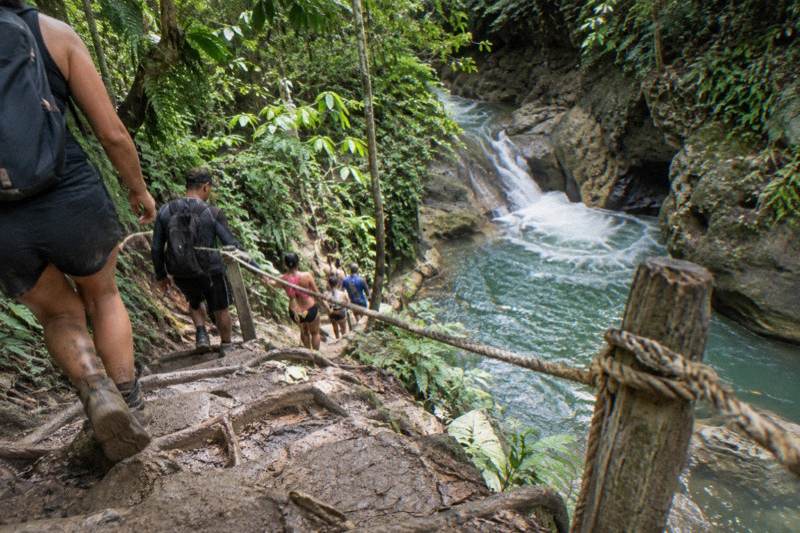
How Do You Pronounce Damajagua?
The correct pronunciation of Damajagua, syllable by syllable, plus where the name comes from and how to use it when booking a tour or asking directions in Puerto Plata.
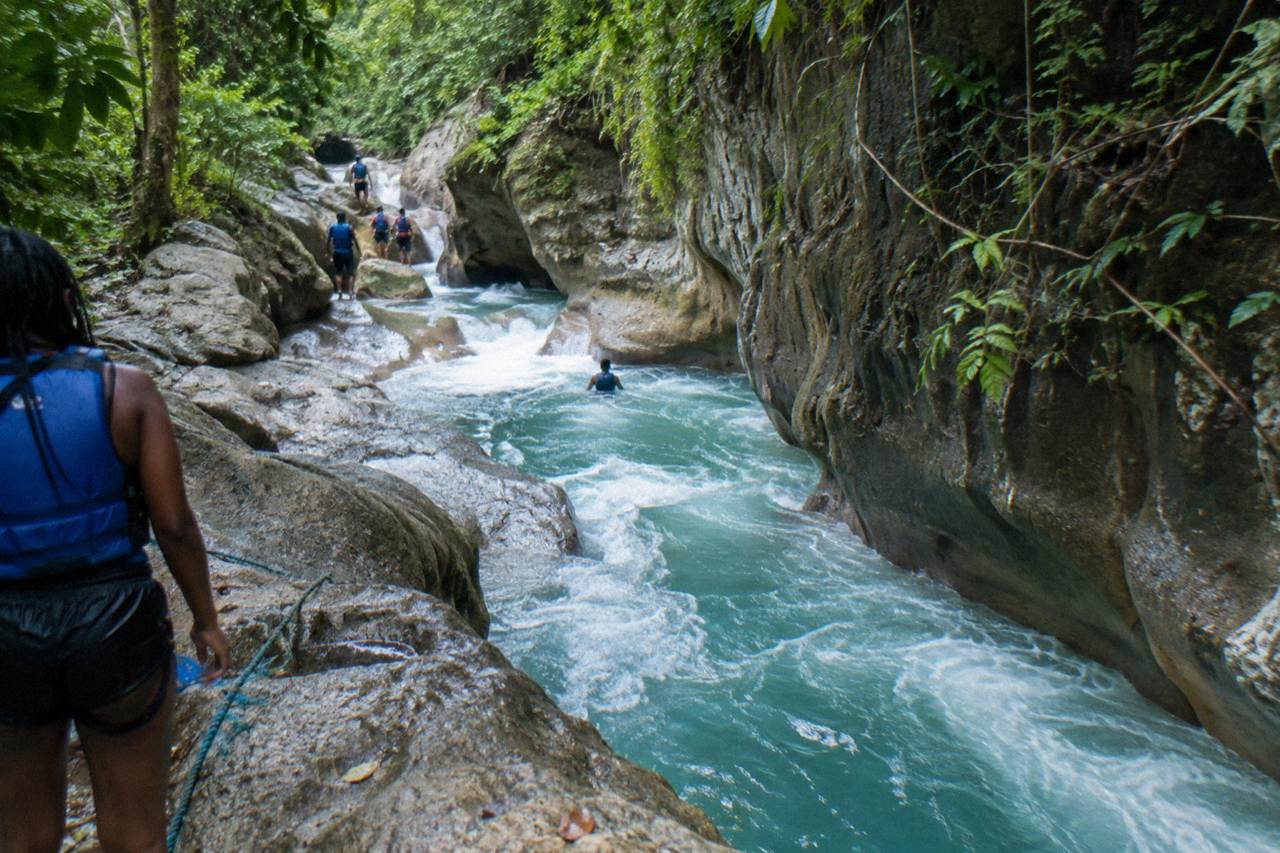
Damajagua is pronounced dah-mah-HAH-gwah, four syllables with the stress on the third one, "HAH". The "j" sounds like an English "h" because the word comes through Spanish, where j is always a breathy h sound. Said at conversational speed it flows together as dah-mah-HAH-gwah, with the final "gwah" soft and quick.
That single word covers a lot of ground in this corner of the Dominican Republic. It names the river that carves the canyon, the municipality of Imbert's most famous attraction, the community that guides visitors through it, and the waterfall system that this whole site, 27 Waterfalls Dominican Republic, is built around. The 27 waterfalls of Damajagua sit on the Damajagua river in the Cordillera Septentrional, and the name appears on road signs, tour listings, bus destinations and half the conversations you will have in Puerto Plata about what to do with a free day.
English speakers stumble on it for predictable reasons. The spelling invites a hard "j", as in "jam", and the ending "-agua" tempts people to say "ah-GWA" with a heavy push on the last vowel. Both instincts are wrong. Spanish pronunciation is more regular than English, which is good news here: once you know that j is an h sound and that the stress falls on the second-to-last syllable, the word locks into place. Locals, guides and drivers will understand a rough attempt, but a clean pronunciation earns a small nod of appreciation, and more practically, it removes any doubt about which destination you mean when there are several waterfall options in the province.
If you are already convinced and just want to get on the water, the tour angle is straightforward. Most visitors reach the canyon on an organized trip rather than driving themselves, and the most reviewed options on the roster include 7 Waterfalls Tour With Lunch in DR, from $60 per person with entry listed as included, and Adventure at the Damajagua Waterfalls From Puerto Plata, from $45 per person with hotel pickup listed. There is also a well-reviewed zipline combo from $94.99 per person for travelers who want the falls plus a canopy run.
Where Does The Name Damajagua Come From?
The name comes from the river and the rural section of Imbert where the falls are located, and it long predates tourism. Local guides began organizing expeditions there in the late 1990s, and the area was declared a Natural Monument in 2004, attaching the river's name to the protected area itself. The word's deeper indigenous roots are debated, so treat any Taíno etymology you read online with caution.
Rivers in the Dominican Republic often give their names to everything around them, and Damajagua followed that pattern. The canyon, the community of guides from the surrounding villages, the entrance road near Imbert, and the monument all carry the river's name. When the Ministry of Environment and the local guides' association set up the co-management arrangement that runs the site today, the name was already fixed in local use, and it transferred naturally to the ticket booth, the circuits and eventually to hundreds of tour listings. Visitors arriving from the cruise ports of Amber Cove and Taino Bay hear it from the moment they board a bus.
The tourism layer is recent; the name is not. Local usage was calling the river Damajagua long before anyone sold a ticket to slide down it. The municipality of Imbert, which holds the falls within its boundaries, remains the administrative home of the whole area. Some writers link the word to Taíno roots, the language of the island's pre-colonial inhabitants, but there is no settled scholarly source for that, and several confident etymologies circulating online contradict each other. The honest version is simpler: it is a river name of long local standing, now also the name of a well-known natural attraction.
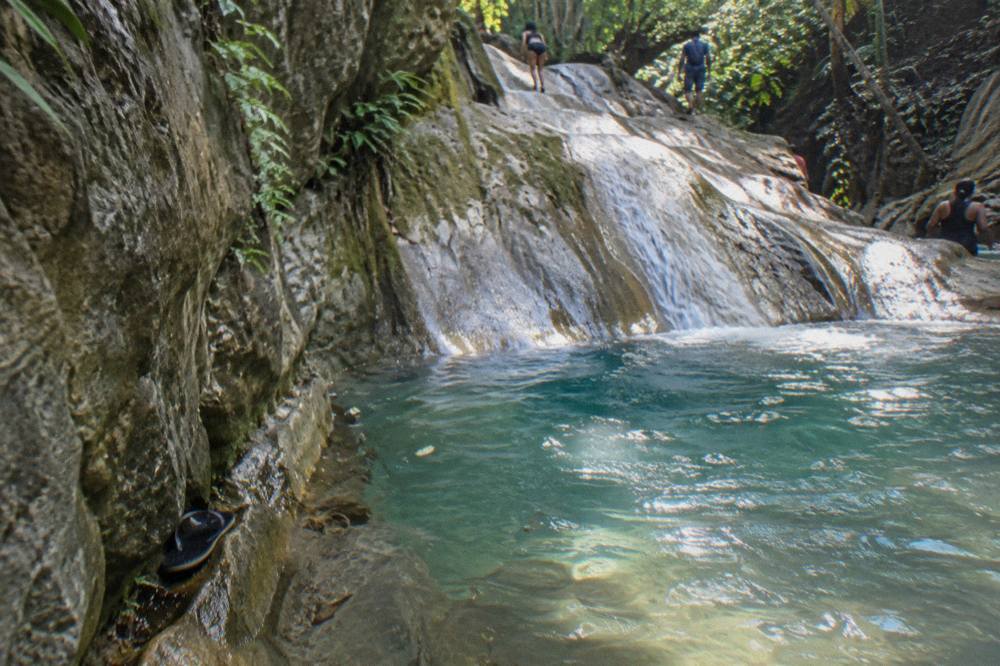
A useful comparison is the other name you will hear constantly: 27 Charcos. "Charco" is ordinary Spanish for a pool or puddle of standing water, and "los 27 charcos", the 27 pools, is what many Dominicans call the place in casual speech. Tour listings abroad lean on "Damajagua Waterfalls" or "27 Waterfalls", and the two names refer to exactly the same site near Imbert, as explained in more detail on the Los 27 Charcos de Damajagua explained guide. Knowing both names, and being able to say both, is what keeps a taxi conversation short.
How Do Spanish Sounds Make The Word Easier?
Spanish gives every vowel one fixed sound, so Damajagua has no hidden traps once you learn three small rules: j is an h sound, the vowels a and u never shift as they do in English, and stress lands on the "HAH" syllable. Spanish words carry a written accent mark when stress breaks the default pattern, and Damajagua has none, which tells you it follows a predictable rhythm.
Start with the vowels, because they do the heavy lifting. Every "a" in the word is the same open "ah" as in "father", never the flat "a" of "cat" or the "ay" of "day". The "u" in the final syllable is the "wah" glide you hear in "guava", which is why "jagua" comes out as "HAH-gwah". Now swap the j for an h, as Spanish requires, and the word assembles itself: dah, mah, HAH, gwah. Nothing is silent, nothing swallows a syllable, and the four beats stay even.
| Syllable | Sounds like | Common English speaker error |
|---|---|---|
| da | "dah" as in father | "duh", too clipped |
| ma | "mah" as in ma'am | "may", turning a into ay |
| ja | "hah", the j is an h | "jah", a hard j as in jam |
| gua | "gwah" as in guava | "gwa" with a hard g and no w glide |
Stress is the final piece. Say the word once with the push on the third syllable and it immediately sounds Dominican rather than attempted. A good drill is to borrow a word you already pronounce correctly: "Guantanamo" opens with the same "gwah" sound that English mouths handle without thinking, and "marijuana" is the classic example of an adopted Spanish word where English speakers automatically say the j as an h. Damajagua asks for the exact same reflex. Two or three slow repetitions, dah-mah-HAH-gwah, then at speed, and the muscle memory is set for the week.
The payoff is practical, not just polite. A driver at Puerto Plata's port gates, a hotel desk clerk arranging an early start, and a guide at the visitor centre all hear dozens of accents a day and will usually decode any attempt, but a crisp pronunciation removes hesitation when you are confirming a pickup or telling a taxi "the Damajagua entrance, near Imbert". The site sits about 28 minutes by road from Puerto Plata's centre under free-flowing conditions, so the word will come up in every one of those conversations.
How Do You Say It When Booking A Tour Or Asking Directions?
Say "dah-mah-HAH-gwah" with the stress on HAH, and pair it with the word you need: "las cataratas" for the waterfalls, "los charcos" for the pools, or "la entrada" for the entrance. Adding "cerca de Imbert", near Imbert, pins the destination for any driver. Booking platforms print the name, so you never have to spell it aloud when reserving online.
In practice, the word travels inside short phrases. A hotel guest asking the front desk to confirm a tour might say "la excursión a Damajagua", the excursion to Damajagua, and the desk will know exactly which product is meant. A traveler arranging independent transport would ask a driver for "la entrada de Damajagua, cerca de Imbert", the Damajagua entrance near Imbert, and that entrance sits about 8 minutes from Imbert town, 20 minutes from Amber Cove, and about 30 minutes from Taino Bay, drive times that traffic can extend. Directional conversations are where pronunciation genuinely matters, because Puerto Plata province has other waterfalls and other attractions, and a mangled name plus a shrug can send a taxi to the wrong one.
Booking online is the easier half of the problem. Every listing on this site's roster prints the destination in its title, so searching, comparing and reserving never requires you to say the word at all. The roster's most reviewed cruise-port options include 7 waterfalls+typical food, 4.7 from 567 reviews, from $60 per person, and the Damajagua 7 waterfalls excursion, 4.8 from 617 reviews, from $44 per person, the most reviewed listing in the whole lineup. Prices, durations and inclusions live on each operator's live listing, and free cancellation is listed on both of those.
The Adventure at the Damajagua Waterfalls From Puerto Plata is a good early-stage pick for readers still deciding: from $45 per person, about 4 hours, hotel pickup listed, free cancellation listed, and a 4.9 rating from 28 reviews. Check availability if that profile fits, or read on to fine-tune the pronunciation.
What Mistakes Do English Speakers Make With Damajagua?
The three most common errors are a hard English "j", stress on the wrong syllable, and collapsing the ending into "gwa" without the w glide. You will also hear "Dam-a-JAY-gwa", imported from words like Jamaica. None of these will strand you, since context usually rescues the meaning, but they all mark the speaker as freshly arrived.
The hard j is the most frequent slip because English orthography demands it. Written "Damajagua", the eye wants "dam-uh-JAG-wah", and plenty of first-time visitors say exactly that on the ride out from the port. The fix is remembering that Spanish j is always the breathy h, the same sound English speakers already produce in "jalapeño" and "marijuana", two loanwords nobody pronounces with a hard j anymore. Once that substitution is habitual, half the mispronunciations disappear on their own.
Stress errors are subtler. English tends to shove stress toward the front or the back of long words, producing "DAM-ah-jah-gwah" or "dah-mah-jah-GWAH". Spanish keeps it on the "HAH". The collapsed ending, "gwa" without the w, is a smaller fault that still flattens the word's rhythm. A reassuring footnote: guides from the local association, who lead every group into the canyon under the site's mandatory-guide rule, hear all of these daily and treat them as background noise. Nobody is turned away for an accent. The value of getting it right is social smoothness and precise communication, not a gate test.
How Does The Name Fit The Wider Puerto Plata Vocabulary?
Damajagua sits in a small family of place names you will use on the same day: Imbert for the town at the turn-off, Puerto Plata for the province and city, and Amber Cove or Taino Bay for the cruise terminals. Each has its own small pronunciation trap, and together they cover nearly every direction you might ask for on a waterfall day.
Imbert is "eem-BEHR", with the stress at the end and no English "im" sound at the front. Taino Bay is usually said "TYE-no bay" in English, or "tah-EE-no" in Spanish, and it is named for the Taíno people. It is one of two cruise terminals serving the city, able to berth three ships at once, as the Port of Puerto Plata record documents. Amber Cove is plain English, located in Maimon. Puerto Plata, "PWER-to PLAH-tah", means silver port, a name that shows up on everything from the airport code to restaurant menus. None of these words is hard, but stringing them together confidently is what makes a morning of logistics feel effortless, from the pier to the canyon and back before all-aboard.
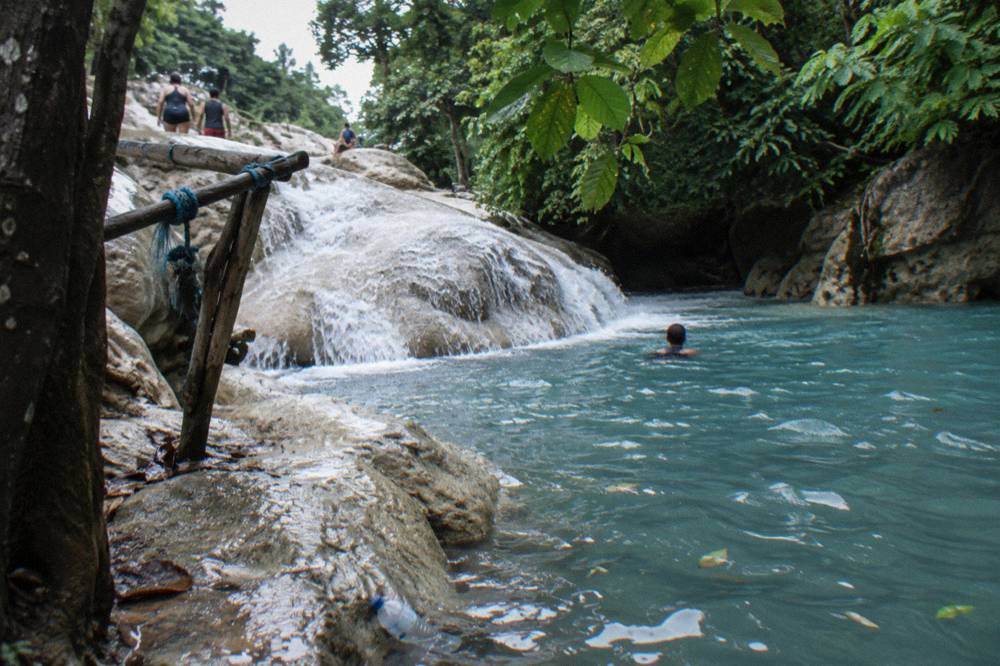
The canyon vocabulary is worth a sentence too. Your guide will talk about "charcos", the pools, "cascadas" or "saltos", the falls, and the "casco" and "chaleco", the helmet and life vest that entry includes at the gate. The circuits themselves are simply numbered: seven, twelve or twenty-seven waterfalls, with age minimums of 8 for the first seven and 12 for the longer circuits, per the administration's rule as reported by the park's information pages. Visitors wanting the full picture of the site's location and layout can dig into the site's guide to where the waterfalls actually are and how the day is paced.
Why Does Saying It Correctly Actually Help Your Day?
Saying Damajagua correctly speeds up every handoff in the day: port gates, taxi desks, hotel lobbies and the park's own visitor centre. It also prevents confusion with other regional attractions, and it signals to local guides that you know where you are going, which tends to produce clearer, more direct answers about timing, circuits and conditions.
The waterfall day is a chain of small verbal transactions. At the cruise terminal you confirm the excursion; on the road, about 20 free-flowing minutes from Amber Cove, the driver may ask which entrance or which operator; at the visitor centre you are assigned a certified guide, and the guide asks which circuit you want, seven, twelve or all twenty-seven. Each exchange goes faster when the destination comes out cleanly. It also protects against the one real risk, which is ambiguity: Puerto Plata province markets several water experiences, from Ocean World in Cofresi to river beaches inland, and a garbled name plus vague pointing is how people end up at the wrong ticket line on a tight shore day.
There is a second, quieter benefit. The canyon is run by community guides from the villages around Imbert, working with the Ministry of Environment, and a visitor who says the name of their river the way they say it is meeting them halfway. That is not a ticket to special treatment, the rules are the rules, mandatory guide, helmet and life jacket for everyone. It simply makes the whole encounter warmer, and warmth matters on a tour where you spend hours trusting the person calling the jumps. If the practical side is what you need before committing, the timing question is worth settling too, from the 30 to 60 minute uphill walk to the descent through the pools, all covered in the site's walkthrough of how long the waterfalls take.
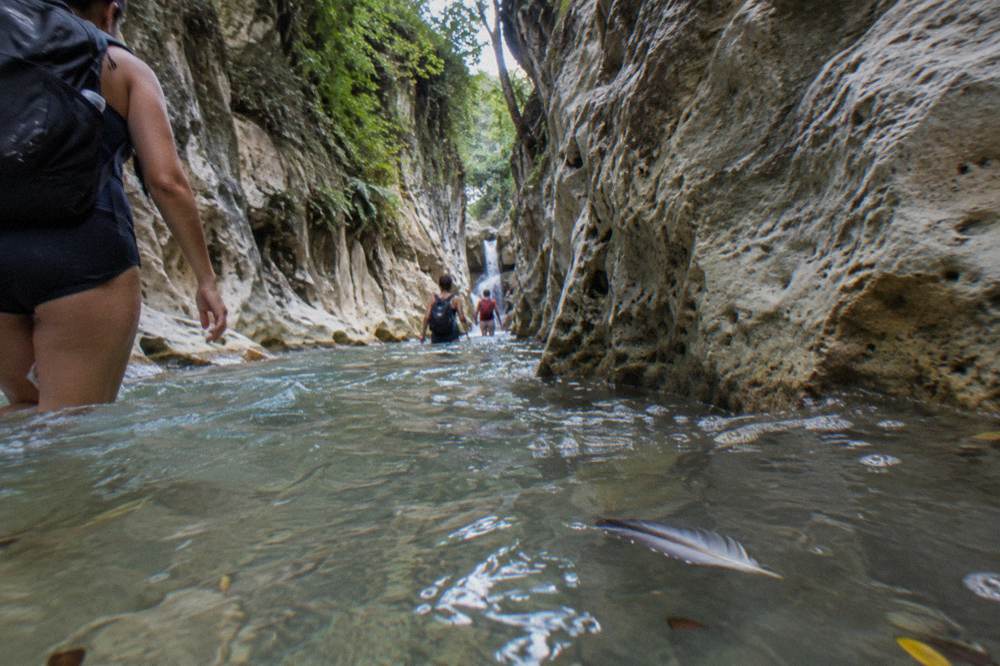
For readers ready to move from words to water, three listings cover the main ways to do it. Adventure at the Damajagua Waterfalls From Puerto Plata keeps it simple, from $45 per person with pickup listed. The 7 Waterfalls Tour With Lunch in DR adds a meal and gate entry, from $60 per person. And the Quick Zip and Waterfalls of Damajagua shore excursion stacks a zipline onto the day, from $94.99 per person, 4.7 from 58 reviews. Whichever you lean toward, the destination is the same one you can now pronounce.
Common Questions About Pronouncing Damajagua
How Do You Pronounce Damajagua?
Dah-mah-HAH-gwah, four syllables, stress on the third. The j is an h sound, every a is "ah", and the ending glides like the start of "guava". Two slow repetitions out loud usually fix it for good.
Does The J In Damajagua Sound Like An H?
Yes. In Spanish the letter j is always a breathy h sound, the same as in jalapeño or marijuana. Pronouncing it as a hard English j is the single most common mistake visitors make with the name.
Which Syllable Is Stressed In Damajagua?
The third one, "HAH". English speakers often shift the stress to the first or last syllable, but the correct rhythm pushes the middle-late beat: dah-mah-HAH-gwah. The word carries no written accent mark, which is consistent with its natural spoken stress pattern.
Is Damajagua The Same Place As The 27 Charcos?
Yes. "Los 27 charcos", the 27 pools, is the everyday Dominican name for the same canyon on the Damajagua river near Imbert. Tour listings abroad tend to say Damajagua Waterfalls or 27 Waterfalls, but both names point to one site with 7, 12 and 27-fall circuits.
Will People Understand Me If I Mispronounce It?
Almost always. Drivers, hotel staff and guides hear attempts in many accents daily and use context to fill the gap, since the waterfalls are the region's headline attraction. Getting the word right simply makes directions, bookings and pickups faster and removes any ambiguity with other local destinations.
How Do I Say Imbert, The Town Near The Waterfalls?
Eem-BEHR, with the stress on the end. The town sits about 8 minutes by road from the park entrance and is the landmark locals use when giving directions to the canyon, so it is worth having both names ready.