Damajagua Waterfalls History And Facts: How The Circuit Opened
The 27 waterfalls of Damajagua were a local secret until village guides began running expeditions in the late 1990s. Protected as a Natural Monument since 2004 and co-managed by the community with the Ministry of Environment, the canyon's history explains almost everything about how a visit works today.
Short answer
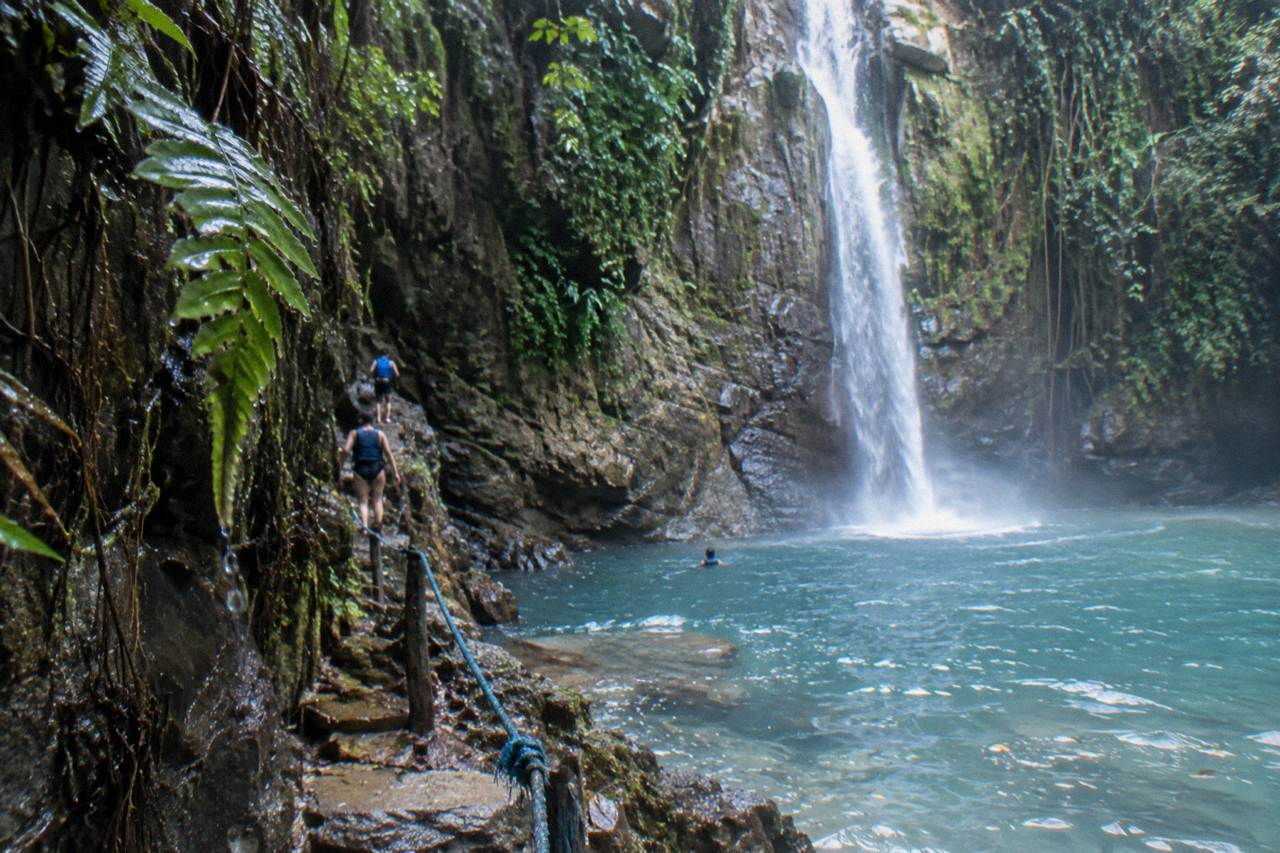
The 27 Charcos de Damajagua sit on the Damajagua river near Imbert, Puerto Plata province. Local guides began organising expeditions in the late 1990s, and the canyon was declared a Natural Monument in 2004. It is co-managed by the Ministry of Environment and the community guides' association, which is why every visit includes a mandatory certified guide.
Long before cruise passengers queued at Amber Cove for the ride south, the canyon of the Damajagua river belonged to the villages around Imbert. Kids swam in the lowest pools, farmers knew the trail up the ridge, and almost nobody from outside had seen the upper falls. That changed in the late 1990s, when local guides began organising the first formal expeditions down what locals call the 27 Charcos, the 27 pools. The story of how a community canyon became a protected Natural Monument is worth knowing before you book, because it explains the mandatory helmets, the certified guides and the cash-only gate. It also explains why a share of the entrance fee still funds the community and the protection of the canyon itself. If you're wondering where this canyon ranks among the country's other cascades, the guide to the most famous waterfall in the Dominican Republic has the answer.
This page lays out the history and the hard facts: who runs the park, why there are 27 pools, what protection means in practice, and how the past shapes the tours on sale today, from the 7-falls cruise excursions to hotel-pickup trips like the well-reviewed Puerto Plata Hotels Pick Up Waterfalls of Damajagua tour, 4.4 from 18 reviews, from $80 per person with lunch and hotel pickup listed. For the full practical rundown, start with the complete Damajagua visitor guide.
What Are The 27 Charcos De Damajagua?
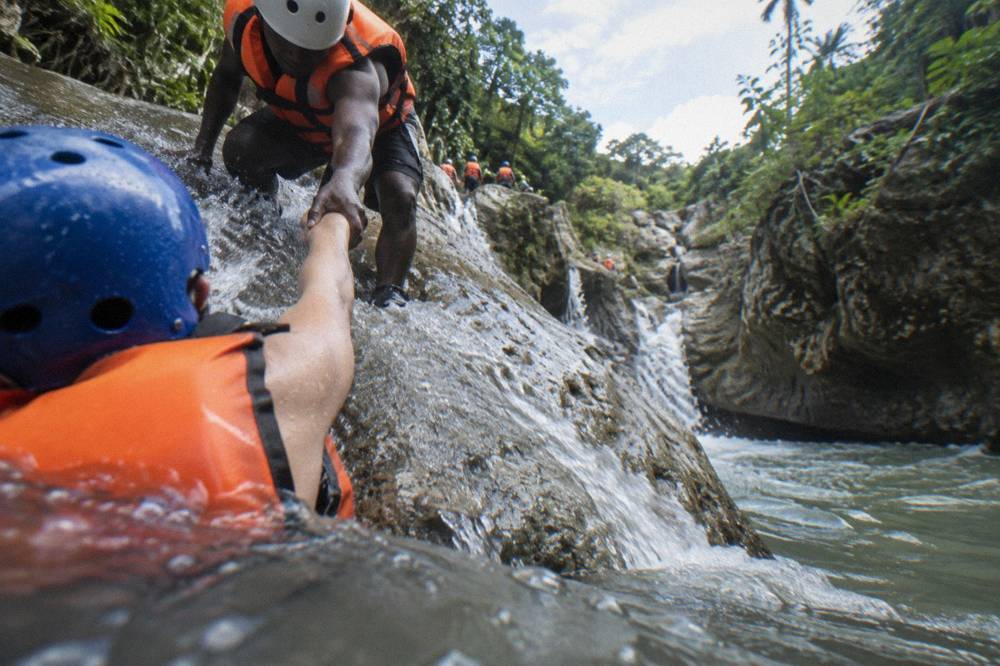
The 27 Charcos are a natural system of 27 waterfalls and plunge pools carved into the Damajagua river, located in the municipality of Imbert, Puerto Plata province, in the Cordillera Septentrional mountain range. Visitors do not wander freely: entry includes a mandatory certified guide, a helmet and a life jacket, and the park sells three circuits, covering 7, 12 or all 27 falls.
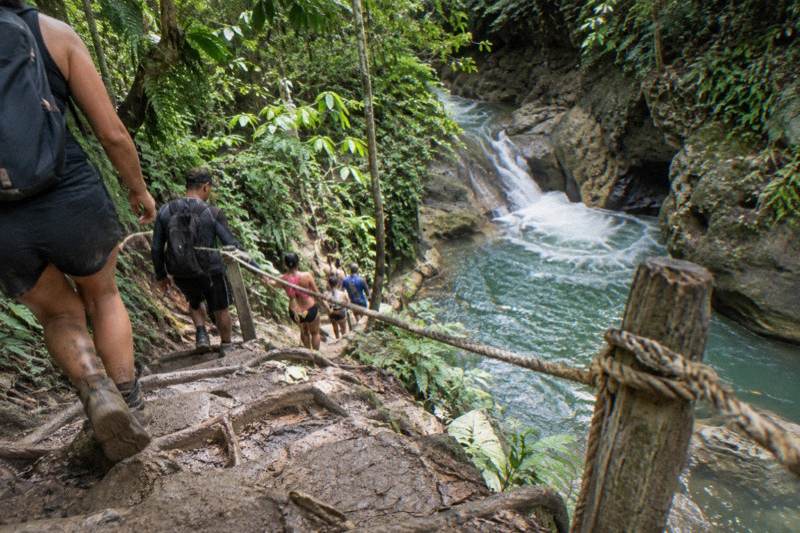
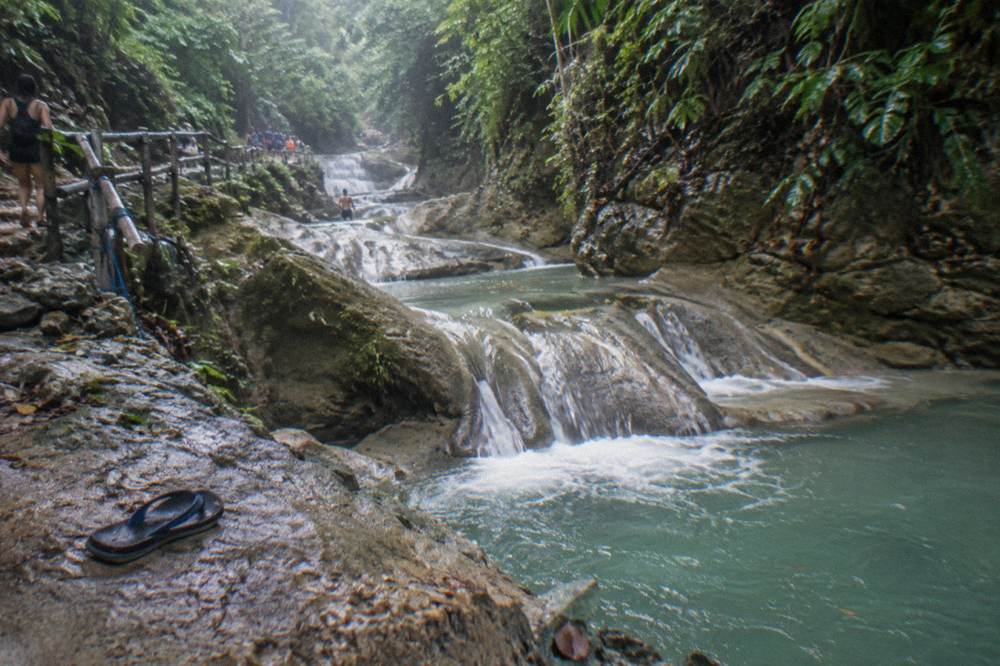
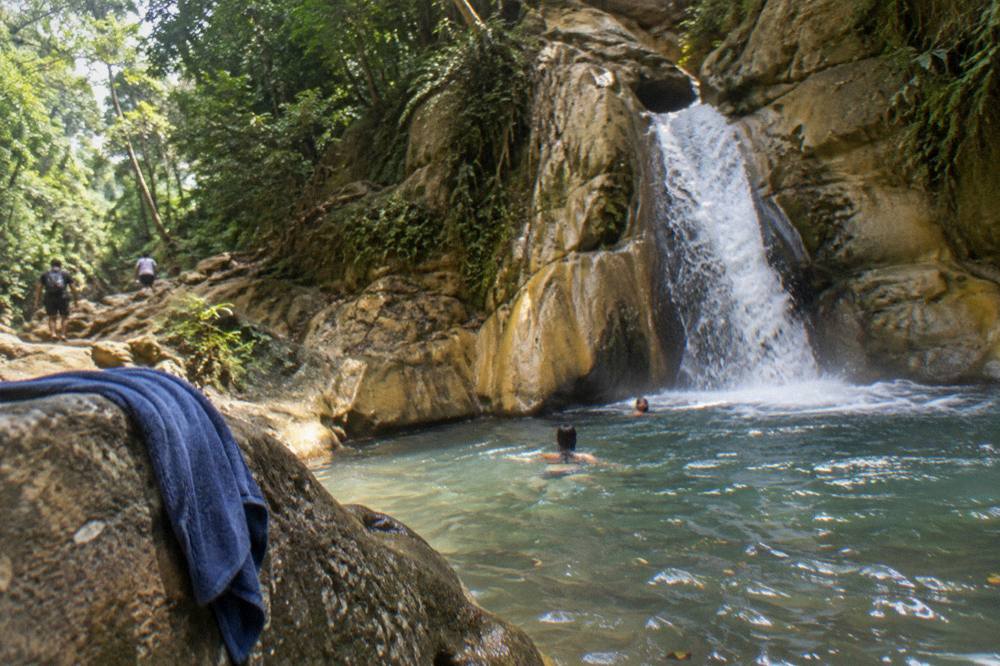
The name needs a quick translation. A charco is a pool or watering hole in Spanish, so "los 27 charcos de Damajagua" literally means the 27 pools of the Damajagua river. The river drops through a limestone canyon, and at each step the falling water has scoured a deep basin below the drop, which is what makes the descending circuit possible: you slide or jump from pool to pool, working downhill through the canyon rather than climbing anything technical. Guides choose the entry point at each fall, and jumps are of varying height, with lateral ladders at some drops if you would rather walk down than jump.
Geologically the site is young by rock standards and old by human ones. The Cordillera Septentrional is the mountain range that forms the Dominican north coast, and the Damajagua river drains off it toward the Atlantic plain near Imbert. The river's flow over the rock produced the stepped sequence of chutes and pools that give the park its name, and that same flow keeps reshaping them: it rises and falls with rain in the hills, and the park closes upper falls first, then the whole river, when the water turns brown. Our page on how rain and river level close the falls covers that protocol in detail.
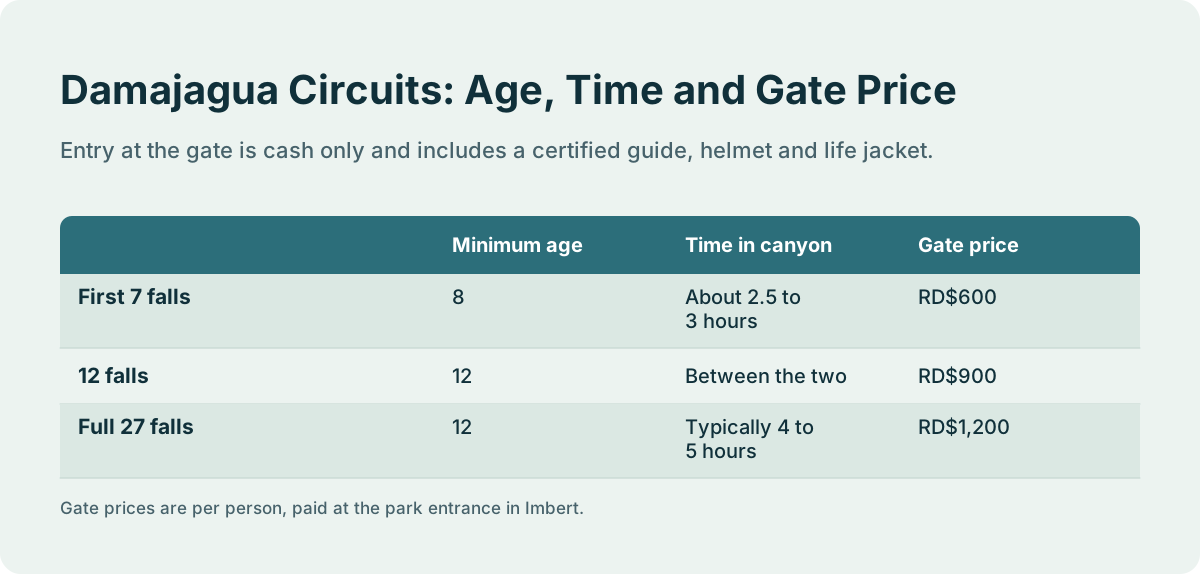
The three circuits split the canyon into chunks, and the split is the single most practical fact about a visit:
| Circuit | Roughly who it suits | Minimum age | Typical time in the canyon |
|---|---|---|---|
| First 7 falls | Most visitors, families with older kids | 8 | About 2.5 to 3 hours |
| 12 falls | Fitter visitors wanting more | 12 | Between the two |
| Full 27 falls | Comfortable in water, high fitness only | 12 | Typically 4 to 5 hours |
Every visitor, on every circuit, gets a guide, helmet and life jacket with entry. That is not an operator upsell, it is the park's own rule, and the history below explains why it exists.
How Did The Damajagua Waterfalls Become A Tourist Attraction?
Local guides from the villages around Imbert began organising formal expeditions into the canyon in the late 1990s, drawing on knowledge of a gorge that residents had long known. The canyon was declared a Natural Monument in 2004, and today the waterfalls are one of the north coast's signature excursions, with cruise traffic feeding much of the demand.
The early years were informal. Local guides from the surrounding villages began organising expeditions in the late 1990s, and the association that manages guiding on the river formed in the same decade. As visitor numbers grew, the canyon needed formal protection, and today a share of the entrance fee funds both the community and the canyon's upkeep. An independent visitor portal traces this arc from local river to managed natural monument on 27waterfalls.org.
The year 2004 was the turning point. The canyon was declared a Natural Monument and folded into the Dominican national protected-areas system, which put the site under the Ministry of Environment and gave the community guides' association a formal co-management role. A share of every entrance fee funds the community and canyon protection, a model that independent reporting on the site also describes on Sargazo Watch. In plain terms: the people guiding you down the river are largely from the villages that have run it since the beginning, not staff of a concession or a foreign operator.
Growth since then has tracked the cruise industry. Puerto Plata's two terminals, Amber Cove in Maimon and Taino Bay beside the city, together handle a heavy schedule: October 2026 alone listed 38 calls, 18 at Amber Cove and 20 at Taino Bay. The drive from either port to the park entrance is short, about 20 minutes free-flow from Amber Cove and about 30 from Taino Bay, which is why waterfall excursions now dominate the ports' shore-excursion menus. The Amber Cove excursions guide maps that side of the story.
If you want to see the canyon with the crowd rather than fight it, these are two tours that fit the history-minded visitor well:
The second option is the better-rated of the two: "27 Waterfalls Damajagua Amber Cove, Taino Bay - Puerto Plata" carries a 5.0 rating from 309 reviews, from $59 per person for a 4 hour 10 minute day with lunch and gate entry listed as included.
Who Runs The Damajagua Waterfalls Today?
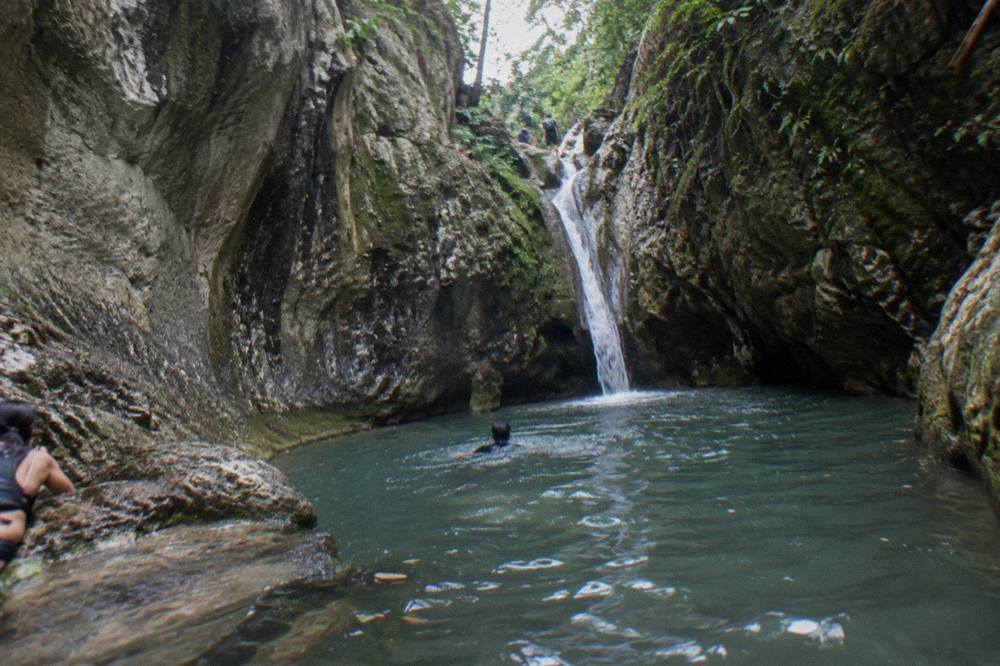
The park is co-managed by the Dominican Ministry of Environment and the local community guides' association formed in the 1990s. No tour operator owns, runs or officially represents the falls; operators buy access like everyone else and bring their own transport, food and itinerary on top of the park's mandatory guide, helmet and life jacket.
This distinction matters because marketing copy blurs it constantly. Tour operators in Puerto Plata, at the cruise ports and online sell Damajagua trips, and some imply a special relationship with the site. The facts are simpler: the gate fee, the rules and the in-canyon guiding sit with the park, run jointly by the ministry and the association. A tour company adds the vehicle, the lunch, the schedule and often the entry ticket bundled into one price, which is genuinely useful if you are coming from a hotel or a ship, but it is a service layer, not the park itself.
For visitors, the practical consequence is a two-layer system. Pay at the gate independently and you arrange your own transport to Imbert, pay cash in pesos or dollars, and hire a guide there; the gate price is roughly RD$600, RD$900 and RD$1,200 per person for the 7, 12 and 27 circuits, about US$11 to US$21 per person depending on the circuit, cash only, and it can change. Book a tour and most of that friction disappears: the 7 Waterfalls in Puerto Plata tour with local lunch, 4.8 from 256 reviews from $55 per person, lists all fees and taxes in its price, while others, like the port excursion from $44, include gate admission on the listing. Our tickets and entrance fee page breaks down which tours bundle the gate and which leave it to you.
| Layer | Who provides it | What it covers |
|---|---|---|
| The park | Ministry of Environment with the community guides' association | Gate entry, certified guide in the canyon, helmet, life jacket, rules, closures |
| The tour | Independent operators, booked via their live listings | Transport from port or hotel, lunch, schedule, often the entry ticket bundled |
Community management also shapes some of the site's character. The association, not an insurer in a distant office, carries the canyon's reputation, and the guides' culture is correspondingly hands-on. Tipping the guides is customary; lockers and shoe rental at the visitor centre cost a few dollars extra, paid on arrival. A share of entry income stays local, giving the villages around Imbert a direct stake in the canyon staying healthy.
For a tour that embodies the community model, with hotel pickup listed and lunch included:
Why Are There Exactly 27 Pools?
The count of 27 comes from the river itself, not from design: the Damajagua drops through its canyon in a chain of waterfalls, each one spilling into a scoured plunge pool. No one built the pools and no authority chose the number. Twenty-seven is simply the settled count of falls and pools in the canyon, the figure the community guides, visitor portals and tour listings all repeat.
Limestone rivers in the tropics erode in exactly this staircase pattern. Where the rock is softer, the water cuts faster, and a vertical drop forms; at the base of every drop, plunging water spins stones and grit in a circle, grinding a deep basin. Repeat that process thousands of times along a few kilometres of canyon and you get a chain of pools, each one sitting below its own small waterfall, each one deep enough to jump or slide into from the ledge above.
Two honest caveats on the number. First, most visitors do not see all 27: the standard circuits visit 7 or 12, and only the full-day, high-fitness option covers the lot, typically 4 to 5 hours in the canyon. Our page on how many waterfalls you actually visit gives the realistic picture. Second, the count is descriptive, not a survey: the number 27 is the locally settled figure, repeated consistently across the community association, the visitor portals and the tour listings, but nature does not maintain an inventory. Floods reshape ledges, and pools silt up and scour out again.
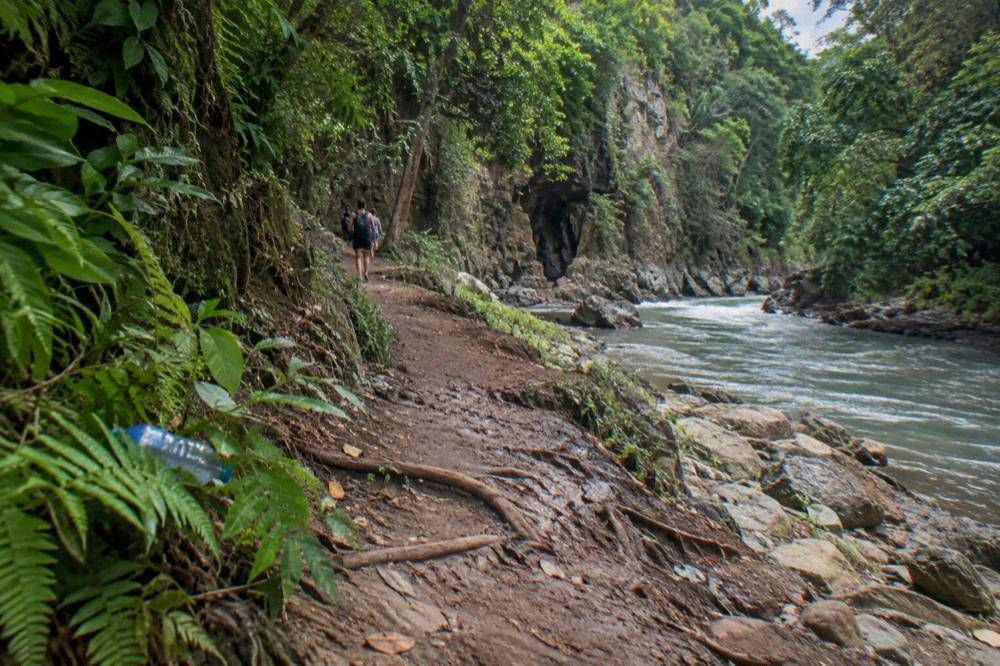
The descent is the part first-time visitors underestimate. Every circuit starts with a 30 to 60 minute walk up through forest before the first jump, because you enter the canyon high and work down through the water. That single fact explains why fitness matters, why the park sets minimum ages of 8 for the first 7 falls and 12 for the longer circuits, and why the last entry for the full 27 sits around 1:30 PM. The river only flows downhill, and so does the tour.
What Does Natural Monument Status Mean For Visitors?
Protection as a Natural Monument since 2004 means the canyon sits inside the Dominican national protected-areas system, managed with the Ministry of Environment. In practice it fixes the rules visitors meet at the gate: mandatory certified guides, helmets and life jackets for everyone, no independent wandering in the canyon, and closures whenever the river runs high or brown.
A Natural Monument in the Dominican system is a protected-area category for outstanding natural formations, and Damajagua's canyon of pools and falls fits it precisely. The designation did two things at once. It recognised the site's scientific and scenic value, and it gave the community guides' association a legal, formal role in managing visits, converting what had been an informal local operation into co-management between the state and the people who live beside the river.
For you, standing at the gate in Imbert, the protections are visible as rules rather than scenery. Everyone wears a helmet, buckled, and a life jacket, all the time in the water; closed water shoes or old trainers with grip are required, and flip-flops and sandals are not allowed in the canyon. Guides set the entry point at each fall and give the signal before anyone moves; they explain which jumps are optional, and you can ask to skip any jump. Anything not strapped on securely, sunglasses included, is likely to be lost in the water. These rules exist because the canyon is a wild river inside a protected area, not a water park, and the Damajagua safety page explains them fully.
Protection also explains the closure culture, which surprises visitors used to commercial attractions. The river responds fast to rain in the hills, even under a blue sky at the site, and rangers decide on the day from water colour and flow. The park closes upper falls first and shuts the river entirely when it runs brown, reopening typically 12 to 24 hours after rain stops. There is no arguing with that, and no operator can override it; the seasonal pattern is dry season December to April and wet season May to November, with the highest tropical-storm risk in September and October, inside the Atlantic season that runs June 1 to November 30 per the National Hurricane Center.
| Era | What happened | What a visitor would have seen |
|---|---|---|
| Before the 1990s | Local swimming hole known to nearby villages | Kids in the lower pools, no trail infrastructure |
| Late 1990s | Community guides begin organised expeditions | Local guides leading visitors down the river |
| 2004 | Canyon declared a Natural Monument | Joins the national protected-areas system under co-management |
| Today | Co-management by the ministry and the association | Visitor centre, lockers, three ticketed circuits, cruise-scale volume |
How Did Damajagua's Past Shape The Tour You Book Today?
Much of what a modern Damajagua tour includes comes straight from the park's own rules rather than any operator's choice: a certified guide must accompany visitors in the water, and the mandatory helmet and life jacket date from the protected-area regulations. Transport, lunch and port timing are the additions that vary, which is why tours here differ mainly in what they layer on top of the park basics.
Start with the port excursions, the largest category. A trip like "Damajagua The 7 waterfalls excursion - Amber Cove & Taino bay", 4.8 from 617 reviews and the most reviewed listing on this site, from $44 per person for 4 hours, bundles port pickup, lunch, a mamajuana shot on the bus and gate entry. That shape, everything in one price, timed against the ship's all-aboard, is the direct product of the cruise era. Our Damajagua cruise day timing guide shows how those schedules work against the park's morning hours.
Hotel-pickup tours serve the same history differently. The related tour on this page, "Puerto Plata: Hotels - pick up - WATERFALLS OF DAMAJAGUA", from $80 per person, picks up at Puerto Plata hotels for a 4 hour 30 minute day with lunch and drinks listed, for up to 100 guests. Then there are the adventurers: "Damajagua Waterfalls Adrenalin Adventure", 4.8 from 405 reviews from $79, caps groups at 16 and includes park fees, snacks and a rum punch. Smaller still, "Waterfalls of Damajagua & Lunch Included!" runs up to 11 guests, 4.9 from 29 reviews from $60, with private transport and WiFi on board. The canyon layer is identical in every case; what you are choosing among is group size, food and ride quality.
| Tour type | What history added | Typical price signal on this roster |
|---|---|---|
| Port excursion (shared, up to 47) | Cruise-era bundling: pickup, lunch, gate entry, ship timing | From $44 to $89 per person |
| Hotel pickup from Puerto Plata | Resort-era transport layer on the community canyon | From $45 to $80 per person |
| Small-group adventure | The guides' original small-expedition spirit | From $60 per person, caps at 11 to 16 guests |
| Private tour | The canyon as a personal expedition, family style | From $110 per person or $380 per group |
Combos are the newest chapter, pairing the falls with ziplines, monkeys or the city, and our Damajagua and zipline combo page compares them. Through all of it, one thing has not changed since the 1990s: the guides in the water with you, the pools themselves, and the fact that a share of what you pay at the gate stays with the community that opened the canyon in the first place. That continuity is the real story of the 27 Charcos, and it is the reason 27 Waterfalls Dominican Republic exists as a site at all: the more you know about how this canyon works, the better the day you will have in it.
What Should History-Minded Visitors Know Before Going?
Read the canyon's past as a packing list: the community-guided era means a guide is with you all day, the protected-area rules mean helmet, life jacket and proper water shoes are mandatory, and the cash-only gate means pesos or dollars in pocket even on a fully bundled tour. Bring a towel, a change of clothes and nothing valuable that is not strapped on.
Timing is the other inheritance. The park opens about 8:30 AM and closes about 4:00 PM, daily, with no closure days found on any source. Arriving before 9 AM is the standard advice because cruise groups from both ports land mid-morning, and the pools are simply calmer, in every sense, before they do. If you are staying in Sosua or Cabarete, the free-flow drive is about 57 minutes and about 1 hour 11 minutes respectively, so an early start matters even more; our Damajagua from Sosua and Cabarete guide has the details.
Common Questions About Damajagua Waterfalls History
What Are The 27 Charcos De Damajagua?
A natural system of 27 waterfalls and plunge pools on the Damajagua river near Imbert, Puerto Plata province, run as a ticketed attraction with three circuits covering 7, 12 or all 27 falls. Every visit includes a mandatory certified guide, helmet and life jacket.
Who Runs The Damajagua Waterfalls?
The park is co-managed by the Dominican Ministry of Environment and the local community guides' association, which formed in the 1990s. No tour operator owns or officially represents the falls; operators add transport, food and scheduling on top of the park's own layer.
When Did Damajagua Become A Natural Monument?
In 2004, when the canyon was declared a Natural Monument and joined the Dominican national protected-areas system. Local guides had already been running informal expeditions since the late 1990s.
Why Are There Exactly 27 Pools?
The number is descriptive: the river drops through its limestone canyon in 27 natural steps, each with a scoured plunge pool below it. Most tours visit 7 or 12 of them.
Does The Community Benefit From My Ticket?
Yes, a share of the entrance fee funds the local community and canyon protection under the co-management arrangement. Guides on the river are largely from the surrounding villages, and tipping them is customary.