What To Wear To The Damajagua Waterfalls
The canyon supplies the water, the jumps and the slides. What it does not supply is footwear that grips, a swimsuit that stays put, or a dry place for your passport. Here is what to wear and what to leave behind for a day at the 27 Charcos of Damajagua.
Short answer
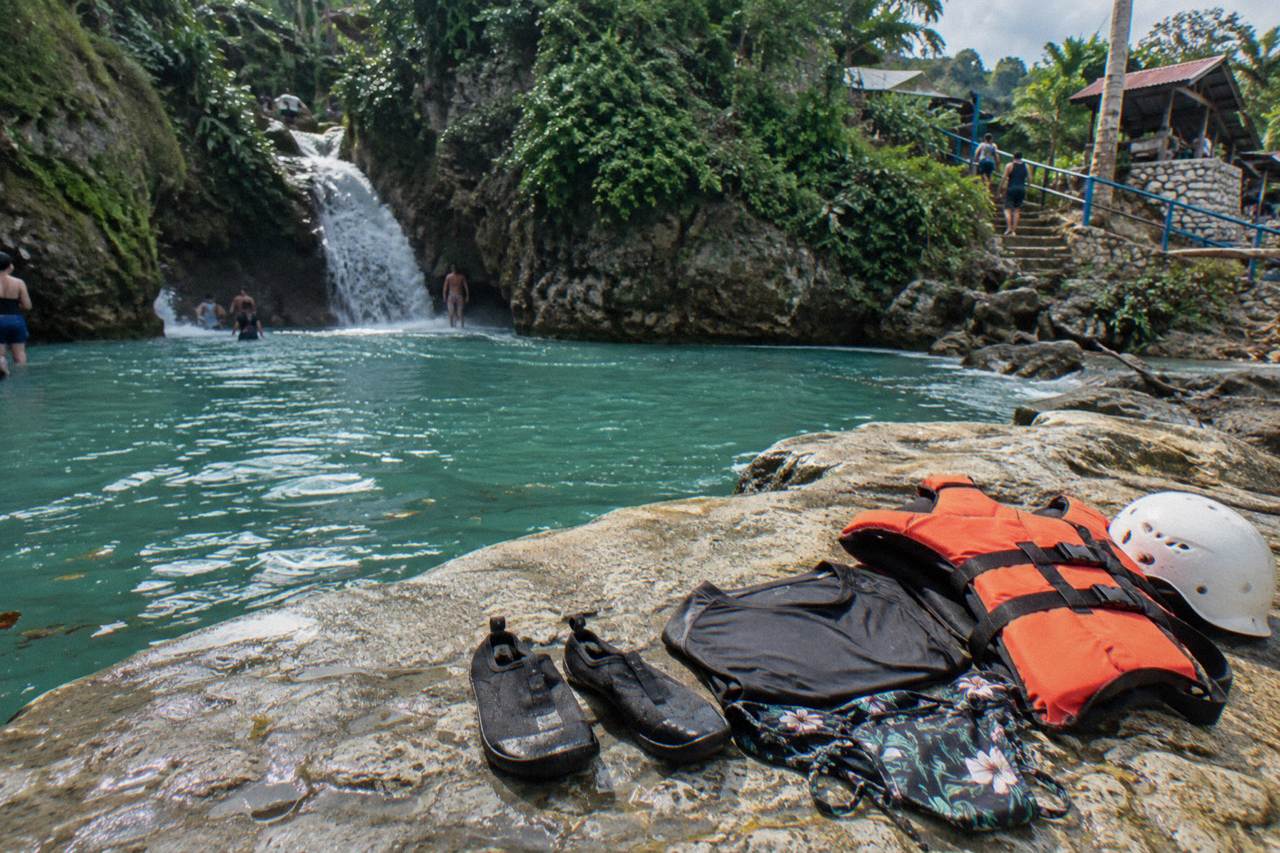
Wear a swimsuit under quick-drying clothes, closed water shoes or old trainers with grip, and bring a towel and dry change of clothes. The park supplies the helmet and life jacket with your entry fee, roughly RD$600 for the 7 falls. Leave jewellery, valuables and flip-flops behind, and use the lockers at the visitor centre.
The 27 Charcos of Damajagua is a get-wet day by definition. You walk up through forest for 30 to 60 minutes, then descend a river canyon by sliding and jumping through a chain of pools, wearing a helmet and a life jacket the whole way. What you put on your body in the morning decides whether that day is comfortable or miserable. A few wardrobe mistakes break park rules outright rather than being merely inadvisable, starting with flip-flops in the water, and jewellery on the jumps is simply asking to lose it.
This guide walks through the clothing question piece by piece: footwear first because it matters most, then swimwear and layers, then the gear the park hands you at the gate, then the things you should lock up or leave at the hotel. The details come from the park's published safety and visitor guidance and from the tour listings on this site, and where a detail is not settled, the honest answer is to check the listing before you pack.
What Do You Wear To The Damajagua Waterfalls?
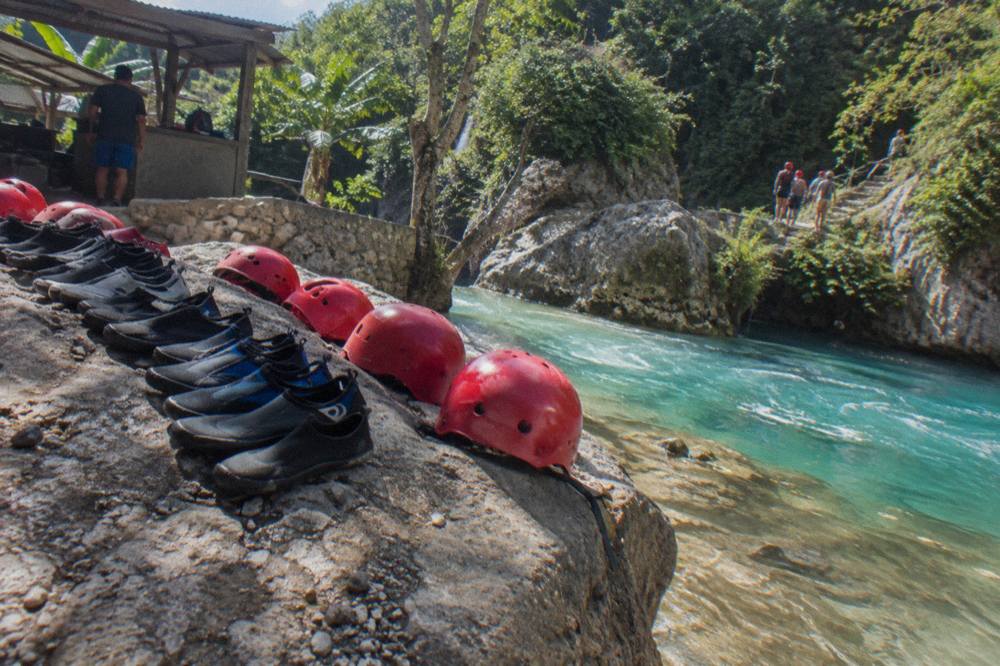
The short answer is a swimsuit worn under quick-drying clothes, closed water shoes or grippy old trainers, and nothing loose, valuable or delicate anywhere on your body. Your entry fee includes the mandatory helmet and life jacket, so you do not bring those. Pack a towel, dry clothes for after, and cash for the gate, which takes pesos or dollars only.
That combination covers the whole arc of the day. The walk up is hot and partly exposed, so a t-shirt over your swimwear works well on the trail and in the water. Shorts that dry fast beat cotton, which stays wet and heavy for hours. On the descent itself, the life jacket does most of the thermal work: the river is cool rather than cold, and most visitors climb out wishing they had less clothing on, not more.
Footwear is the one item the park is strict about beyond the helmet and jacket. Flip-flops and sandals are not allowed in the water, full stop. The rocks in the canyon are wet, uneven and polished smooth by decades of flow, and every step between pools is a balancing move. A secure closed shoe with real grip is both the rule and the obvious practical choice.
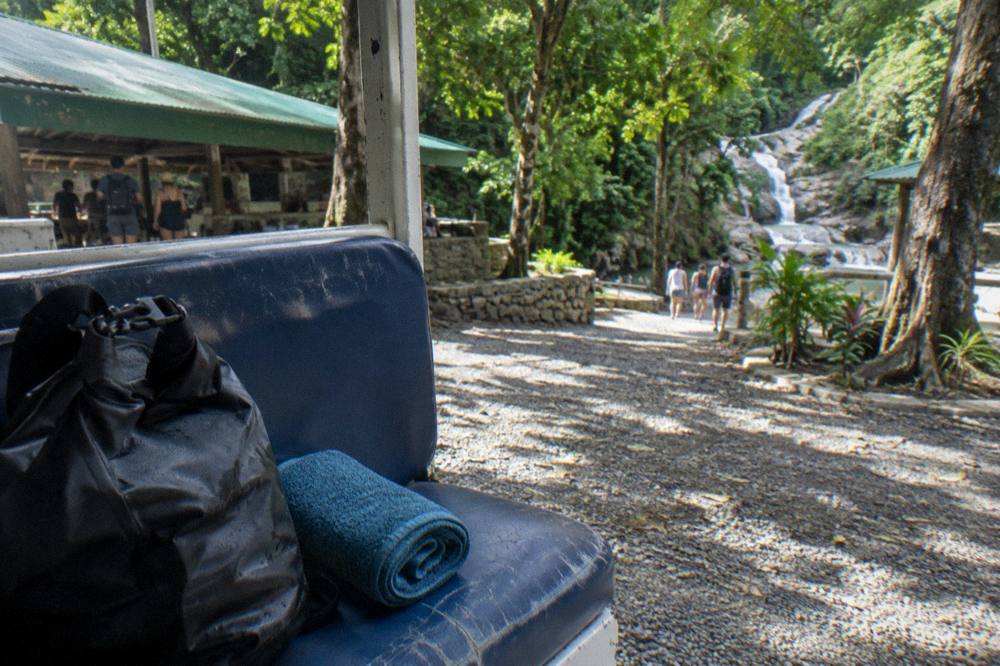
Two final items decide your comfort after the last pool: a towel and a full change of dry clothes, including underwear and shoes, left on the bus or in a locker. Some listings on this site name towels among the things to bring, including the 27 Waterfalls Damajagua tour from Amber Cove and Taino Bay (from $59 per person, rated 5.0 from 309 reviews), while the Adventure in 7 Damajagua Waterfalls with Lunch listing notes it does not provide towels or dry clothes. Where a listing is silent on a detail, ask the operator before departure rather than assuming.
Which Water Shoes Or Footwear Actually Work At The 27 Charcos?
Closed-toe water shoes with a grippy sole are the right answer, and old trainers you do not mind soaking are a close second. Flip-flops, sandals and anything without a heel strap fail the park's rules. Rentals exist at the visitor centre for a few dollars, but sizes and supply are not guaranteed, so bringing your own is the safe plan.
The distinction that matters is closed versus open. The park's guidance is blunt: closed water shoes or old trainers with grip, no flip-flops or sandals in the water. That rule exists because the canyon floor is a staircase of wet rock, and an open shoe that slips off mid-pool becomes both a hazard and, very likely, a lost shoe travelling downstream without you.
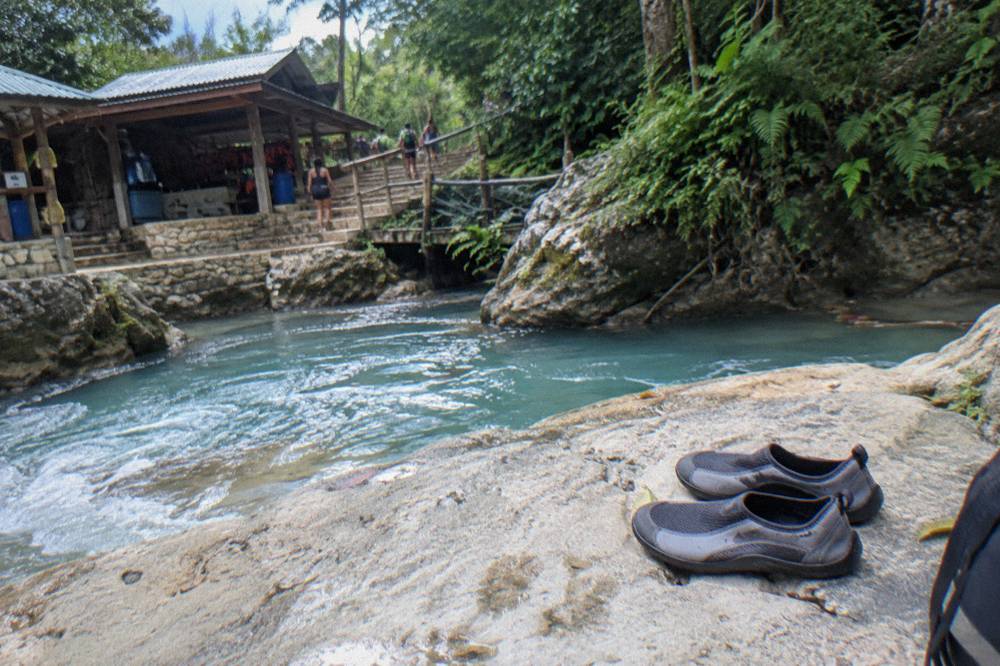
Within the closed category, almost anything works. Purpose-built water shoes with a thick rubber sole handle the rocky entries best. Broken-in running shoes with an aggressive tread are the budget option plenty of visitors use happily; expect them to stay wet for the rest of the day. Thin-soled canvas shoes are the weak choice, since the soles flex over every rock edge.
Rental footwear is available on site, and the honest framing is that lockers and shoe rental cost a few dollars extra, paid on arrival. Do not build your plan around a rental being available in your size on a busy cruise day. A cheap pair of water shoes bought at home costs about the same as a day's rental and is yours afterward.
Footwear also interacts with the circuit you choose. The 7 falls, about 2.5 to 3 hours, is a moderate route that most families manage in basic water shoes. The full 27, typically 4 to 5 hours with a longer climb, is the one where shoe quality, and the fitness questions covered in the Damajagua difficulty and fitness guide, genuinely start to matter. If you have booked a tour, the listing usually restates the footwear advice; one cruise excursion on this site tells passengers to bring sneakers or water shoes and towels, which is the same advice in plainer words.
What Swimwear And Clothing Should You Wear In The Canyon?
Wear a well-fitting swimsuit as your base layer, with a t-shirt or rash guard over it for the hike and sun exposure. Choose suits that stay secure during slides and jumps, since you will be entering the water feet-first again and again. Avoid heavy cotton, which stays waterlogged, and anything with hooks, zips or straps that can catch on rock.
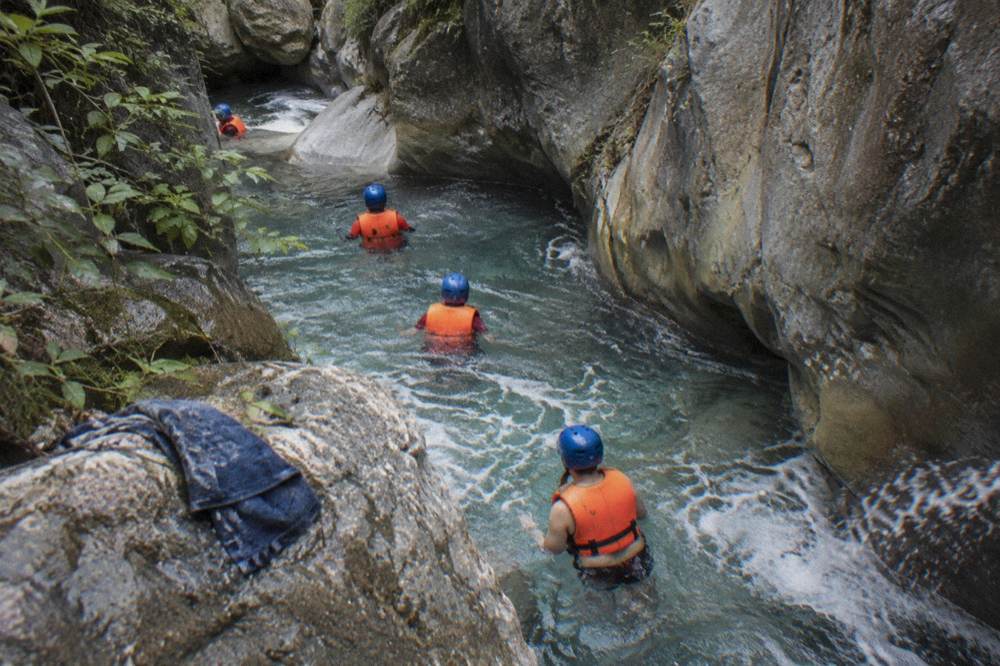
The physics of the canyon shapes the wardrobe. You descend through the water, which means repeated slides down smooth chutes and jumps of varying height into deep pools, with guides choosing the entry point at each one. Anything loosely fitted fills with water on impact; anything metal or rigid scrapes against rock on the way down. Athletic-cut swimwear, board shorts with a drawstring, and snug one-piece suits for women are the reliable patterns.
A t-shirt or rash guard over the swimsuit serves two purposes. It protects shoulders and backs from sun on the exposed walk up, and it gives the life jacket something besides bare skin to sit against for hours. Fitted is better than baggy for the same reason baggy swimwear fails: fabric that balloons in the water is fabric that drags.
For the hike itself, quick-dry shorts over the swimsuit are the standard move. You can shed layers at the top before the descent, or simply get them wet and let the walk out dry them. A light layer is worth carrying in the dry season, December to April, when shaded mornings on the trail can feel cooler than the coast, though nobody needs a wetsuit at any time of year.
One clothing question the answer to which is genuinely "it depends": eyewear and prescription glasses. The park's safety guidance lists unsecured sunglasses among items prohibited in the canyon, because a slide takes them off your face instantly. If you need prescription lenses to function, use a strap that locks them to your head, or accept that the better plan is a contact-lens day. The same logic applies to hats, which belong in the locker, not on the jumps.
What Gear Does The Park Supply With Your Entry?
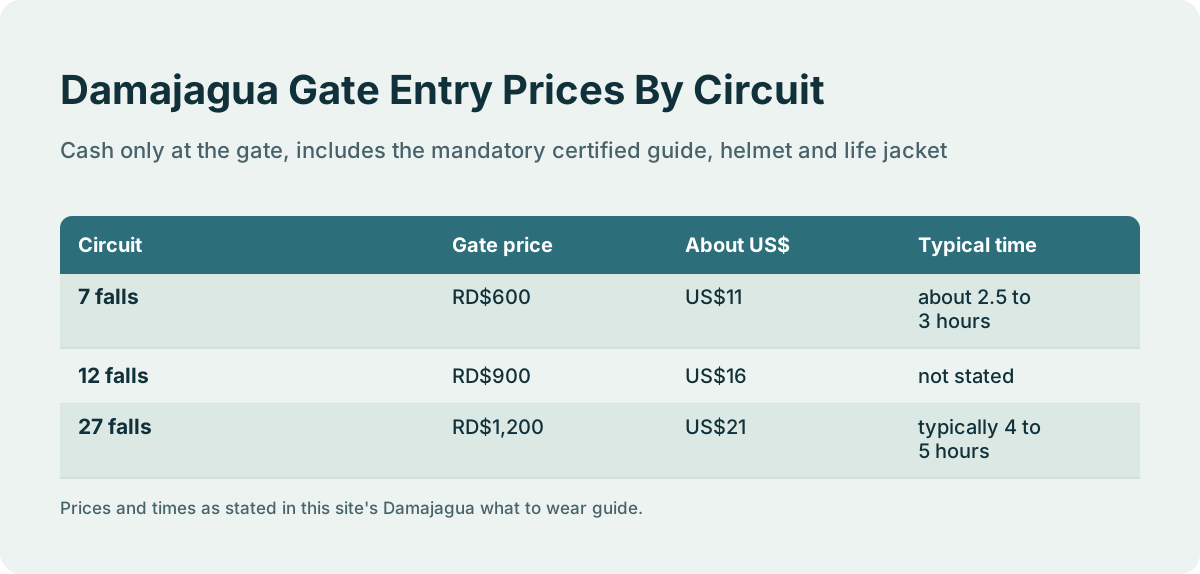
Entry to the monument includes the mandatory certified guide, a helmet and a life jacket, so you never bring your own. The gate price runs roughly RD$600, RD$900 and RD$1,200, about US$11, US$16 and US$21, for the 7, 12 and 27 fall circuits, cash only. Lunch is not part of gate entry, and the visitor centre has lockers and a place to eat.
That bundle is the honest baseline for comparison with tours. A tour listing that says "gate entry included" is folding that roughly US$11 to 21 cash fee, plus the guide and gear, into its price. A listing that stays silent on entry inclusion may be expecting you to pay at the gate on top, which is exactly why the packing advice here is to carry cash regardless: even fully bundled tours leave tips, rentals and small purchases to you.
| Item | Supplied with entry? | Notes |
|---|---|---|
| Certified guide | Yes, mandatory | You are never alone in the canyon |
| Helmet | Yes, must stay buckled | Provided at entry, sizes at the gate |
| Life jacket | Yes, mandatory | Provided at entry |
| Water shoes | No | Bring your own or rent on site for a few dollars |
| Locker | No, paid on arrival | At the visitor centre, a few dollars |
| Lunch | No | On-site buffet option at the visitor centre; many tours include lunch |
The helmet rule deserves a line of respect rather than a shrug. The park's safety guidance requires the chin strap buckled at all times in the canyon, not perched on the head loose, because the helmet is doing real work on every slide and entry. The life jacket is equally non-negotiable, and it is the reason swimming ability is not strictly indispensable: you float whether or not you can swim well, but you must be comfortable in water and able to walk on uneven wet ground, as the Damajagua safety guide explains in detail.
Tours that bundle gear take a small weight off the packing question. The Adventure at the Damajagua Waterfalls From Puerto Plata listing (from $45 per person, rated 4.9 from 28 reviews) states that body life jackets are included alongside transport, while its exclusions list names water shoes if you do not bring your own, which is the park's own rule surfacing in operator language.
What Should You Leave Behind Or Lock Up At Damajagua?
Leave jewellery, watches, valuables and unstrapped cameras behind entirely, and lock the rest in the visitor-centre lockers before you climb. The park prohibits unsecured sunglasses and valuables in the canyon, and anything not strapped on securely is likely to be lost in the water. Phones belong in a waterproof pouch or in the locker, not in a pocket.
The lost-and-found reality of a river canyon is unforgiving. Every pool is deep enough to jump into, which means it is deep enough to swallow a ring, an earring or a phone permanently, and the flow moves small objects downstream within minutes. Independent visitor guides to the area are blunt about it: cameras and phones without secure mounts go missing on a regular basis. This is why the dedicated advice on the Damajagua photos and GoPro page is to use a locked chest mount or a tethered pouch, and nothing else.
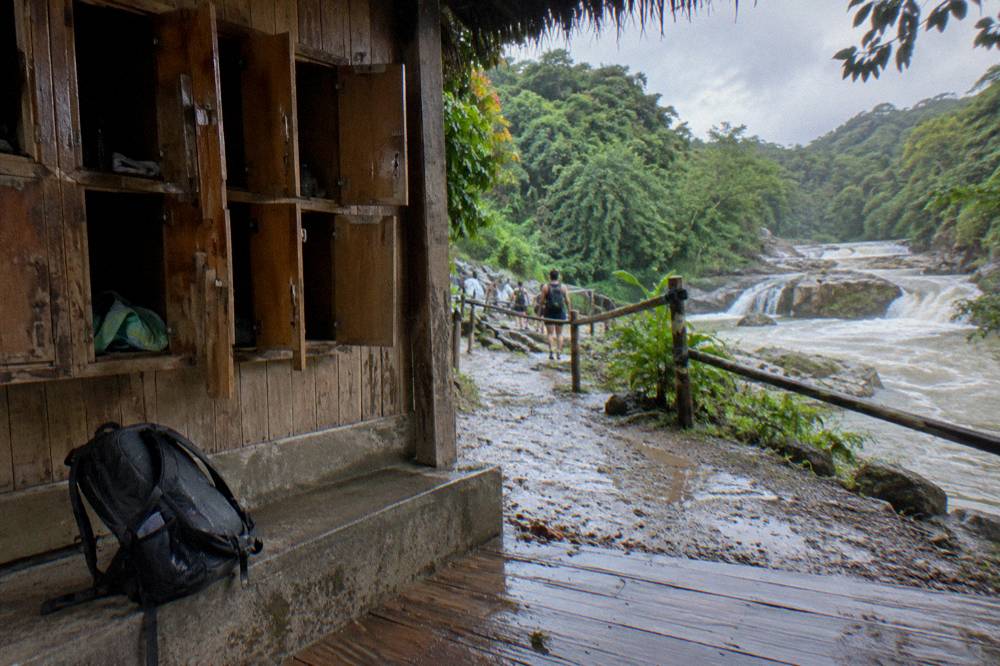
A workable split looks like this. On your body: swimsuit, shirt, water shoes, helmet and life jacket. In a small dry bag or bus seat: towel, dry change of clothes, cash for the gate and extras, sunscreen for before and after. In the locker or at the hotel: passport, jewellery, room keys you can replace, expensive watches, and any camera you would grieve. Lockers cost a few dollars, paid on arrival, cash.
| Where it lives | Items | Why |
|---|---|---|
| On your body | Swimsuit, t-shirt or rash guard, water shoes | Everything else gets soaked or lost |
| Dry bag or bus seat | Towel, dry change of clothes, cash, sunscreen | Needed the moment the descent ends |
| Visitor-centre locker | Room keys, spare phone, strap-locked glasses | A few dollars, paid on arrival, cash only |
| At the hotel | Passport, jewellery, watches, good cameras | No reason for any of it to reach Imbert |
Sunscreen belongs on the hike even though the canyon itself is shaded, because the 30 to 60 minute walk up is exposed in stretches and tropical sun burns fast. Apply it before you dress, and accept that anything on your forearms will wash off in the first pool. Water-resistant formulas last a little longer; none lasts the full descent.
The one category of "wear" that is really a "carry": a waterproof pouch for a phone, if you insist on having it on the water. Operators and the park both advise it. Even then, assume the phone can be lost, and decide beforehand whether the photos justify the risk. Many visitors conclude that the tour's own photographer package, sold separately by local photographers, is the calmer route to pictures, and simply leave the phone locked up.
What Should Children Wear At The Waterfalls?
Children need the same core kit as adults: secure swimwear, closed water shoes and a towel, with the park supplying child-sized helmets and life jackets at the gate. Age rules cap what kids can do, minimum age 8 for the first 7 falls and 12 for the longer circuits, so dress them for a shorter, splashier day and confirm the rule with your tour.
The age limits matter for wardrobe planning more than parents expect. A child of 8 to 12 does the first 7 falls, about 2.5 to 3 hours including the hike, which means they need shoes that survive wet rock but not the endurance gear of the full circuit. Under-8s do not climb into the canyon at all; they stay at the base pools supervised, which is a swim-and-watch day, and the packing list shrinks accordingly. The family-specific angles, including the tour listings that suit mixed ages, are covered in the Damajagua with kids and age limits guide.
Dress children in the same fitted, quick-dry logic as adults, with two additions. First, a rash guard earns its place on kids more than on anyone: it doubles the sun protection for the hike and dries in minutes. Second, bring a full second outfit, because children will be in and out of the water at the base area even when the circuit itself is over.
Footwear sizing is the practical trap. Rental shoes at the visitor centre are not guaranteed in small sizes on busy days, and cruise days are busy days, with the two Puerto Plata terminals handling 38 ship calls in a single recent month. Buy inexpensive closed water shoes at home in the right size, and the problem disappears.
Does The Season Change What You Wear?
Only at the margins: the dry season, December to April, calls for a light layer on the shaded hike up, while the wet season, May to November, makes grip and a quick-dry wardrobe matter more. The canyon's water temperature changes little; what changes is the trail underfoot and how fast everything dries afterward.
The north coast does not have a cold season, so the swimsuit-and-shirt formula holds year-round. What shifts is conditions. In the dry season the trail is drier and firmer underfoot and the river runs clearer, which is why it is the recommended window covered in the best time to visit guide. In the wet season the river carries more force, upper falls close first after rain, and rangers shut the river entirely when it runs brown, reopening typically 12 to 24 hours after the rain stops.
Wet-season wardrobe adjustments are small but real. Shoes with the best grip you can find, a dry bag rather than a cloth bag for the after-clothes, and a willingness to change somewhere sheltered. The rain and river-flow guidance on the independent visitor portal 27waterfalls.org describes the closure protocol in detail; what you wear does not change it, but knowing the upper sections close first explains why operators keep the schedule flexible in September and October.
The Atlantic hurricane season runs June 1 to November 30, per the National Hurricane Center's climatological records, and the highest tropical-storm risk on the north coast falls in September and October. None of that demands different clothing. It demands a refundable booking, a check of the day's conditions, and the same packing list with slightly lower expectations of dryness.
A Packing Checklist For The Day
Pack one small bag per person: swimsuit worn under clothes, closed water shoes, t-shirt or rash guard, towel, full dry change including shoes, cash in pesos or dollars, and a waterproof pouch only if you accept the risk to your phone. Everything else, jewellery, watches, passports, expensive cameras, stays at the hotel or in the locker.
The table below is the whole day in one view. Items marked "wear" go on your body at the hotel; items marked "carry" live in the bus or locker until the descent ends.
| Category | Item | Wear or carry |
|---|---|---|
| Footwear | Closed water shoes or grippy old trainers | Wear |
| Swimwear | Secure-fitting swimsuit | Wear |
| Layers | T-shirt or rash guard, quick-dry shorts | Wear |
| After | Towel, full dry change of clothes and shoes | Carry |
| Money | Cash for gate, locker, rental, tips | Carry |
| Sun | Sunscreen applied before the hike | Carry |
| Optional | Waterproof phone pouch, strap-locked glasses | Carry |
| Stay behind | Jewellery, watch, passport, unstrapped cameras | Leave |
Tours absorb parts of this list, and reading the inclusions before packing saves weight. The 7 Waterfalls and Typical Food listing (from $60 per person, rated 4.7 from 567 reviews) includes helmets and life jackets, bottled water and lunch, while its exclusions name water shoes and lockers, which is the park's structure showing through. The Puerto Plata Damajagua Waterfalls Tour listing (from $66.6 per person, rated 4.8 from 43 reviews) adds a coffee and hot chocolate tasting and cigar tasting to the transport and entry, so the bag gets lighter while the cash line stays the same.
Whatever the listing covers, the visitor is the one wearing the shoes. That is the quiet theme of this whole page: the park hands you the safety gear, the tour hands you the logistics, and the only equipment that is genuinely yours on the day is what you chose to put on your feet and pack in the bag. Choose the shoes well, lock the rest away, and the canyon takes care of the drama on its own.
For cruise passengers the calculus is tighter, since locker and bag logistics run through the excursion bus rather than a hotel room. The Damajagua cruise day timing guide covers how the port-to-park schedule shapes what you can realistically carry off the ship. If you prefer a small-group setup rather than a big bus, one example among the port excursions listed on 27 Waterfalls Dominican Republic is the Damajagua Waterfalls Adrenalin Adventure out of Amber Cove and Taino Bay, which runs up to 16 guests with park fees included in the listed price.
Common Questions About What To Wear At Damajagua
What Do You Wear To The Waterfalls In Damajagua?
A swimsuit under quick-drying clothes, closed water shoes or old trainers with grip, and a towel plus full dry change left on the bus or in a locker. The park supplies the helmet and life jacket with entry. Leave flip-flops, jewellery and unstrapped cameras behind; they are either prohibited or likely to be lost.
Do I Need Water Shoes For The 27 Charcos?
Yes. Closed shoes are required in the water, and flip-flops or sandals are banned. Purpose-built water shoes with grippy soles are best, broken-in trainers second. Rentals exist at the visitor centre for a few dollars, but sizes are not guaranteed on busy days, so bring your own if you can.
Does The Park Provide Helmets And Life Jackets?
Yes. Entry, roughly RD$600 for the 7 falls and up to about RD$1,200 for the full 27, includes the mandatory certified guide, helmet and life jacket. Lunch is not included in gate entry. Tours that list "gate entry included" fold this fee and gear into their price.
Can I Bring My Phone Or Camera Into The Canyon?
Only if it is strapped on securely, ideally in a locked waterproof pouch or on a chest mount. The park's guidance is that unsecured cameras and phones are lost routinely in the pools. Many visitors leave devices in the visitor-centre locker and buy the local photographers' package instead.
What Should Children Wear At The Damajagua Waterfalls?
The same kit as adults: secure swimwear, closed water shoes and a rash guard for sun, with the park supplying child-sized helmets and life jackets. Age limits are 8 for the first 7 falls and 12 for the longer circuits; bring a full second outfit, since kids stay in and out of the water at the base pools.
Does The Season Change The Packing List?
Barely. Add a light layer for the shaded hike in the dry season, December to April, and prioritise shoe grip plus a dry bag in the wet season, May to November, when the trail is slicker and the river runs stronger. Water temperature changes little year-round.