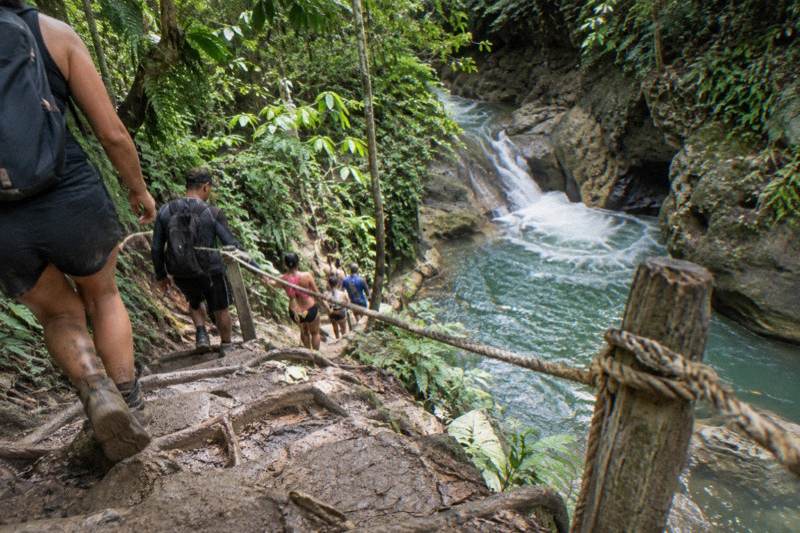
How High Can You Jump At Damajagua Waterfalls?
The park publishes no jump heights in metres or feet. Here is what is actually known about the jumps at Damajagua, how guides control them, and how to pick a tour that matches your nerve.
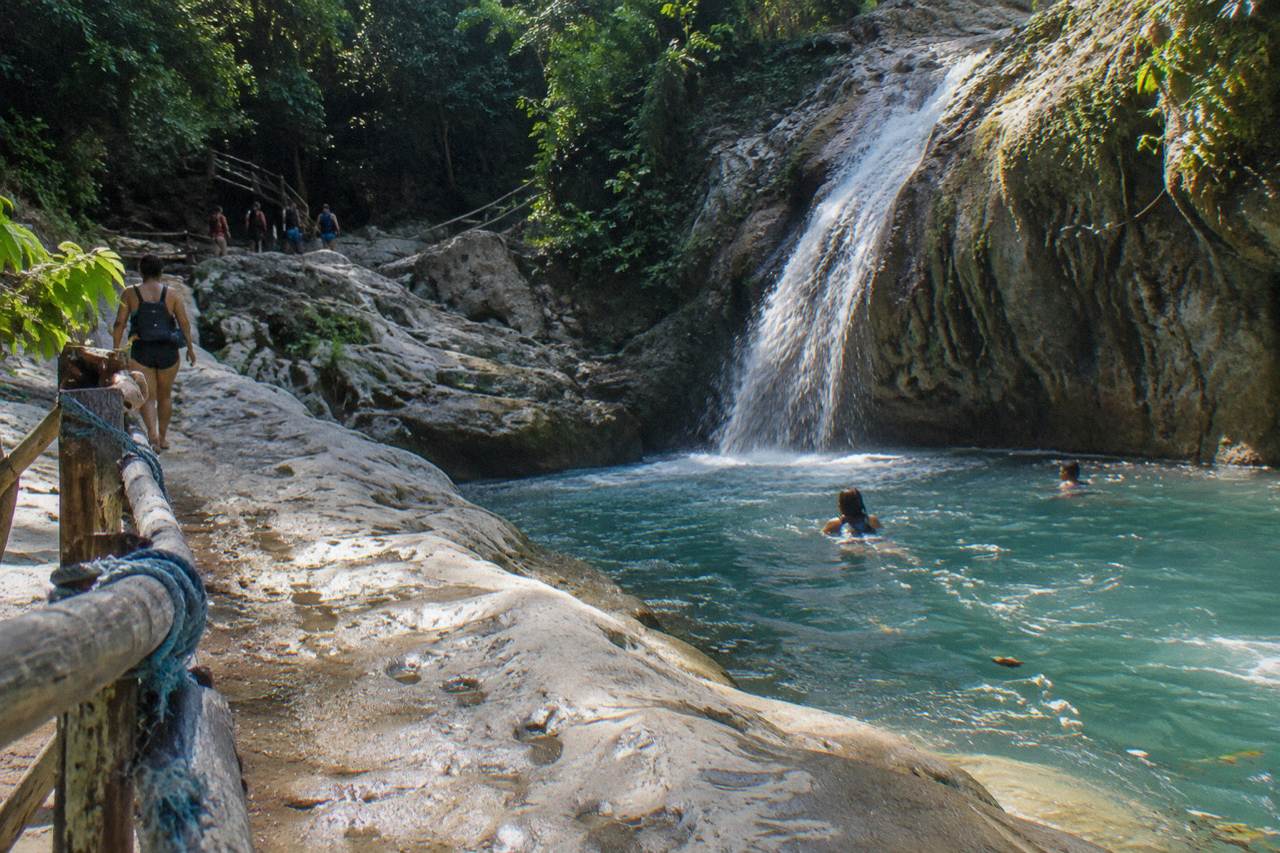
No official height exists to quote: the park publishes no jump heights in metres or feet, and any single precise figure you see comes from one portal, not from the park itself. What independent sources agree on is that the jumps vary in height, a certified guide chooses your entry point for each one, and lateral ladders let you skip some jumps on some circuits.
The question sounds simple, and the honest answer is deliberately unspecific. Damajagua is a natural system of 27 waterfalls and pools on the Damajagua river in the Cordillera Septentrional, declared a Natural Monument in 2004, and it has never operated like a theme park with a sign reading "this drop is X metres". The canyon changes with every rainy season. Rocks shift, pools deepen or silt up, and the guides who work the river daily read the water before anyone leaves the ground.
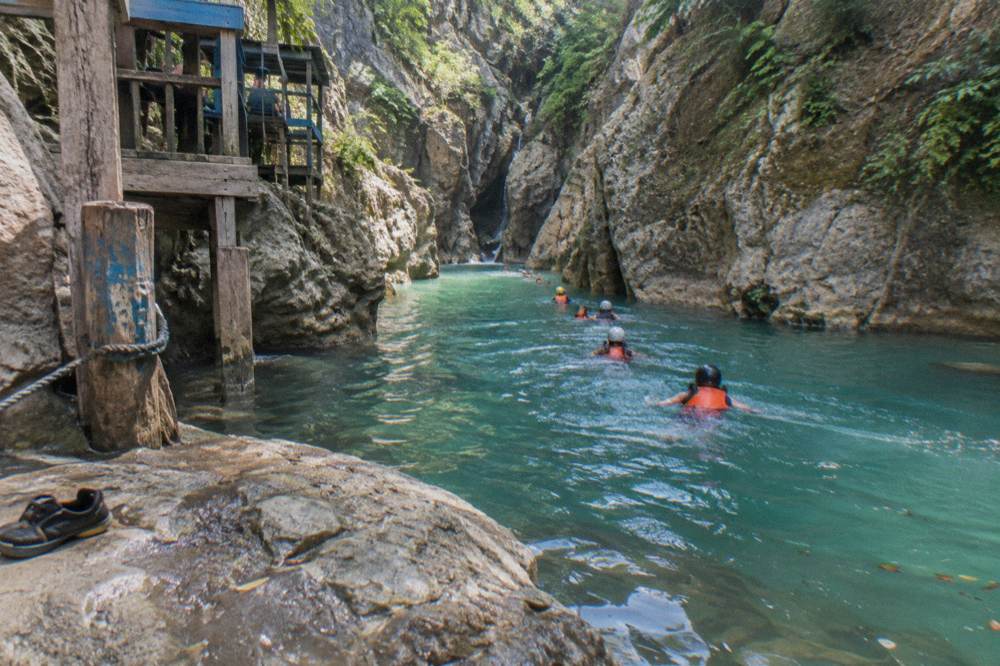
That does not mean the experience is vague. Visitors consistently describe the same arc: a 30 to 60 minute walk up through forest before the first jump, then a descent through the water where you jump, slide and swim from pool to pool, always behind a guide. Some jumps feel trivial, a step off a low shelf into a deep blue pool. Others make people pause at the edge, and that pause is exactly why the guides stand where they stand.
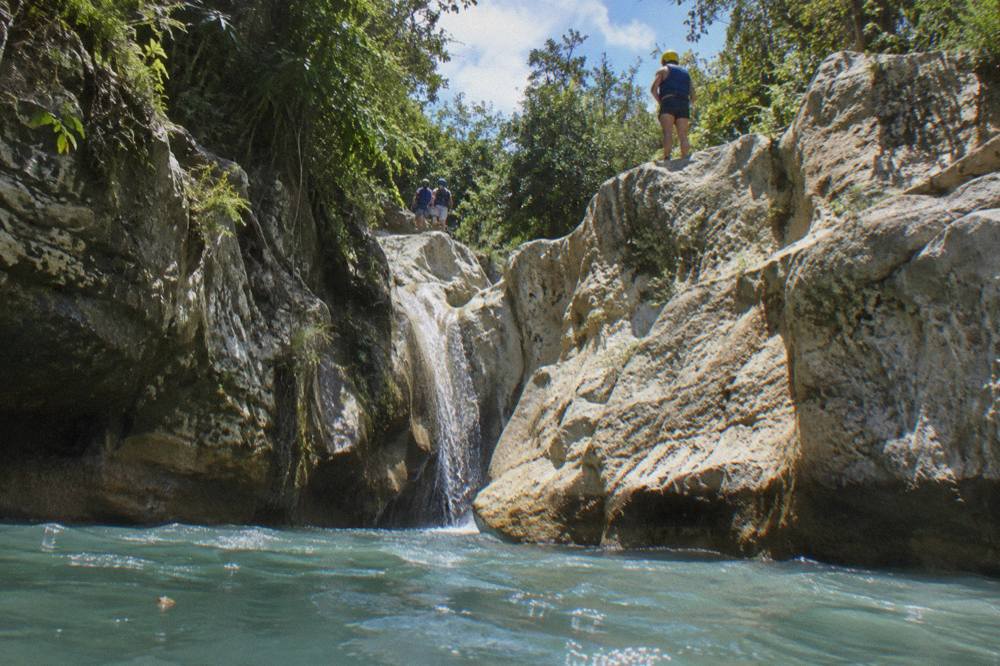
What you book determines how much of that arc you get. The park sells three circuits, 7, 12 or all 27 falls, with minimum ages of 8 for the first 7 and 12 for the longer circuits. The full 27 typically takes 4 to 5 hours and asks for genuine fitness. Most visitors, including almost every cruise excursion, do the first 7.
If you are deciding on the adventure circuit now, these are the three listings this site carries that best span the range of nerve, from a small-group 3-hour tour to a zipline combination.
Why No Honest Source Quotes A Jump Height
No honest source quotes a jump height because the park's administration has never published one, in Spanish or English, and its legacy association site shows no figures on its reachable pages. Every number circulating online traces back to a single visitor portal or to one writer's estimate repeated down the chain, so the only defensible statements are that jumps vary in height and guides choose the entry point.
There is a practical reason behind the silence, and it is worth understanding before you stand on a rock. The pools at the base of each jump are not fixed depths. The Damajagua river responds quickly to rain in the mountains upstream, and the level can rise significantly even while the canyon itself is in sunshine. A jump that was deep and safe in the dry season can be shallower after sediment builds up, or stronger after a rise in flow. Rangers watch the water color and the flow level, and their decision on the day is final.
Because conditions move, the guides do too. A certified guide, mandatory for every visitor, goes into the water ahead of the group, checks the landing, and tells each person exactly where to enter, in what posture, and when. That system only works if the entry point is chosen on the day rather than fixed by a published number that a visitor might treat as a promise.
The same logic explains why the park publishes no count of jumps and slides per circuit. The route through the canyon is adjusted to conditions: after rain, the upper falls close first, and on some days only the first 7 or 12 are open at all. A fixed inventory of "this many jumps, that many slides" would imply a fixed route, and there isn't one.
How Guides Control Every Jump You Take
A certified guide leads every group, so you are never alone in the canyon: guides test each landing, choose the entry point for every jump and slide, signal the exact moment to go, and handle rescues and first aid if needed. Lateral ladders let you skip some jumps on some circuits, though one listing describes mandatory slides on its longer adventurous hike, so confirm what is optional on the specific tour you book.
The instruction is more specific than many first-timers expect. Guides teach a vertical, pencil-style jump with feet together and arms protecting the face, and a specific crossed-arm, straight-legged posture for the slides. The signal discipline is real: nobody jumps before the guide's go. Moving before the signal or improvising an entry is exactly what the rules exist to prevent, which is why the guides repeat the posture briefing at every jump.
The gear exists to make the jumps forgiving rather than scary. The life jacket is not decoration, it cushions the entry and keeps you floating while you catch your breath in the pool below. The helmet matters on the slides more than the jumps, where the rock is polished but hard. Both are provided with your entry at the gate or by your tour, and both stay buckled the whole time you are in the canyon.
Skipping is a quieter option than most people realize. Ladders cut into the canyon wall run alongside many of the bigger drops, so a nervous member of a group can climb down and meet the jumpers in the pool below. The honest caveat is that "skip everything" is not a guarantee: one operator's adventurous hike describes mandatory slides on its longer route, and conditions can close ladders too. Read the listing for the specific tour, and ask the operator about height and weight limits before you book, because the park publishes none.
If the description so far sounds like more than you want, a softer route through the same canyon exists. One listing, the Puerto Plata Damajagua Waterfalls Tour with Lunch, explicitly offers a family-friendly slow hike of about 20 minutes with optional slides, aimed at kids, older guests and anyone with mobility limits, alongside a longer adventurous option. It runs from $65 per person and carries a 4.3 rating from 35 reviews.
What Each Circuit Asks Of Your Nerve And Legs
The 7-falls circuit is the moderate option, about 2.5 to 3 hours on the water and open to visitors aged 8 and up, making it the default for families and cruise groups. The full 27 takes 4 to 5 hours, is limited to visitors 12 and over, and asks for real fitness and confidence in water; the 12 falls sits between the two, and every circuit starts with a 30 to 60 minute walk up through forest.
The uphill part surprises people more than the jumps. You are climbing a forest trail, in heat, in water shoes, for somewhere between 30 minutes and an hour depending on your group and the circuit. Then the whole trip reverses downhill through the canyon. The 7 circuit is a taste; the 27 is a full day of it, with a harder exit that tired legs feel.
| Circuit | Minimum age | Typical time on the water | Gate fee at the park (about, cash only) | Who it suits |
|---|---|---|---|---|
| First 7 falls | 8 | About 2.5 to 3 hours | RD$600, about US$11 | Families, teens, cruise days, first-timers |
| 12 falls | 12 for the longer circuits | Between the two | RD$900, about US$16 | Confident swimmers wanting more |
| All 27 falls | 12 for the longer circuits | Typically 4 to 5 hours | RD$1,200, about US$21 | Strong fitness, full-day commitment |
Fitness and confidence questions come up constantly, and the park's own framing is fair: you do not need to be a strong swimmer because of the life jacket, but you must be comfortable in moving water and able to walk on uneven, wet ground. The canyon is not suitable for visitors with heart problems, recent surgery or back injuries, or pregnancy, and wheelchairs cannot use the trail. This site's guide to Damajagua difficulty and fitness breaks down the training question in more detail, and the can non-swimmers do the waterfalls post covers the water-confidence side.
On the tour side, the middle of this site's roster is full of 7-falls products from Puerto Plata hotels, and one good example is Damajagua 7 Waterfalls Adventure In Puerto Plata: from $55 per person, 3 hours, entry admission, helmet and life jacket included, pickup at the Amber Cove and Taino Bay ports as well as Puerto Plata hotels, with a 4.6 rating from 42 reviews. Lunch is not included on that listing, which is the trade for the lower price. It is a solid pick for a first taste of jumping.
Preparing To Jump: Gear, Shoes And What To Leave Behind
Closed-toe water shoes or old trainers with grip are required, as flip-flops and sandals are not allowed in the water, though rentals are available on site for a few dollars extra paid on arrival. Leave everything that is not securely strapped to you in a locker at the visitor centre, keep your phone in a waterproof pouch, and bring cash to tip the guides.
Shoes are the one piece of gear that genuinely changes the day. The rock in the canyon is wet, polished and uneven, and the walk between jumps is over the same surfaces you jump from. Several tours on this site's roster, including the featured Damajagua excursion from Amber Cove and Taino Bay, explicitly tell guests to bring water shoes and exclude them from the listed price, so check the exclusions line on whichever listing you book rather than assuming.
The rest of the kit is simple. Swimwear worn under clothes, a dry change for after, a towel, and sun protection for the hike up. Jewelry, unsecured sunglasses and anything you would be sad to lose should stay in the locker; independent guides who work the river describe lost phones and sunglasses as routine. Photography has its own page on this site, Damajagua photos and GoPro, and the short version is that professional photographers work the canyon and sell packages on site, while your own camera needs a mount that survives a jump.
Momentum matters as much as kit. Late in a circuit, fatigue builds, and tired people take worse lines off rocks. The guides pace the groups with that in mind, but the honest preparation for jumping at Damajagua is being fit enough that hour three feels like hour one. The best time to visit Damajagua question matters here too: dry season, December to April, brings clearer water and steadier pools, while the wet season from May to November brings more force and a higher chance the upper falls are closed.
When Rain Changes The Jumps Entirely
The park closes the upper falls first after rain and shuts the river entirely when it runs brown. Rangers decide on the day from the water's color and flow, and their decision is final; the river can rise significantly in under 30 minutes after upstream mountain rain even when the canyon itself is sunny, watched from upstream posts. Reopening typically happens 12 to 24 hours after the rain stops, once the level drops and the water clears.
This is the single biggest thing jump-height searchers miss. The height of any jump is only half the safety equation; the other half is what is happening in the pool below it, and that changes with every storm in the hills. On limited-open days, only the first 7 or 12 falls run, and the upper falls are the first to close. A brown river with strong current means no access at all.
For visitors, the practical read is this: a jump you saw in a video from March may be closed, altered or guided differently in October. It does not mean the trip is off, it means the guide's judgment, not the video, sets the route. Operators report conditions on the day, and the standard advice is to check with your tour the day before and be flexible about which circuit you get.
The seasonal picture is consistent across sources. Dry season, December to April, is the preferred window for clear water and full circuits. September and October carry the highest tropical-storm risk in the Atlantic season, which runs June 1 to November 30 according to the National Hurricane Center's climatology pages. Light drizzle at normal levels may still allow a visit, and some visitors prefer those days for thinner crowds, but the risk of a mid-tour evacuation is real. The do the waterfalls close when it rains post covers the protocol in detail.
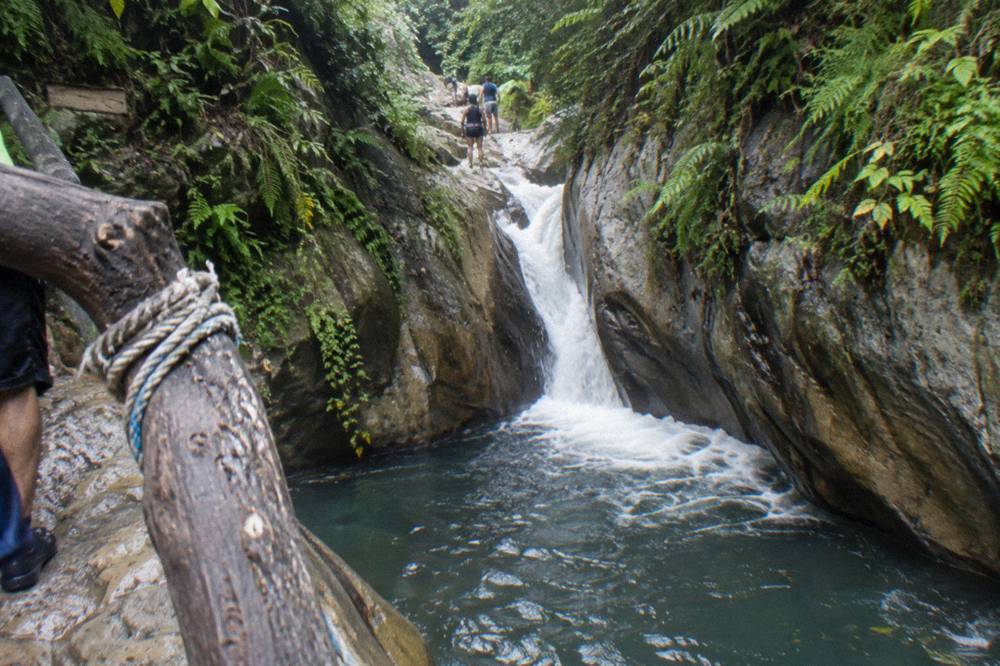
Booking A Tour That Matches Your Nerve
Book the tour that matches your honest read on your own fitness, not the biggest number on the page: first-timers and families should take the 7-falls tour with pickup and lunch from about $50 to $60 per person, small-group seekers the 11-guest listing from $65 (a 3-hour run, so confirm which circuit it covers), and variety seekers the waterfalls-plus-zipline combination from $110, with most listings offering free cancellation so you can book early and adjust.
The distance question matters less than people fear. The park entrance sits near Imbert on the road between Puerto Plata and Santiago: about 20 minutes from Amber Cove, about 30 minutes from both Taino Bay and central Puerto Plata, free-flow, with traffic adding time. From Sosua it is about 57 minutes, from Cabarete about 1 hour 10 minutes. Anyone arriving on a ship at Amber Cove or Taino Bay can comfortably reach the canyon and do the 7 circuit within a standard port day, and the cruise day timing guide works through the clock in detail.
The small-group option deserves a specific mention. The 27 Waterfalls of the Damajagua Puerto Plata DR caps its group at 11 guests, includes entry, vest, helmet, lunch, soda and water, and runs 3 hours from $65 per person. Note that a 3-hour listing cannot cover the full 27-fall circuit, which takes roughly 4 to 5 hours, so confirm with the operator which circuit it runs before booking. It carries 14 reviews, too few for a star claim in good conscience, but the format is exactly what a jump-curious traveler wants: fewer people at each ledge, more time with the guide, and a calmer canyon than the 40-to-50-guest cruise buses. For travelers who want the jumps plus a different kind of adrenaline, Damajagua Waterfalls, Zipline with Lunch and Transfer combines both from $110 per person, rated 4.7 from 50 reviews, with hotel pickup, lunch and a licensed guide on the listing.
Whatever you book, the same three questions to ask the operator apply: which circuit does this listing actually run, what does it exclude (water shoes, lockers and gratuities appear constantly on exclusion lines), and what happens if the river closes part of the route on the day. Operators who answer those plainly are the ones worth your money. Readers who want the full picture of the canyon before committing can start with the complete Damajagua waterfalls guide on 27 Waterfalls Dominican Republic, and independent types should read can you visit without a tour, since hiring a guide at the gate is possible but transport and cash logistics are yours to solve.
Before the common questions, three more listings earn a look: a 7-hour full day from Puerto Plata, the 4-hour port excursion with typical food, and a quick 2-hour zipline-and-falls pairing.
Common Questions About Jump Heights At Damajagua
How High Can You Jump At Damajagua Waterfall?
The park publishes no jump heights in metres or feet, so no honest number exists. The jumps are of varying height, a certified guide chooses the entry point for each one on the day, and lateral ladders let you skip some jumps on some circuits. Any specific height you read online traces to a single visitor portal, not the park.
How High Are The Jumps At Damajagua Waterfalls?
Unpublished. The park, co-managed by the community guides' association with the Ministry of Environment, has never issued height figures for its jumps or slides, nor a count of them per circuit. What is documented is that every visitor jumps behind a mandatory certified guide, wearing a helmet and life jacket, and that the guide directs each entry.
How High Can You Jump At Damajagua Falls?
The park publishes no height figures for the jumps. The honest framing is that the drops range from low shelf steps to leaps big enough to make people pause at the edge, and guides check the landing and signal when to go. After rain the upper falls are the first to close, so the answer shifts from week to week.
How High Are The Jumps At The Damajagua Waterfalls?
The park publishes none, in Spanish or English, and its legacy association site shows no figures on its reachable pages. Jump height also varies naturally as pools deepen or silt up between seasons, which is one reason the guides choose entry points daily rather than following fixed numbers.
How High Is The Jump At Damajagua Waterfall?
No single jump defines the canyon, so no single height applies even if one were published. The circuits run 7, 12 or 27 falls, each with multiple jumps and slides of different sizes, and your guide sets the route and the entry point for each based on the day's water conditions.